
Compare Car Insurance Rates in Ohio
See if you qualify for a lower rate in less than 2 minutes



Who Actually Needs Car Insurance Without a License?
It might sound contradictory, but there are several completely legitimate reasons why someone who doesn't hold a valid driver's license still needs to insure a vehicle. The car itself needs protection regardless of who is (or isn't) behind the wheel.
Here are the most common situations:
- Suspended or revoked license holders. A license suspension doesn't mean you lose your need for insurance. In fact, many states require you to maintain continuous coverage (and file an SR-22) as a condition of reinstating your license. Learn more in our guide to car insurance after license suspension.
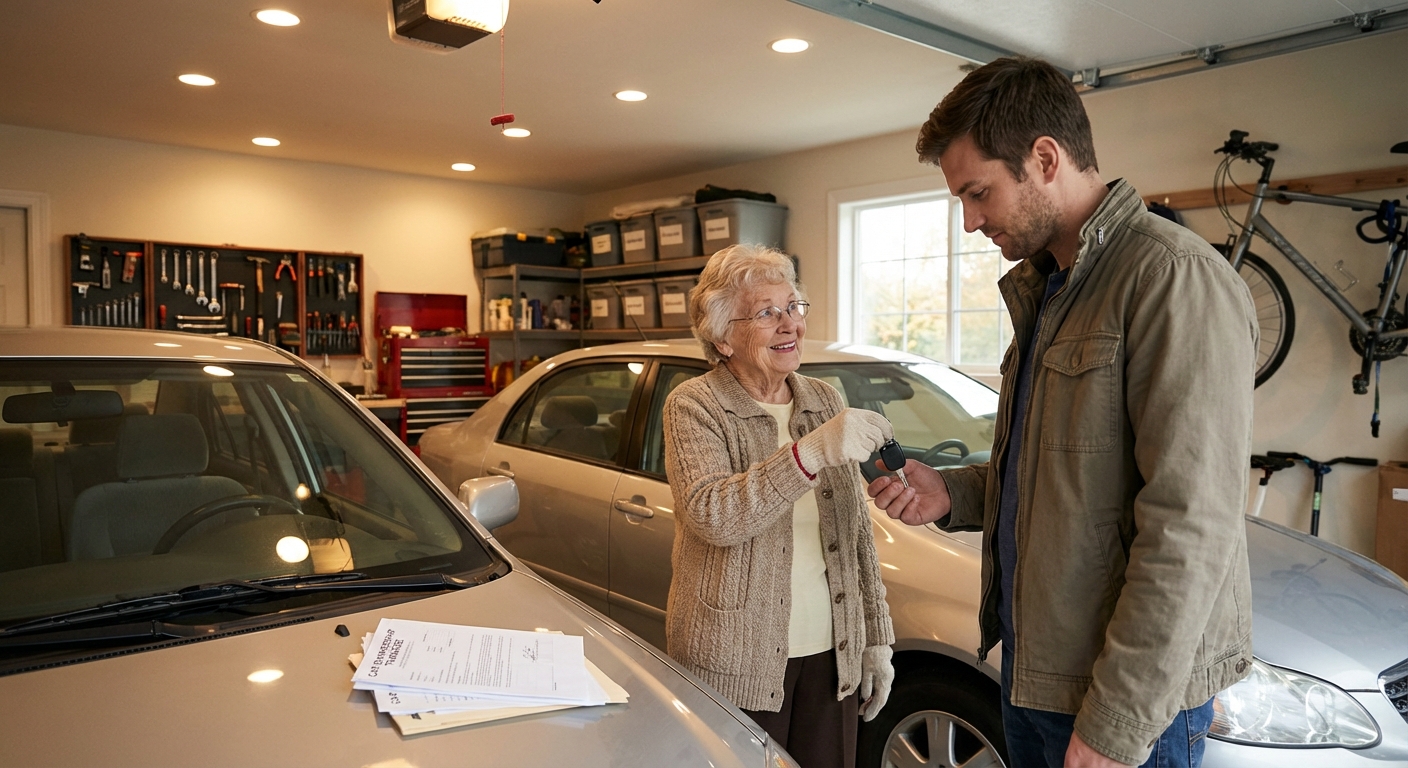
- Elderly non-drivers. Seniors who no longer drive but still own a vehicle (perhaps for a caregiver or adult child to use) need the car insured regardless. See our guide to parked and stored vehicle coverage if the car sits unused for extended periods.
- Visa holders and immigrants. Those new to the U.S. may not yet have a state-issued license but may own or use a vehicle. Many insurers will accept a valid foreign driver's license, International Driving Permit (IDP), passport, or consular ID as identification. Read more about car insurance without an SSN using an ITIN or passport.
- Car owners who don't drive. You may own a vehicle that a family member, spouse, or hired driver operates exclusively. The car still needs to be covered, and permissive use rules may apply when others get behind the wheel.
- Learner's permit holders. A permit is not a full license, but you still need insurance while practicing with a licensed supervisor. See our learner's permit insurance guide for parents' options.
State Rules for Unlicensed Vehicle Owners
Not all states treat unlicensed vehicle owners the same way. In most states, you can insure a vehicle you own without a license, but you'll likely need to name a licensed primary driver. A handful of states are stricter, and several states raised their minimum liability limits between 2025 and 2026.
| State | Key Rule for Unlicensed Owners |
|---|---|
| New York | Very difficult to insure without a licensed driver; may require co-ownership form |
| Michigan | Coverage typically requires a licensed primary driver on the policy |
| Virginia | Requires a licensed driver; minimums are 50/100/25 (updated Jan. 2025); FR-44 (DUI) is 100/200/50 |
| California | Minimum limits are 30/60/15 as of Jan. 1, 2025 (first increase since 1967, locked through 2035 under SB 1107) |
| Texas | Allows coverage with a non-driver state ID; third-party registration accepted |
| Florida | Requires a signed "Intent to Operate" affidavit from the primary driver |
| North Carolina | Minimum limits raised to 50/100/50 as of July 1, 2025 (highest PD minimum in the nation) |
| Utah | Minimum limits raised to 30/65/25, plus $3,000 PIP (Jan. 2025) |
| New Jersey | Minimums fully phased in at 35/70/25 as of January 1, 2026 |
| Hawaii | Minimums doubled to 40/80/20 as of January 2026, plus $10,000 PIP |
Always check with your state's DMV, as minimum liability limits were recently updated in California, North Carolina, Utah, Virginia, New Jersey, and Hawaii. For a full overview, see our guide to car insurance and vehicle registration requirements.

Compare Car Insurance Rates in Ohio
See if you qualify for a lower rate in less than 2 minutes
Types of Coverage Available Without a License
Getting car insurance without a license doesn't necessarily mean you're stuck with bare-bones protection. The coverage options available to you largely depend on your specific situation and which insurer you work with.
Full Coverage (With a Named Primary Driver)
If you own a car that someone else drives regularly, you can often obtain a standard full coverage policy by naming a licensed driver as the primary driver on the policy. The rates will be calculated primarily based on that driver's record, not yours. Learn more about how named driver exclusions work if you want to formally exclude yourself from the policy, or review the difference between a policyholder, named insured, and listed driver.
Comprehensive-Only (Parked Car / Storage Insurance)
If your vehicle is not being driven at all (stored in a garage, driveway, or lot), you may qualify for comprehensive-only coverage, sometimes called "storage insurance." This covers the vehicle against:
- Theft
- Vandalism
- Weather damage (hail, flooding, wind)
- Fire
- Falling objects
- Animal strikes
It does not cover liability or collision. Because liability is excluded, this option is significantly cheaper. Here's a breakdown of current 2026 comprehensive-only storage coverage estimates by insurer:
| Insurer | Monthly Estimate |
|---|---|
| State Farm | |
| GEICO | |
| Allstate | |
| Progressive | |
| Direct Auto | ~$25/month |
| Liberty Mutual | ~$31/month |
| The Hartford | ~$38/month |
Broader market estimates for parked-car policies typically run $10 to $25 per month with major carriers, and up to $40 to $50 per month for higher-value vehicles or lower deductibles. Higher deductibles ($1,000 to $2,000) can drop the monthly cost to the lower end of the range. The vehicle typically must be kept off public roads (and often in storage for 30 days or more) to qualify. For more, see our detailed guide to car insurance for stored and parked vehicles.
SR-22 Insurance (Suspended License)
If your license was suspended due to a DUI, serious traffic violation, or lapse in coverage, many states require you to file an SR-22 form, a certificate of financial responsibility, before you can reinstate your driving privileges. Not all insurers offer SR-22 filing, so you'll likely need to work with a high-risk or non-standard carrier. See our full SR-22 insurance guide for the deep dive.
Key SR-22 facts for 2026:
- Most states require SR-22 to be maintained for 3 years from conviction or license reinstatement without any lapse
- Texas and Iowa require 2 years, North Dakota just 1 year, while Nebraska and Tennessee can extend to 5 years for DUI
- Oregon SB 840 (effective January 1, 2026) reduced SR-22 to 1 year for uninsured-driving convictions without an accident
- Ohio HB 29 (effective April 2025) cut SR-22 requirements to 1 year for uninsured driving and eliminated reinstatement fees for fine-based suspensions
- SR-22 filing fees typically run $15 to $50 as a one-time charge
- Non-owner SR-22 policies (for those without a car) are available from most major carriers, averaging $58 to $85/month
- Virginia requires the stricter FR-44 form after DUI, now at 100/200/50 (double the state minimums), and Florida FR-44 requires 100/300/50 plus $10,000 PIP. See our Florida FR-44 guide for details
- SR-22 is not used in Delaware, Kentucky, Minnesota, New Mexico, New York, North Carolina, Oklahoma, or Pennsylvania
For a deeper look, see our full guide to non-owner car insurance which covers non-owner SR-22 policies in detail, or read about your options if you've been denied car insurance.

Protect your car with Farmers
Average Rate:
Find coverage options that fit your budget.

The insurance savings you expect.
Average Rate:
Enjoy personalized policies, comprehensive coverage & more.

See how much you could save today!
Average Rate:
Drivers who switch their auto insurance and save with State Farm save $764 on average!

Safe Drivers Save with Allstate®
Average Rate:
Get rewarded with savings for having a clean driving record.
Which Companies Offer Car Insurance Without a License?
Most major national insurers prefer not to issue policies to unlicensed individuals online, but there are reputable companies that will work with you, especially if you're naming a licensed primary driver. Many require you to call directly rather than apply online, since standard forms typically ask for a license number.
| Insurer | Notes for Unlicensed Owners |
|---|---|
| Progressive | Most flexible large carrier; accepts government ID for the owner; handles SR-22 and parked-car setups in many states |
| The Hartford | Explicitly covers no-license situations including learner's permits, other drivers, and stationary vehicles |
| GEICO | Manual underwriting via agent; strong for SR-22, parked-car, and learner's-permit scenarios |
| State Farm | May insure with a licensed primary driver and the owner excluded; availability varies by state, so call directly |
| USAA | Available to eligible military members and families; among the lowest storage rates |
| Direct Auto | Specializes in high-risk and unlicensed drivers; accepts state ID in lieu of license |
| Kemper / Bristol West / Gainsco | Non-standard specialists that focus on hard-to-insure drivers |
| Travelers | Competitive rates when a licensed primary driver is listed |
| Dairyland | Strong SR-22 option for suspended license situations |
| The General / Acceptance / Foremost / Mendota / OnGuard | Regularly write policies for unlicensed and non-standard drivers |
| AAA / Freeway / Infinity | Regional and club-based carriers that commonly write unlicensed-owner policies |
If a standard carrier won't work with your situation, exploring high-risk car insurance options designed specifically for hard-to-insure drivers can help, along with non-standard auto insurance carriers. If you've already been turned down, our guide on how to request reconsideration after a denial walks through your next steps.
What About Visa Holders and Foreign License Holders?
Insurers like Progressive, GEICO, Liberty Mutual, and The Hartford commonly accept foreign driver's licenses and government-issued IDs for coverage. Visa holders and recent immigrants may see rates 20% to 40% higher initially due to the absence of a U.S. driving history, but rates typically improve after 6 to 12 months of clean driving.
As of mid-2026, 19 states plus Washington, D.C. (and Puerto Rico) issue driver's licenses (typically marked "Not for Federal Purposes") to undocumented residents: California, Colorado, Connecticut, Delaware, Hawaii, Illinois, Maryland, Massachusetts, Minnesota (the most recent to authorize, in 2023), Nevada, New Jersey, New Mexico, New York, Oregon, Rhode Island, Utah, Vermont, Virginia, and Washington. Note that Tennessee's law (effective January 1, 2026) now makes it a Class B misdemeanor to drive in-state using a license issued by another state to an undocumented immigrant, and a federal FMCSA rule effective March 30, 2026 restricts new non-domiciled commercial driver's licenses to holders of H-2A, H-2B, or E-2 visas only. If you drive across state lines, verify current rules.
Documents you may need include:
- Valid foreign driver's license or International Driving Permit (IDP)
- Passport and visa documentation
- Proof of U.S. residency (utility bill, lease agreement)
- Vehicle registration or title
- ITIN (Social Security number generally not required)
- Consular ID (matrícula consular) accepted by some carriers
Costs, Limitations & How to Save
What to Expect to Pay in 2026
Car insurance without a license typically costs more than a standard policy because insurers view the situation as higher risk. Here are the current benchmarks:
| Coverage Type | Estimated Annual Cost |
|---|---|
| Comprehensive-only (storage/parked car) | ~$146 to $480/year ($10 to $40/month typical) |
| Non-owner SR-22 policy | ~$700 to $1,020/year |
| Minimum liability (with licensed primary driver) | ~$627 to $1,176/year |
| Full coverage (with licensed primary driver) | ~$2,237 to $2,578/year |
| SR-22 high-risk policy (DUI or serious violation) | ~$3,500 to $5,100/year |
The national average for full coverage in August 2026 is approximately $2,237/year per Insurify's Mid-Year Auto Report (up 1% since the end of 2025), $2,266/year per Experian, $2,356/year per NerdWallet, $2,434/year per Forbes Advisor, and $2,578/year per Insurance.com. Insurify projects the year-end 2026 average will land near $2,242. Unlicensed owner scenarios vary widely from these baselines depending on state, insurer, and the primary driver's record. High-risk drivers (including DUI convictions) commonly pay 2 to 3 times the standard rate.
If you don't own a vehicle at all, a non-owner car insurance policy is often the most affordable way to maintain liability coverage and avoid a lapse. Income-qualified drivers in a few states may also be eligible for low-cost auto insurance programs offered by California, Hawaii, New Jersey, and Maryland.
Key Limitations to Be Aware Of
Tips for Keeping Costs Down
- Compare multiple quotes. Rates vary drastically between insurers for non-standard situations. Never settle for the first quote.
- Choose storage/comprehensive-only coverage if the car won't be driven at all. Costs start under $150/year with a high deductible.
- Name a driver with a clean record. The primary driver's history has the biggest impact on your rate.
- Avoid coverage gaps. Even a short lapse can raise future premiums by 8% to 35% or more, and driving without insurance carries stiff penalties in 49 states. Read up on household member disclosure rules to avoid rescission issues later.
- Work with an independent agent. They can shop dozens of carriers at once and often find better rates than going direct.
- Choose a higher deductible on comprehensive-only storage policies to lower your monthly premium further.
Frequently Asked Questions
Can I legally own a car without a driver's license?
Yes. In most U.S. states, there is no legal requirement to have a driver's license in order to purchase or own a vehicle. Ownership and driving privileges are treated as separate legal matters. However, you will still need to register the vehicle and maintain at least the minimum insurance coverage required by your state. Minimum coverage requirements were updated in California, Virginia, North Carolina, Utah, New Jersey, and Hawaii between 2025 and 2026, so check your state's current limits.
What happens to my insurance if my license gets suspended?
Your existing policy may continue through the current term, but expect your insurer to non-renew or significantly raise your rates at renewal. Many standard carriers will drop you after a suspension, particularly for serious violations like DUIs. You may need to seek coverage from a high-risk specialist and likely file an SR-22, which must typically be maintained for 3 years without any lapse (or 1 to 2 years in states like Oregon, Ohio, North Dakota, Iowa, and Texas). See our full guide on car insurance after a license suspension for more detail.
What is an excluded driver policy, and should I use one?
An excluded driver policy explicitly removes a specific person (typically the unlicensed owner) from coverage, meaning the vehicle is not covered if that person drives it. This is a way for insurers to issue a standard policy on the vehicle while managing their risk. It's commonly used by elderly owners who no longer drive and want to insure the car for a caregiver or family member. Note that Texas banned named-driver policies in 2022 and at least 11 states (including Kansas, Michigan, New York, Virginia, and Wisconsin) restrict or prohibit exclusions, so read more about how named driver exclusions work before making this decision.
Can I get car insurance with just a state ID and no driver's license?
Yes, some insurers, particularly those that work with high-risk or non-standard situations like Progressive, Direct Auto, Kemper, Acceptance, and certain regional carriers, will accept a state-issued ID, passport, consular ID, or other government ID in place of a driver's license. You'll still need to name a licensed primary driver on the policy in most states. Your best bet is to work with an independent insurance agent who can identify which carriers accept alternative ID in your specific state.
Will insuring a car without a license affect my future premiums?
Maintaining continuous coverage, even without a license, is actually beneficial for your long-term insurance costs. A gap in coverage is a red flag for insurers and can raise your rates by 8% to 35% or more when you do get or reinstate your license. Keeping a policy active with minimal coverage, like comprehensive-only storage insurance, helps preserve your insurance history. Even a basic parked-car policy is enough to maintain that continuity and protect against future rate spikes.