
Compare Car Insurance Rates in Ohio
See if you qualify for a lower rate in less than 2 minutes



The 25% Tariff on Auto Parts: What It Is and Why It Matters
In March 2025, the Trump administration imposed a 25% tariff on imported automobiles and auto parts under Section 232 of the Trade Expansion Act of 1962. Tariffs on completed vehicles took effect on April 3, 2025, while tariffs on auto parts became fully active on May 3, 2025. As of August 2026, the base Section 232 rate remains 25% on passenger vehicles, light trucks, and listed auto parts, and their financial ripple effects are now reaching drivers across the country in the form of higher repair bills and steeper insurance premiums.
The tariffs apply broadly to parts imported from most countries, including engines, transmissions, electrical systems, and advanced driver assistance system (ADAS) components. Several important exemptions and offset programs have taken shape, with the most significant August 2026 development being the U.S.-Canada trade framework. On August 19, 2026, President Trump announced a three-day pause on a scheduled 50% tariff hike on certain Canadian goods after both countries reached a preliminary framework, with reporting from Reuters, Bloomberg, and the Wall Street Journal indicating the deal would cut the top-line Section 232 tariff on Canadian-built vehicles from 25% down to 15%, before further deductions for U.S.-produced content. The same framework would reportedly halve steel and aluminum duties on Canadian imports from 50% to 25%, possibly subject to a quota.
| Origin | Auto Parts Tariff Rate | Notes |
|---|---|---|
| Most countries | 25% | Full Section 232 duty |
| USMCA-compliant (Canada/Mexico) | Exempt (pending) | Until Commerce establishes non-U.S. content process |
| EU | 15% | Reduced from 25% via bilateral deal (Aug. 2025) |
| Japan | 15% | Reduced from 25% via bilateral deal (Sept. 2025) |
| South Korea | 15% | Reduced from 25% via bilateral deal (Nov. 2025) |
| Canada | 15% top-line (framework Aug. 19, 2026) | Pending finalization; U.S. content deductions apply |
| United Kingdom | 10% | UK-origin parts in UK-origin vehicles only |
| U.S. assemblers | 3.75% MSRP + 2.5% parts offset | Parts offset new for May 2026 to April 2027 |
Even with these partial reductions, the vast majority of imported parts still face substantial duties. Importantly, the U.S.-assembly offset structure expanded in 2026. An auto manufacturer may apply for an offset equal to 3.75% of the aggregate Manufacturer's Suggested Retail Price (MSRP) value of all its U.S.-built vehicles between April 3, 2025 and April 30, 2026, and the parts offset program was extended through 2030. On top of that, a 2.5% offset for auto parts used in vehicles assembled in the U.S. took effect on May 1, 2026 and runs through April 30, 2027. CBP issued new duty offset guidance (CSMS # 69087399) on June 29, 2026 for imports of automobile and medium- and heavy-duty vehicle parts.
Separately, steel and aluminum tariffs continue to compound parts costs. Articles wholly of steel or aluminum currently carry a 50% tariff (with derivative components carrying tariffs on their metal content), and Section 232 duties on trucks, truck parts, and buses took effect on November 1, 2025.

Compare Car Insurance Rates in Ohio
See if you qualify for a lower rate in less than 2 minutes
How Tariffs Compound an Already Broken Repair Cost Chain
The tariff impact didn't land on a healthy baseline. Auto repair costs were already in crisis before the first tariff dollar was collected. According to the U.S. Bureau of Labor Statistics, car maintenance and repair costs rose sharply from 2019 through 2025, a surge driven by pandemic-era supply chain disruptions, global semiconductor shortages, rising labor costs, and the proliferation of expensive vehicle technology.
The BLS CPI index for motor vehicle maintenance and repair reached 460.185 in July 2026, up 6.6% versus July 2025 and up 0.6% from June's 457.313 reading. That marks the fifth straight month of annual increases at or above 6%, and vehicle maintenance and repair remains one of the largest contributors to transportation inflation even as overall CPI has cooled to 3.4% year over year. Notably, motor vehicle insurance CPI is now down 4.5% year over year, meaning insurers' underlying repair costs are climbing at more than 6% while premium pricing has softened, a widening gap that puts pressure on future rate filings. The next BLS release for August 2026 CPI is scheduled for September 11, 2026.
Year-over-year inflation in repair costs tells the story clearly:
| Period | Repair Cost Inflation (YoY) |
|---|---|
| 2023 | +17.11% |
| 2024 | +7.37% |
| 2025 | +9.02% |
| May 2026 | +6.1% |
| June 2026 | +7.0% |
| July 2026 | +6.6% |
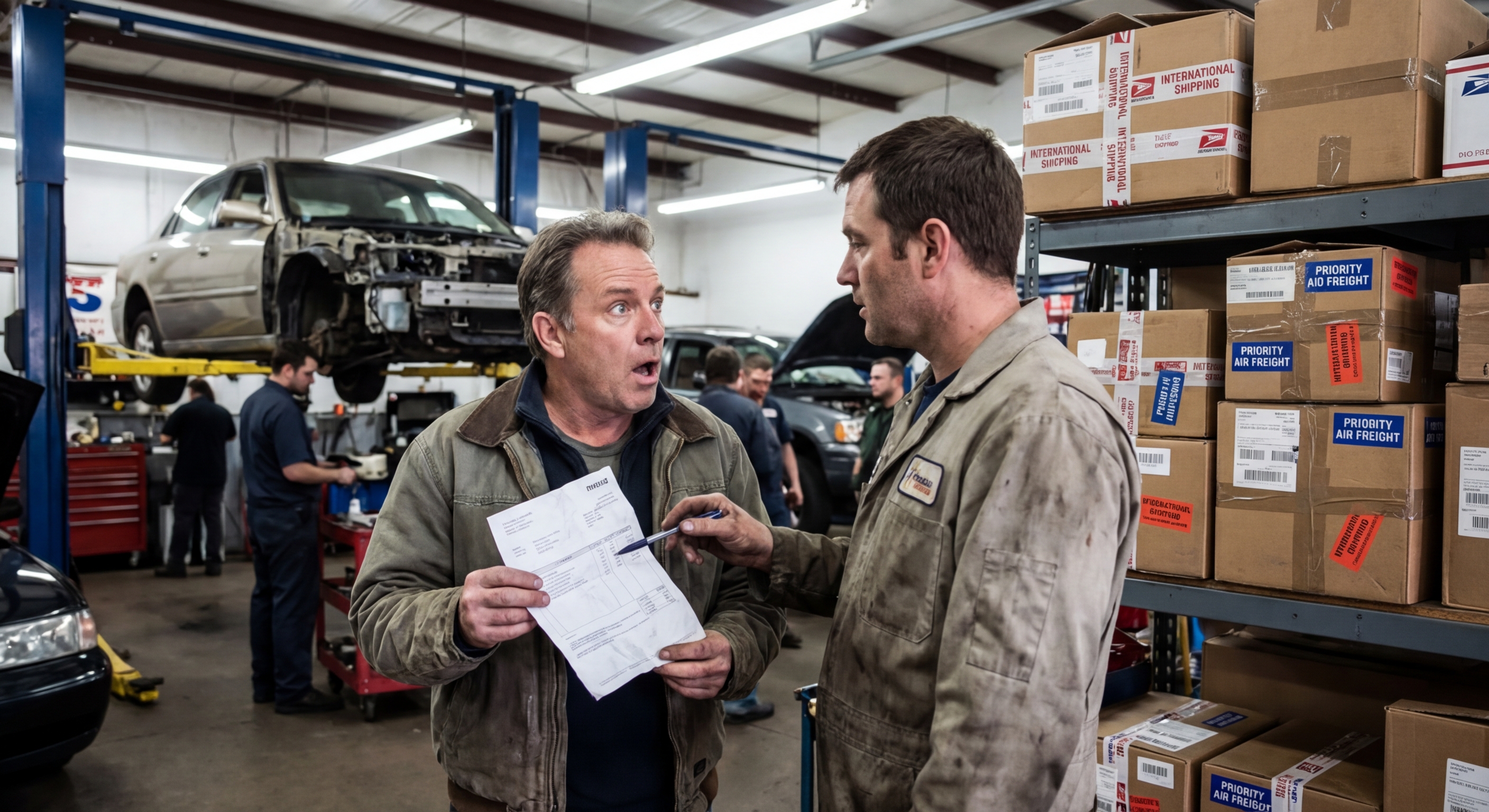
Now add a 25% tariff on the imported parts that repair shops depend on. Roughly 60% of repair parts are sourced from abroad, with approximately 40% coming from Mexico and Canada alone, and costs escalate further. National average mechanic labor rates have also climbed to $120 to $159 per hour in 2026, adding further pressure to every claim payout. A 25% tariff on auto parts can raise replacement part prices by 20% to 30%, directly increasing claim payouts and pressuring premiums upward.
This is why the car insurance loss ratio matters so much right now. Tariffs aren't a standalone cost spike, but a multiplier on top of years of compounding cost pressure. Learn more about how inflation affects your car insurance and why premiums stay elevated even when headline CPI cools.

Protect your car with Farmers
Average Rate:
Find coverage options that fit your budget.

The insurance savings you expect.
Average Rate:
Enjoy personalized policies, comprehensive coverage & more.

See how much you could save today!
Average Rate:
Drivers who switch their auto insurance and save with State Farm save $764 on average!

Safe Drivers Save with Allstate®
Average Rate:
Get rewarded with savings for having a clean driving record.
Which Vehicles Are Most Affected by Auto Parts Tariffs?
Not all cars are equally exposed to tariff-driven repair cost increases. The impact is most pronounced on vehicles with a high percentage of foreign-sourced components, whether they are fully imported models or U.S.-assembled vehicles that rely on global supply chains for major parts.
Toyota has now disclosed the largest tariff cost exposure of any global automaker. In its FY2026 financial results, Toyota projected approximately ¥1.45 trillion (roughly $9.1 billion to $9.5 billion) in tariff costs for the fiscal year ending March 31, 2026, and slashed its full-year operating income forecast from ¥3.8 trillion to ¥3.2 trillion. It was the largest single tariff cost disclosure by any global corporation to date.
The Detroit Three have revised their exposure downward in mid-2026 earnings updates. General Motors now expects 2026 gross tariff costs of $2.5 billion to $3.5 billion, down from an earlier estimate of $3.0 billion to $4.0 billion, with GM warning the impact could still equal more than 20% of operating profit. Ford has pegged its net tariff hit at about $1 billion for 2026, tracking below its prior estimate. Stellantis reported a €300 million net tariff headwind in H1 2026 (including a €400 million IEEPA tariff refund) and expects a full-year headwind of €1 billion to €1.2 billion.
Automakers with the highest confirmed tariff cost exposure (through mid-2026):
| Brand/Group | 2026 Tariff Cost Exposure |
|---|---|
| Toyota | |
| General Motors | $2.5B to $3.5B (revised down from $3B to $4B) |
| Ford | ~$1.0 billion net tariff impact |
| Stellantis | €1.0B to €1.2B full-year net headwind |
| Detroit Three combined (2025) | ~$6.5 billion absorbed |
If you drive an import or an EV with foreign-sourced battery components, your insurer's cost to repair your vehicle has likely risen substantially since 2025. This directly affects collision and comprehensive coverage pricing. Learn more about the ADAS and safety tech impact on your rate, and how vehicle type affects your premium. Owners of imported vehicles and JDM cars face additional considerations at renewal, and Tesla owners can review the Tesla insurance cost breakdown to see how tariffs interact with EV repair pricing.
The 2026 Premium Outlook: What Consumers Are Seeing Now
The link between tariffs and insurance premiums is real, but it operates on a lag. When auto parts costs rise, insurers don't immediately reflect those increases in your premium. Rate changes require actuarial modeling, state regulatory filings, and approval processes that can take 12 to 18 months to complete after the underlying cost shift occurs.
Here's the important context for mid-2026: the average annual cost of full-coverage car insurance rose 1% in the first half of 2026 to $2,237. After falling 6% in 2025, rates are on track to end 2026 up 1% year over year based on Insurify projections, a 7-percentage-point swing in the national trend. That baseline notably does not yet reflect the full pass-through of tariff costs. Insurify projects that if tariffs significantly increase vehicle repair and replacement costs, premiums could rise about 4% instead of the 1% baseline, adding about $214 per year (from roughly $2,313 to $2,527). Some industry analysts at S&P Global and AM Best are projecting an even wider band of 4% to 8% over the next 12 months.
New Insurify data shows that 27 states have already seen insurance rates climb in the first half of 2026, and the company projects 32 states will finish the year with higher premiums than where they started. By December, the average American will pay roughly $2,242 per year for full-coverage insurance. Learn more about the full 2026 rate outlook and how premium calculations work.
State-level changes in 2026 are highly uneven, with Connecticut emerging as the sharpest increase in mid-2026 data:
| State | 2026 Rate Change |
|---|---|
| Connecticut | +15% |
| Kentucky | +8% |
| West Virginia | +8% |
| Nevada | +6% |
| Illinois | +6% |
| New York | -3.8% |
| New Jersey | -4.9% |
| Washington, D.C. | -4.9% |
Connecticut drivers face the steepest year-over-year hike at 15%, followed by Kentucky (+8%), West Virginia (+8%), Nevada (+6%), and Illinois (+6%). Full-coverage rates have declined in Washington, D.C. (-4.9%), New Jersey (-4.9%), and New York (-3.8%) as those historically expensive markets normalize from their post-pandemic peaks.
Analysts estimate individual premium hikes from tariff effects alone at roughly $35 to $125 per vehicle annually, with worst-case modeling reaching up to $324 per vehicle depending on the car and repair needs. The American Property and Casualty Insurance Association has estimated the industry-wide personal auto claim cost increase from tariffs could range from $7 billion to $24 billion. The combination of rising repair costs and tariff-inflated claim severity is forcing insurers to recalibrate. Even drivers who haven't filed a single claim are being affected, because insurers price policies based on the full risk pool, and the cost of every claim in the pool has gone up. For a broader view, see our guide on the affordability crisis in 2026 and factors that affect car insurance rates.
For a deeper look at the broader landscape, review the latest car insurance industry trends so you can spot which rating factors are moving your rate.
What You Can Do to Mitigate Rising Insurance Costs
Even as tariff pressures push repair costs and premiums higher, you have meaningful levers to control what you pay. Here are the most effective strategies for 2026.
1. Shop and Compare Quotes Aggressively
The single most impactful step is requesting quotes from 3 to 5 insurers with identical coverage parameters. Comparing apples-to-apples can save you $200 to $500 or more annually on your premium. Insurers weigh rating factors differently, and one company may rate your vehicle model far more favorably than another. Use our policy review checklist to prepare, and consider searching for cheap car insurance in your area. Set a reminder to shop 30 to 45 days before your renewal date.
2. Adjust Your Deductible
Raising your deductible from $500 to $1,000 can cut your collision and comprehensive premium by 20% to 25% (roughly $464 to $525 annually on a typical policy). This strategy works best if you have savings to cover the higher out-of-pocket cost in the event of a claim.
3. Right-Size Your Coverage
If you own an older vehicle outright, reconsider whether full coverage still makes financial sense. If your annual collision premium exceeds 10% of your car's actual cash value, it may be time to drop to liability-only. See the aging vehicle fleet guide and our liability vs full coverage comparison for the full framework. Dropping collision on an older car can save $200 to $600 per year.
4. Stack Available Discounts
Bundle your auto policy with home or renters insurance for 15% to 30% off, sign up for a telematics or usage-based program (programs like Progressive Snapshot or Allstate Drivewise can save 10% to 30% for safe drivers), pay in full instead of monthly to avoid installment fees, and ask about low-mileage discounts if you work from home or drive less than 10,000 miles per year. Our full guide on how to lower car insurance walks through 15 additional tactics.
5. Consider OEM Parts Coverage Carefully
With tariffs driving up the cost of genuine factory parts, understanding your policy's OEM parts coverage is more important than ever. Roughly 44% of OEM collision parts are sourced from outside the U.S., meaning OEM endorsement costs are rising. Standard policies may use lower-cost aftermarket alternatives, which can vary in quality but may reduce your claim costs and keep your premium more competitive.
6. Know When (and When Not) to File a Claim
Before filing a claim, consider whether the repair cost is truly worth the potential rate impact. Minor claims can trigger surcharges that exceed the payout value over time. If you own a heavier vehicle or EV, note that the vehicle weight surcharge can compound tariff-driven repair costs. Understanding the pricing gap between high-risk and standard drivers can also help you make smarter renewal decisions.
Frequently Asked Questions
How do auto tariffs affect car insurance premiums?
Tariffs on imported auto parts increase the cost for repair shops to source components like engines, sensors, and body panels. As repair costs rise, insurance companies pay out more on collision and comprehensive claims, a dynamic known as higher claim severity. Insurers then recalibrate their premium models to account for these elevated costs, ultimately passing the increase to policyholders at renewal. The process typically involves a 12 to 18 month lag between when tariffs take effect and when consumers see the full impact.
Which cars are most affected by the auto parts tariffs in 2026?
Fully imported vehicles from Japan, Germany, South Korea, and other countries face the most direct exposure, since their parts must clear import duties. Even U.S.-assembled vehicles are impacted if they rely heavily on foreign-sourced components, particularly ADAS sensors, infotainment modules, EV batteries, and electronic control units. Toyota has disclosed the largest single-year tariff hit at approximately ¥1.45 trillion (roughly $9.1 billion to $9.5 billion) for FY2026. GM ($2.5B to $3.5B), Ford (~$1B net), and Stellantis (€1B to €1.2B) also face major exposure.
Have any tariff exemptions or offsets been put in place for auto parts?
Yes. USMCA-compliant parts from Canada and Mexico remain exempt until Commerce establishes the non-U.S. content valuation process. Bilateral trade deals have reduced the rate to 15% for parts originating from the EU (August 2025), Japan (September 2025), and South Korea (November 2025), and a U.S.-Canada trade framework announced August 19, 2026 is expected to cut Canadian-built vehicle tariffs from 25% to 15% top-line and halve steel and aluminum duties from 50% to 25%. A new 2.5% offset for auto parts used in U.S.-assembled vehicles took effect May 1, 2026 through April 30, 2027, on top of the 3.75% MSRP offset. CBP also issued new duty offset guidance on June 29, 2026.
How much could my car insurance premium increase due to tariffs in 2026?
Insurify projects the 2026 national average full-coverage premium will rise about 1% baseline to roughly $2,242 by December, but tariff pass-through could push the total closer to 4% if repair cost inflation accelerates, adding about $214 per year. S&P Global and AM Best have projected a wider band of 4% to 8% over the next 12 months. Individual tariff-driven premium hikes are estimated at $35 to $125 per vehicle annually in moderate scenarios, with worst-case modeling reaching up to $324 per vehicle. Certain states, including Connecticut (+15%), Kentucky (+8%), West Virginia (+8%), Nevada (+6%), and Illinois (+6%), are already seeing the sharpest 2026 increases.
What's the best way to offset tariff-related insurance increases in 2026?
The most effective approach is to comparison shop with at least three to five insurers before your next renewal, as rate differences between carriers for the same driver and vehicle can be $200 to $500 or more annually. Beyond that, raising your deductible, dropping unnecessary coverage on older vehicles, bundling policies, and enrolling in a telematics discount program are all proven ways to reduce your premium by 10% to 30%. Reviewing how inflation affects your car insurance can also help you identify the factors you can control in the current environment.