

Compare Home Warranty Options in Ohio
See what plans you qualify for in less than 2 minutes
What Maintenance Does a Home Warranty Actually Require?
Most homeowners assume a home warranty automatically covers anything that breaks, but that's only half the story. Every home warranty contract includes maintenance obligations: a set of routine upkeep tasks you're required to perform as a condition of coverage. Think of it like a car warranty that becomes void if you never change the oil.
Most home warranty contracts require homeowners to perform routine upkeep on all covered systems and appliances in line with manufacturer recommendations. If a technician discovers a failure was caused by neglect, like a clogged HVAC filter starving the motor or sediment buildup destroying a water heater tank, your claim can be denied even if that system is listed as "covered." A widely cited 2026 analysis of 15,000 home warranty claims found an average denial rate of 42%, with pre-existing conditions and improper maintenance identified as the two most common reasons companies reject claims. Industry reporting in 2026 also confirms warranty companies are getting more aggressive about demanding proof of professional maintenance before approving a claim, with many providers now expecting a dated invoice from a licensed technician within the last 12 months.
Common Required Maintenance Tasks by System
Here's a breakdown of the maintenance tasks most warranty providers expect you to perform:
| System / Appliance | Required Maintenance | Frequency |
|---|---|---|
| HVAC (Heating & Cooling) | Professional tune-up, coil cleaning, refrigerant check | Annually |
| HVAC Filters | Clean or replace air filters | Every 30-90 days |
| Water Heater | Flush sediment, test pressure relief valve | Annually |
| Water Heater Anode Rod | Inspect and replace if needed | Every 2-3 years |
| Plumbing | Inspect for leaks, clean drains | Every 6-12 months |
| Refrigerator | Clean condenser coils, check door seals | Every 6-12 months |
| Washer / Dryer | Clean lint trap after every load, inspect water hoses every 6 months | Ongoing |
| Electrical Panel | Licensed electrician inspection | Every 3-5 years |
| Dishwasher | Clean filter, inspect spray arms and door seal | Monthly |
Understanding home warranty HVAC coverage is especially important here. HVAC is the most commonly claimed system, and it's also the most frequently denied due to maintenance failures.
Maintenance Obligations vs. What the Warranty Covers
There's a clear but often misunderstood line between what you must do and what the warranty pays for.
In short: routine upkeep is on you; unexpected mechanical failure is on the warranty, but only if you can prove you held up your end of the deal. Warranties cover repair or replacement of major systems and appliances that fail due to normal wear and tear. They never cover the cost of the routine maintenance itself, and they never cover failures caused by skipped upkeep.
How Lack of Maintenance Voids Coverage & Gets Claims Denied
Neglect or poor maintenance is one of the most common reasons home warranty providers deny claims. Industry reporting in 2026 found that roughly 44% of home warranty holders had a claim denied or only partially paid, with lack of maintenance sitting alongside pre-existing conditions as one of the top denial categories. When you file a claim, a technician is dispatched to diagnose the problem. That technician's report will note any signs of deferred maintenance, and warranty companies use those findings to determine whether the failure was caused by normal wear and tear or by neglect.
Most Common Maintenance-Related Claim Denial Reasons
Pre-existing conditions from prior inadequate maintenance are also a frequent denial trigger, accounting for roughly 29% to 32% of all 2026 denials according to consumer surveys and BBB-backed data. If a warranty provider's technician determines a system was already degraded before your policy start because of years of neglect, they may classify it as a pre-existing issue and deny the claim entirely. Learn more about pre-existing condition exclusions and how to avoid them.
To understand the full picture of what's excluded, check out our guide on home warranty exclusions that covers everything from improper installation to neglect clauses in plain language.
Strictest vs. Most Lenient Maintenance Policies
Not all home warranty companies treat maintenance the same way. Here's how the major players compare in 2026, based on published approval rates and contract language:
| Company | 2026 Approval Rate | Maintenance Policy | Notable Detail |
|---|---|---|---|
| American Home Shield (AHS) | ~85% | Most Lenient | Explicitly covers items regardless of age or maintenance history; no records required to enroll or file a claim. |
| First American Home Warranty | ~76-96% | Lenient | Approves the vast majority of claims; still expects systems to be in good working order at contract start. |
| Cinch Home Services | ~80% | Moderate | Covers unknown pre-existing conditions; maintenance records recommended for large claims. |
| Choice Home Warranty | ~72% | Strict | Approximately 28% denial rate; frequently cited in BBB complaints for maintenance-related denials. |
| Liberty Home Guard | ~68% | Moderate | Standard wear-and-tear model; maintenance records strongly recommended. |
| Select Home Warranty | ~64% | Strictest | Approximately 36% denial rate; explicitly reviews claim history, appliance condition, and maintenance records for every request. |
| 2-10 HBW / Old Republic | ~74-81% | Moderate-Strict | Repeatedly flagged in 2026 consumer complaint analysis for using "lack of maintenance" as a denial rationale. |
American Home Shield's lenient stance stands out in the industry, and its plans start around $29.99 per month, though comprehensive coverage in higher-cost metros can push monthly premiums into the $55-$90 range. If you're comparison shopping, read the maintenance exclusion language carefully in every contract, and use our guide on how to read a home warranty contract to spot red flags before you sign. Reviewing claim denial appeal strategies is another smart step.
How to Prove Maintenance & What Documentation to Keep
If your claim is ever questioned, your documentation is your defense. Home warranty companies can and do request proof of regular servicing before approving a claim. In 2026, many providers specifically look for a dated invoice from a licensed professional within the last 12 months to satisfy HVAC maintenance requirements. Consumer guides put it bluntly: no records can mean no coverage, even if you actually performed the maintenance.
Documentation Checklist
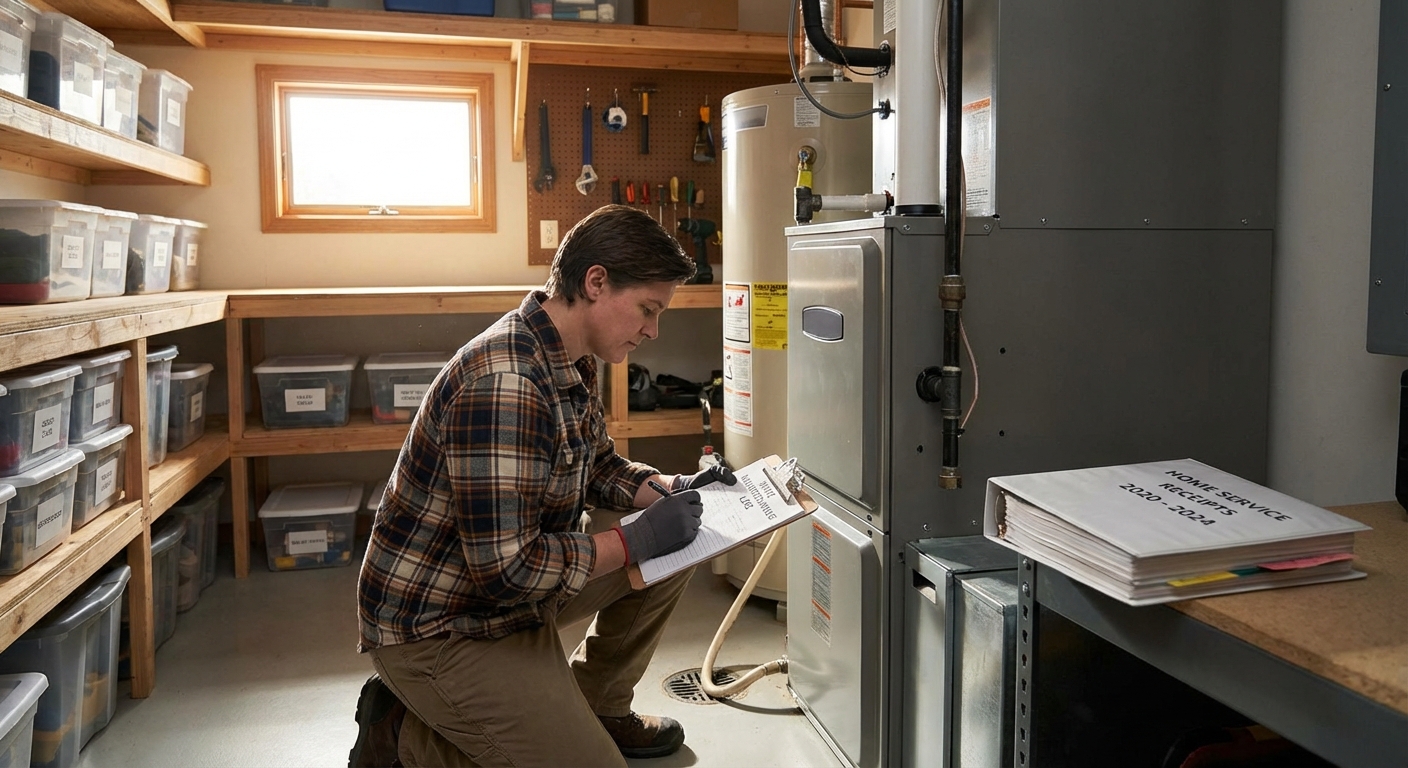
Keep these records in a dedicated binder or digital folder:
- ✅ Dated service receipts from licensed technicians (HVAC tune-ups, plumbing inspections, etc.)
- ✅ Invoices noting work performed, parts used, and technician credentials
- ✅ Before-and-after photos of maintenance work (dirty vs. clean coils, flushed vs. sediment-filled water heater)
- ✅ DIY maintenance logs with dates (a simple note in your phone qualifies for many providers)
- ✅ Manufacturer manuals with highlighted recommended maintenance schedules
- ✅ Home inspection reports from purchase or annual inspections
- ✅ Appliance purchase receipts showing age and model
If you've had a claim denied despite maintaining your systems, our guide on how to appeal a denied claim walks you through the exact steps to fight back effectively, with first-level appeal reversals reported at 40% to 60% in 2026 BBB and state regulator data.
Preventive Maintenance Costs vs. Warranty Savings
Is paying for routine maintenance actually worth it alongside your warranty premiums? The 2026 math strongly says yes.
| Task | Average Annual Cost (2026) | Repair/Replacement Cost Without Warranty |
|---|---|---|
| HVAC professional tune-up | $75-$200 (avg ~$120-$150) | $5,000-$12,500 (full HVAC replacement) |
| Water heater flush + inspection | $100-$200 | $900-$2,500 (tank replacement) |
| Dryer vent cleaning | $100-$180 | $200-$500 (element replacement) |
| Refrigerator coil cleaning (DIY) | $0-$25 | $200-$800 (repair) |
| Annual maintenance total | ~$275-$605 | Up to $12,500+ if uninsured |
A home warranty in 2026 averages roughly $60 to $85 per month according to NerdWallet, Forbes, ConsumerAffairs, and MarketWatch industry data ($720 to $1,020 per year), plus a service call fee that typically runs $75 to $150 per visit (averaging around $108). Spending another $275 to $605 on required preventive maintenance keeps your coverage valid and protects you from repair costs that regularly climb into the thousands. Learn more about how home warranties work before you buy.
Understanding how home warranty furnace coverage works is a perfect example. Furnace replacement now averages about $4,800 to $5,500 nationally in 2026, with gas furnaces running $3,800 to $10,000 and oil furnaces $6,750 to $10,000. But it's only covered if annual maintenance was performed. That $150 tune-up is truly protecting a $5,000+ benefit. The same principle applies to air conditioner coverage, where refrigerant regulations and R-410A phase-outs make replacement even more expensive. Documentation matters even more if you own an older home, so review refrigerator coverage rules and appliance coverage limits for each major item you rely on.
Tips for Staying Compliant Year-Round
- Read your contract's maintenance section first. Highlight every task required for each covered system and appliance.
- Set calendar reminders for every required maintenance task, monthly, quarterly, and annually.
- Always hire licensed professionals for complex work like HVAC tune-ups. DIY doesn't always satisfy warranty requirements.
- Keep receipts immediately. Don't wait until after a claim is filed to try to reconstruct records.
- Follow manufacturer guidelines, not just general advice. Your warranty contract typically references the manufacturer's recommendations by name.
- Take timestamped photos during maintenance. A dated photo of a clean HVAC coil or freshly flushed water heater is powerful evidence.
- Ask technicians to note the system condition on their invoice. Phrases like "system in good working order" provide strong documentation.
Learn more about the step-by-step claims process so you're never caught off guard when it's time to file. And if you want to know whether a home inspection before signing your warranty could protect you further, see our guide on home warranty inspection requirements.
Frequently Asked Questions
Do all home warranty companies require preventive maintenance?
Virtually all home warranty contracts include language requiring homeowners to maintain covered systems and appliances per manufacturer guidelines. The specifics vary by provider, and American Home Shield explicitly covers items regardless of maintenance history or age with no records required. However, most other companies use lack of maintenance as a valid reason to deny claims, so always read the maintenance obligations section of your contract before purchasing a plan.
What happens if I don't have maintenance records when I file a claim?
Without documentation, your warranty provider may deny the claim by arguing the failure was caused by neglect rather than normal wear and tear. Some companies, like American Home Shield and Cinch, are more lenient and cover items even without maintenance records. However, most 2026 providers now specifically request a dated invoice from a licensed professional during the claims review, and "no records, no coverage" is a real risk with stricter companies like Select Home Warranty (roughly 36% denial rate) and Choice Home Warranty (roughly 28% denial rate).
Can a home warranty be completely voided for skipping maintenance?
Skipping maintenance by itself rarely voids your entire home warranty policy. More commonly, it results in individual claim denials for the affected system or appliance. A full policy cancellation typically requires more serious contract breaches, like fraud or non-payment. That said, repeated maintenance-related denials could signal to your provider that you are in breach of your contract terms.
How often does an HVAC system need to be serviced for home warranty compliance?
Most home warranty companies require at least one annual HVAC tune-up performed by a licensed HVAC technician, in addition to filter changes every 30 to 90 days. In 2026, many providers explicitly look for a qualifying invoice within the last 12 months, or they can argue the system wasn't properly maintained. Always check your specific contract, as requirements can differ, and keep the invoice from every service visit as proof of compliance.
Does a home warranty cover the cost of routine maintenance tasks?
Home warranties do not cover the cost of routine maintenance. Tasks like flushing your water heater, replacing air filters, cleaning refrigerator coils, or clearing dryer vents are entirely the homeowner's financial responsibility. Warranties exist to cover unexpected mechanical failures caused by normal wear and tear, not the upkeep required to prevent those failures. Think of maintenance as the price you pay to keep your warranty coverage active and valid.