

Compare Home Warranty Options in Ohio
See what plans you qualify for in less than 2 minutes
What Home Warranties Actually Cover for Energy-Efficient Appliances
Home warranties are designed to protect against the cost of unexpected repairs and replacements when major appliances or systems break down due to normal wear and tear. But as more homes shift toward energy-efficient technology like heat pumps, tankless water heaters, induction cooktops, and Energy Star refrigerators, a critical question emerges: does your warranty keep up?
The short answer is: it depends heavily on your provider and plan tier. Many modern home warranties are expanding to cover energy-efficient and smart appliances, but this is far from universal. Most standard plans cover the mechanical and electrical components of a covered appliance regardless of whether it's an efficient model. This means they'll cover the compressor on an Energy Star refrigerator the same way they'd cover a standard one. What they typically won't do automatically is replace a broken standard unit with a new energy-efficient equivalent.
Here's a general breakdown of what's typically included vs. excluded for energy-efficient appliances:
| Appliance/System | Typically Covered | Typically Excluded |
|---|---|---|
| Energy Star Refrigerator | Compressor, motor, electrical components | Smart display panels, WiFi modules |
| Heat Pump HVAC | Blower motor, circuit boards, compressor | Refrigerant recharge caps, maintenance |
| Tankless Water Heater | Heating elements, controls (with add-on) | Sediment buildup, scale damage, improper installation |
| Induction Cooktop | Heating elements, internal wiring | Smart touch controls, glass surface cracks |
| Solar Water Heater | Rarely covered under standard plans | Solar panels, collectors, specialty components |
For a broader look at what home warranties cover, review your service agreement before purchasing a plan.
Coverage Challenges with High-Efficiency & Eco-Friendly Systems
Newer, high-efficiency technology often introduces complexity that older warranty contracts weren't designed for. This is where many homeowners run into frustrating coverage gaps.
Tankless Water Heaters
Standard tank water heaters have always been easy to warranty. Tankless models are more nuanced. Some providers like American Home Shield include tankless unit coverage across their plan tiers, covering parts and components such as circulating pumps. However, several common issues are routinely excluded:
- Sediment and scale buildup: tankless units require annual flushing, and failure to maintain them can void coverage
- Improper installation: a frequent denial trigger with tankless systems
- Rust, corrosion, or freeze damage: typically excluded across all plan types
- Expansion tanks and exhaust vents: often treated as separate items not included in base coverage
Learn more about water heater warranty coverage and what to expect from your plan.
Heat Pumps
Heat pumps are one of the most popular eco-friendly HVAC upgrades in 2026, and the good news is that most home warranty systems plans include them under the HVAC coverage tier because a heat pump handles both heating and cooling. That said, coverage is subject to important conditions:
- Annual professional inspections are often required to maintain eligibility
- Pre-existing conditions are excluded, which matters for older heat pump installations
- Custom or modified systems may have limited or excluded components
- Age restrictions apply at some providers
HVAC coverage caps are more modest than many homeowners assume. American Home Shield remains the industry benchmark: ShieldGold and ShieldPlatinum publish a $50,000 total limit per agreement term, with $5,000 per covered HVAC system, $2,000 per appliance on Gold, and $4,000 per appliance on Platinum. However, for certain equipment types the limit drops sharply: hot water or steam heating systems, geothermal heat pumps, and water-source heat pumps are capped at just $1,500, and the $10 per pound refrigerant limit is well below current market prices. That's a critical distinction if you own a geothermal or water-source heat pump. For more, see our full HVAC coverage guide.
Induction Cooktops
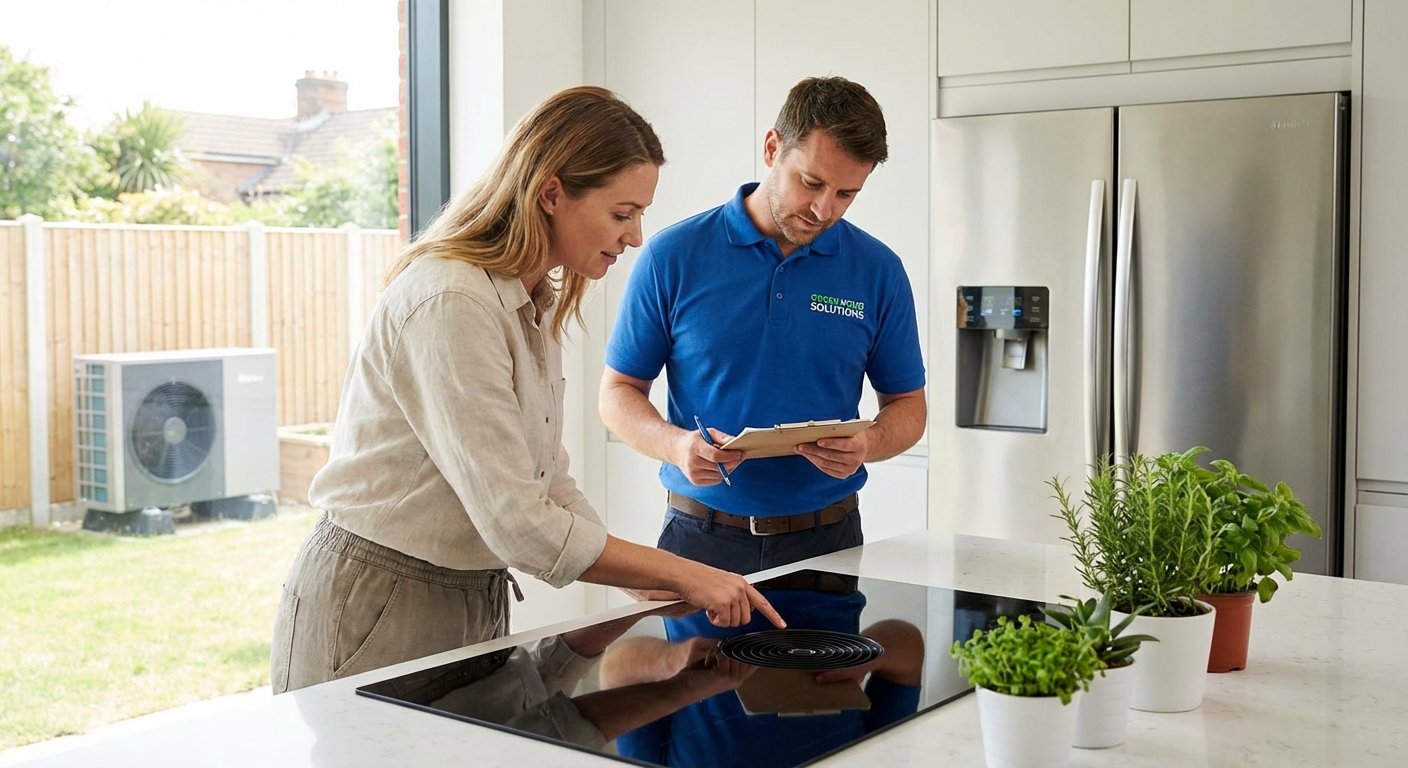
Induction cooktops are a growing trend in eco-conscious kitchens, but they occupy a tricky middle ground in home warranty coverage. Most plans treat induction cooktops similarly to standard ranges. The internal heating elements and wiring may be covered, but the sophisticated glass surface and digital touch controls are often excluded. Always verify that your plan specifically names induction cooktops as covered appliances, since some contracts only reference "ranges" or "ovens" without addressing induction technology. Our appliance coverage guide explains these distinctions in more detail.
Solar Water Heaters
Solar water heaters represent one of the biggest coverage blind spots in the industry. Standard home warranty plans almost universally exclude solar panels, collectors, and the specialty components that make solar water heating systems function. If your home has a solar water heater, you'll likely need a dedicated solar system warranty or manufacturer coverage rather than relying on your home warranty plan.
Green Upgrade Allowances & Which Companies Lead the Way
One of the most important and most misunderstood aspects of energy-efficient appliance coverage is what happens when your covered item needs to be replaced rather than repaired. Our repair vs replace guide walks through the 50% rule most providers use to make this call.
Will They Replace With an Energy-Efficient Equivalent?
Most home warranty providers replace failed equipment with a functional equivalent of similar capacity and type, not necessarily an energy-efficient upgrade. However, in practice, since most new appliances on the market today meet Energy Star or high-efficiency standards, you may receive an efficient replacement simply because it's what's available.
The clearest exception comes from Home Warranty of America's GreenPlus add-on. GreenPlus qualifies homeowners for ENERGY STAR-certified replacement products for certain covered appliances, and its contract specifically lists dishwashers, refrigerators, clothes washers, gas furnaces, and water heaters. Under the GreenPlus rider, heating systems are replaced with a 90% efficiency model and water heaters are replaced with a tankless water heater. Pricing for the rider is modest but varies by source: one 2026 expert review lists GreenPlus at $5.77/month, while another lists it at $7.62 per month as an optional add-on. Note that GreenPlus tankless replacement upgrades are typically capped around $1,500, so verify the ceiling before assuming a full swap will be paid.
Here's how top providers compare for green-friendly coverage:
- American Home Shield (AHS): ShieldGold and ShieldPlatinum publish a $50,000 total limit per agreement term with $5,000 per covered HVAC system, and ShieldPlatinum raises appliance coverage to $4,000 per item versus $2,000 on ShieldGold. Members can access the HVAC Upgrade Program for discounts on top efficient brands.
- First American Home Warranty: First American's Premium plan explicitly lists heat pumps, thermostats, and ductwork as covered items and offers some of the highest per-appliance caps in the industry.
- Home Warranty of America (HWA): The GreenPlus rider is the industry's only true green upgrade guarantee, requiring Energy Star certified replacements on covered items.
- Armadillo Home Solutions: A new 2026 program rewards homeowners for energy-efficient upgrades across HVAC systems, tankless water heaters, and ENERGY STAR appliances, though it is a smaller player than the national brands.
- 2-10 Home Buyers Warranty: Offers appliance discounts through partner brand programs, plus HVAC coverage up to $5,000 per major component.
- Liberty Home Guard: One of the most flexible providers for customizing coverage around efficient systems, with a broad menu of add-ons available across all 50 states.
For a full breakdown of plan types and pricing, see our home warranty options guide.
2026 Trends: How Home Warranties Are Adapting to Sustainable Technology
The home warranty industry is evolving in direct response to the growing number of eco-friendly and smart systems in American homes. Here are the key trends shaping coverage in 2026:
Expanding Coverage for Modern Systems
Home warranty providers are actively working to close the gap between what homeowners have installed and what their warranty actually protects. Select Home Warranty's 2026 outlook analyzes how the market is evolving as homeowners face rising repair costs, aging housing stock, and increasing reliance on smart and energy-efficient home systems. Roughly 82% of providers now offer some form of smart home device coverage, and sustainability-focused plans have grown significantly in recent years.
Key shifts in 2026 include:
- Increased availability of tankless water heater add-ons across more plan tiers
- Growing recognition of induction and high-efficiency cooking appliances in updated contract language
- Integration of IoT sensors and predictive maintenance into home warranty service is becoming more common across major providers
- About 69% of homeowners now choose combination plans that protect both appliances and systems, and coverage remains the most important factor when choosing a home warranty
The R-454B Refrigerant Transition
A major 2026 development that directly affects heat pump and HVAC warranty claims is the shift to A2L refrigerants. New systems now ship with R-454B or R-32 instead of R-410A, at equipment prices roughly 8 to 10% higher than the outgoing generation, and a 2,000 sq ft ducted heat pump prices at $7,750 to $16,000 installed as of mid-2026. A2L-rated components like leak sensors, mitigation valves, and updated indoor coils add 8 to 14% to the bill of materials, and refrigerant cost increases have pushed 2026 pricing on equivalent capacity residential HVAC equipment 18 to 32% higher than 2024. On the repair side, R-454B service stock runs $17 to $20 per pound in mid-2026 (versus $5 to $7 for reclaimed R-410A), and a full recharge after a leak repair on R-454B is $120 to $200 in refrigerant alone plus labor. For an existing covered R-410A system, this means repair bills are climbing while warranty refrigerant caps (like AHS's $10 per pound) have not kept pace.
Smart & Green Technology Add-Ons
A growing number of providers are introducing optional coverage riders specifically for green and smart home technology. While standalone solar panel coverage remains rare in home warranty products, add-ons for solar water heaters, whole-home battery backup systems, and EV chargers are beginning to appear in the marketplace. For more on how smart tech intersects with warranty coverage, read our guide on smart home device warranty coverage.
What Homeowners Are Prioritizing
Homeowners increasingly want broader coverage, especially for high-cost systems like heating, cooling, and electrical, rather than piecemeal protection. Compare bundled options in our home warranty plans comparison.
Understanding home warranty code upgrade coverage can also help you plan for the cost difference when upgrading to a more efficient model, since code-related upgrades and the ongoing R-454B refrigerant transition are commonly excluded from standard plans.
Frequently Asked Questions
Does a home warranty cover Energy Star appliances?
Yes, most home warranties cover Energy Star appliances the same way they cover standard models through protection of mechanical and electrical components that fail due to normal wear and tear. The Energy Star designation itself doesn't change your coverage terms. However, advanced features like WiFi connectivity or digital display panels may require add-ons or may be excluded from standard plans.
Will my home warranty replace a broken appliance with an energy-efficient model?
Not necessarily. Most providers replace failed equipment with a functional equivalent of similar capacity and type. Home Warranty of America's GreenPlus add-on is the notable exception, contractually requiring Energy Star certified replacements on covered dishwashers, refrigerators, washing machines, water heaters, and furnaces. Other companies like 2-10 Home Buyers Warranty and Armadillo Home Solutions offer appliance discount programs that help offset the cost of choosing an efficient replacement.
Are tankless water heaters covered under home warranties?
Many home warranty providers do cover tankless water heaters, either in base plans or through add-ons. American Home Shield and Cinch Home Services are among providers that explicitly include tankless units. However, common exclusions apply, particularly sediment and scale buildup (which requires annual maintenance), improper installation, and rust or corrosion damage. Always confirm tankless coverage before signing a contract, and see our water heater coverage guide for details.
Are heat pumps covered by home warranties?
Most home warranties cover standard air-source heat pumps as part of their HVAC coverage. Providers like First American Home Warranty explicitly list heat pumps among covered components, and American Home Shield offers up to $5,000 per HVAC system across ShieldGold and ShieldPlatinum. Coverage is typically contingent on regular professional maintenance, and pre-existing conditions are excluded. Note that geothermal and water-source heat pumps carry a $1,500 sub-limit at AHS, so verify the cap for your specific system type.
What eco-friendly systems are NOT covered by home warranties?
The most commonly excluded sustainable systems are solar panels and solar collectors, solar water heater specialty components, whole-home battery backup systems, and EV charging equipment, though some providers are beginning to offer add-on riders for these. Induction cooktop glass surfaces and digital control boards are also commonly excluded. When in doubt, call your provider directly and ask whether your specific system model is covered before you need to file a claim.