
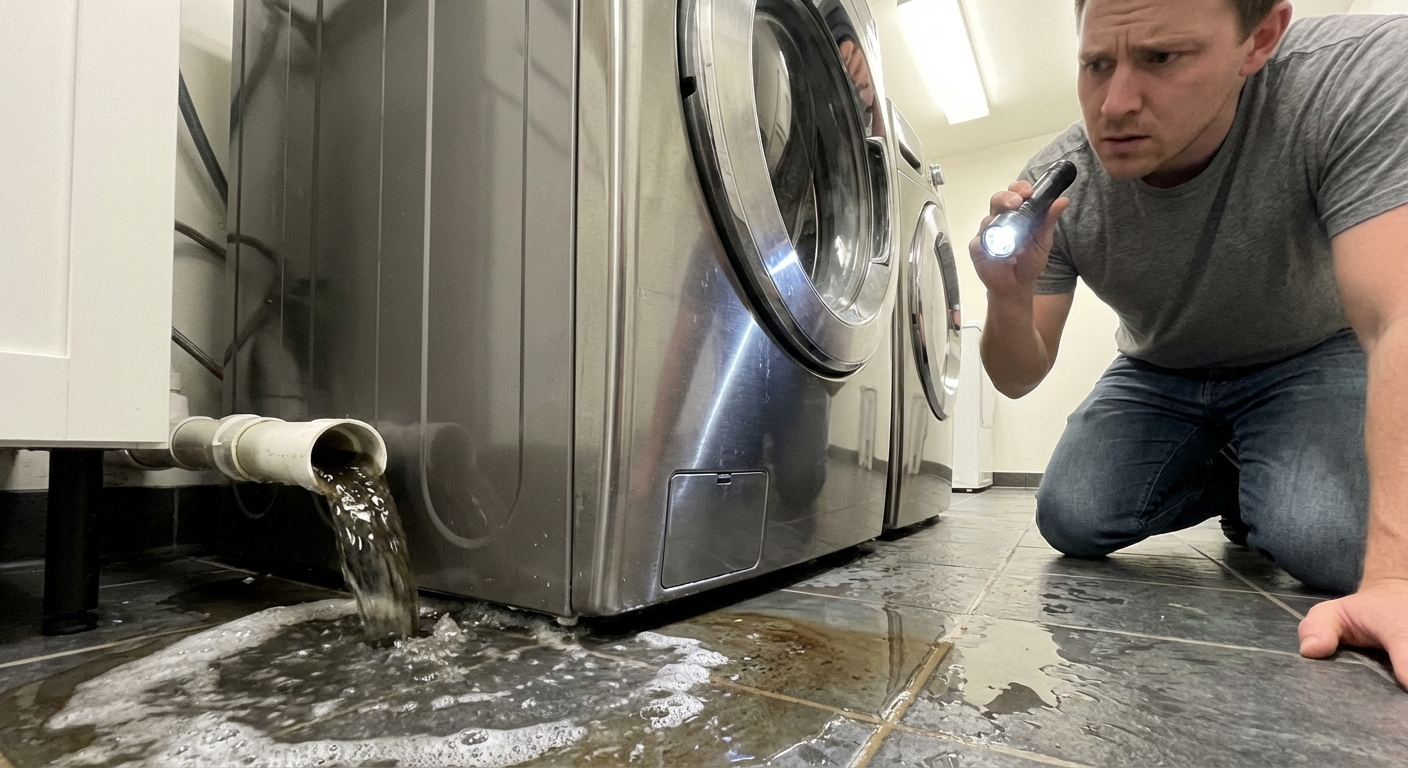
How Washing Machine Drainage Works
Before you can fix a washing machine drain overflow, it helps to understand what's supposed to happen. When your washer completes a wash or rinse cycle, an internal pump forces water out of the tub and through a flexible drain hose. That hose feeds into one of three places: a standpipe, a laundry sink, or a floor drain.
The standpipe is the most common setup. It's a vertical pipe, typically 2 inches in diameter, that connects to a P-trap below, which in turn feeds into your home's main sewer line. A vent pipe allows air into the system so water can flow freely without creating a vacuum. The drain hose from the washer is inserted 6 to 8 inches into the top of the standpipe (but not sealed tight) to allow air to enter and prevent siphoning.
When every component is properly sized and installed, wastewater exits cleanly. When one piece fails, whether it's a clog, a vent issue, or an undersized pipe, water has nowhere to go but back up and out.

Find Trusted & Licensed Plumbers in Ohio
Get matched with companies for your specific needs
Common Causes of Washing Machine Drain Overflow
Understanding the root cause of your washing machine drain backup is the first step to fixing it. Here are the most frequent culprits in 2026:
1. Clogged Standpipe or P-Trap
Over time, lint, soap scum, hair, and detergent residue accumulate inside the standpipe and P-trap. This is the most common cause of a washing machine drain backup. Water pumps out of the washer faster than the clog allows it to drain, causing overflow at the standpipe opening.
2. Improper Standpipe Height or Diameter
The standpipe must fall within a specific height range. Per the current Uniform Plumbing Code (UPC), the standpipe must extend not less than 18 inches and not more than 30 inches above its trap, with the trap roughed in 6 to 18 inches above the floor. That puts the total rise from floor to top of standpipe between roughly 24 and 48 inches. The minimum pipe diameter is 2 inches. If your jurisdiction uses the International Plumbing Code (IPC) instead, the maximum standpipe height above the trap can be as high as 42 inches, so always check your local code.
3. Insufficient Drain Venting
Without adequate venting, air can't enter the drain system. This creates a negative pressure (vacuum) that slows drainage dramatically. A blocked or missing vent is a sneaky culprit behind slow drains that eventually overflow, and it's especially common in remodeled laundry rooms where the vent was never properly extended.
4. Undersized Drain Line
Older homes were often plumbed with 1.5-inch drain lines that can handle roughly 9 gallons per minute. Modern high-efficiency (HE) washers can discharge water at 13 to 17 gallons per minute (and some large-capacity units up to 21 GPM), which easily overwhelms a 1.5-inch pipe. A 2-inch pipe is the current standard minimum, and some manufacturers specify a minimum carry-away capacity of 17 GPM.
5. Shared Drain Line Problems
If your washer shares a drain line with a sink or other fixture, a partial clog downstream can cause water to back up into both. You may notice your washing machine overflowing into a sink when both are in use simultaneously, a clear sign of a shared drain bottleneck.
Here's a quick overview of the most common causes and their severity:
| Cause | DIY Fixable? | Urgency |
|---|---|---|
| Clogged standpipe/P-trap | ✅ Yes | High |
| Improper standpipe height | ✅ Yes | Medium |
| Insufficient venting | ⚠️ Sometimes | Medium |
| Undersized drain line | ❌ No (pro needed) | Medium |
| Shared drain clog | ⚠️ Sometimes | High |
| Drain hose kinked/too deep | ✅ Yes | High |
DIY Troubleshooting: How to Fix Washing Machine Drain Overflow
Many drain backup issues can be resolved without calling a plumber. Always unplug the washer and turn off the water supply before inspecting any drain components. Wear gloves and have towels or a bucket on hand.
Step 1: Inspect the Drain Hose
Pull the drain hose from the standpipe and check for kinks, blockages, or debris at the end. The hose should sit 6 to 8 inches into the standpipe (not sealed tight) with at least a half-inch of clearance around it to allow air flow and prevent siphoning.
Step 2: Try a Baking Soda & Vinegar Flush
For mild clogs caused by soap scum or buildup, pour 1 cup of baking soda into the standpipe followed by 1 cup of white vinegar. Cover the opening and let it fizz for 10 to 30 minutes, then flush with hot (not boiling) water. This is a safe, chemical-free method that works well for early-stage buildup.
Step 3: Use a Drain Snake
If flushing doesn't work, use a 3/8-inch manual drain snake (plumber's auger). Insert it slowly into the standpipe and rotate clockwise when you feel resistance to break up the clog. Pull back slowly to extract the debris, then flush with hot water to confirm flow is restored.
Step 4: Check Standpipe Dimensions
Measure the standpipe height from the floor. It should be between 24 and 48 inches in total height (with the trap positioned appropriately). If it's outside this range, the pipe will need to be cut or extended, a manageable DIY task with the right PVC fittings.
When to Call a Professional
2026 Cost of Fixing a Washing Machine Drain Overflow
Knowing what a repair should cost helps you avoid overpaying and decide when DIY makes sense. Here's what to expect in 2026:
| Fix Type | Typical 2026 Cost |
|---|---|
| DIY materials (hose, fittings, snake) | $20 to $100 |
| Professional clog clearing / simple overflow | $150 to $300 |
| Full washer repair (parts + labor) | $128 to $324 average |
| Drain line upsizing or rerouting | $1,500 to $5,000+ |
| Water damage restoration (moderate) | $1,500 to $4,000 |
| Major restoration (multi-room / mold) | $4,000 to $10,000+ |
A typical one-hour plumber visit to clear a lint-clogged standpipe usually falls in the $150 to $250 range. But if the underlying issue is an undersized 1.5-inch drain line, rerouting or upsizing that pipe can push the bill into the thousands. That's why it pays to catch overflow issues early, before water damages your subfloor or drywall.
Preventing Future Washing Machine Drain Overflows
Once you've resolved the immediate backup, a simple maintenance routine can keep your drain running clear for years.
Monthly Maintenance Checklist
- Flush the standpipe with hot water to dissolve soap and lint residue
- Clean the washer's drain pump filter (accessible via the front panel on most front-loaders)
- Check the drain hose for kinks, proper depth, and secure positioning
- Inspect any lint trap on the drain hose and replace or clean as needed
Upgrade Options Worth Considering
Bulk nylon mesh lint traps (30- to 40-piece kits) are the most common 2026 pick because they're cheap, easy to replace, and capture lint before it reaches the standpipe. Stainless steel mesh sleeves cost more but resist heat and tearing better, and inline micron-rated filter units (roughly $150) are worth it for homes on septic systems.
High-Efficiency Washers and Your Drain System
HE washers use significantly less water per load (roughly 7 to 14 gallons per load vs. 19+ in older top-loaders) but their high-speed pumps discharge that water rapidly. In older homes with 1.5-inch drain lines, this is one of the most common triggers for overflow. If you're upgrading to a modern HE washer and still using an old narrow drain line, plan on a 2-inch line upgrade to prevent backups.
Frequently Asked Questions
Why does my washing machine drain overflow into the sink? This almost always indicates a shared drain line that is either clogged downstream or undersized for the volume of water being discharged. When the washer pumps out water faster than the shared drain can handle it, water travels the path of least resistance, which is often back up into a nearby sink. Try snaking the shared line or running the washer when the sink isn't in use to test the theory. If both back up simultaneously, you likely have a partial clog in the main line or a pipe that's too small.
What is the correct standpipe height for a washing machine in 2026? Under the Uniform Plumbing Code, the standpipe must extend 18 to 30 inches above the trap, and the trap must be roughed in 6 to 18 inches above the floor. That gives a total floor-to-top height of roughly 24 to 48 inches. Homes under the International Plumbing Code may allow up to 42 inches above the trap, so check your local code. If the pipe is too short, water overflows before it drains. If it's too tall, your washer's pump may not have enough power to push water up effectively.
Can I use Drano to unclog my washing machine drain? It's generally not recommended. Harsh chemical drain cleaners like Drano can corrode PVC pipes, which are standard in most modern laundry drain systems. A safer approach is a baking soda and vinegar flush for mild clogs, or a manual drain snake for more stubborn blockages. For repeated clogs, a professional inspection is a smarter investment than repeated chemical treatments.
How much does it cost to fix a washing machine drain overflow in 2026? A simple clog or overflow fix by a licensed plumber typically runs $150 to $300 in 2026, with the national average washer repair around $204. DIY parts and tools usually cost $20 to $100. Major work like rerouting or upsizing an old 1.5-inch drain line can range from $1,500 to $5,000 or more, depending on wall access and pipe layout.
Does my drain system need to be upgraded for a high-efficiency washer? Possibly. Modern HE washers can discharge 10 to 17 gallons per minute (some large-capacity units up to 21 GPM), while a 1.5-inch drain line only handles about 9 GPM. If your home still has a 1.5-inch line, upgrading to a 2-inch standpipe is strongly recommended. If your setup already meets the 2-inch minimum and the standpipe is within the correct height range, your drain system should work fine with any modern HE washing machine.