
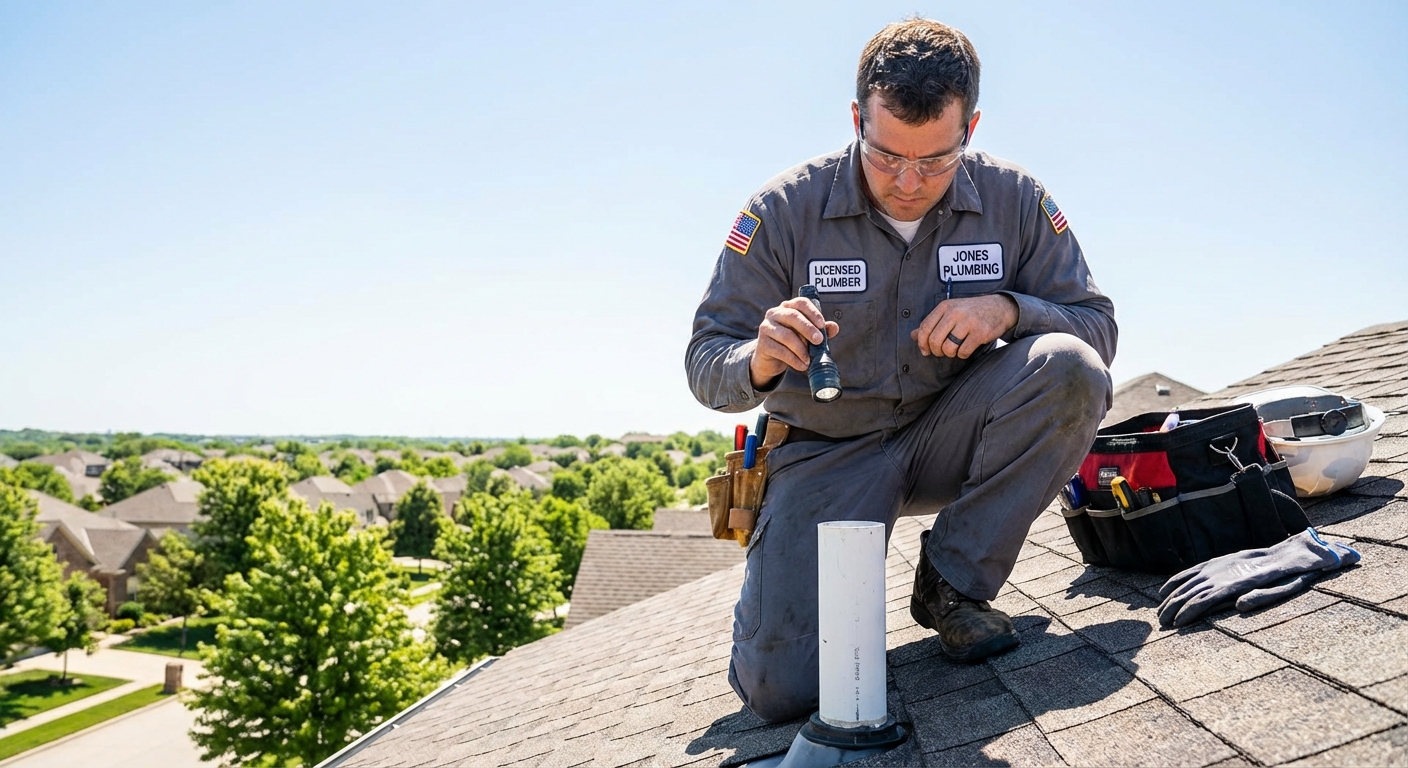
How a Plumbing Venting System Works
Your home's plumbing is made up of two invisible networks working together: the drain-waste system that carries water out, and the vent system that keeps that water moving correctly. When water rushes down a drain, it creates a partial vacuum, a low-pressure zone, behind it. Without air entering the pipe to equalize that pressure, the vacuum can slow drainage, trigger gurgling sounds, and even suck the water right out of your P-traps.
P-traps (the U-shaped bends under sinks and tubs) hold a small reservoir of water that physically blocks sewer gases like methane and hydrogen sulfide from entering your living space. The plumbing vent system introduces fresh air into drain pipes to maintain near-atmospheric pressure throughout the system, preserving those trap seals and allowing wastewater to flow freely and safely.
Vent pipes typically rise vertically from a drain connection, slope back to prevent liquid from pooling inside them, and terminate above the roofline where sewer gases dissipate harmlessly into the open air.

Find Trusted & Licensed Plumbers in Ohio
Get matched with companies for your specific needs
Types of Plumbing Vents
Not every home uses the same venting approach, and the right type depends on your layout, local code, and the fixtures being served. Here's a breakdown of the most common vent types in residential plumbing:
True Vent (Individual/Conventional Vent)
The most traditional option, a true vent is a dedicated dry pipe (meaning it carries no wastewater) that connects directly from a fixture's drain to the main vent stack and exits through the roof. It's the gold standard for reliable airflow and is found in the vast majority of single-family homes. For a deeper look at stack design, see our vent stack installation guide.
Wet Vent
A wet vent serves double duty as both a drain pipe and a vent pipe for multiple fixtures, typically within a bathroom group (sink, toilet, shower). Because upstream drainage provides air for downstream fixtures, this approach can eliminate extra roof penetrations. The 2024 International Plumbing Code (IPC) allows one wet vent for up to two bathroom groups on the same floor, with specific diameter requirements to handle the dual role.
Air Admittance Valve (AAV)
An AAV, sometimes called a Studor vent or mechanical vent, is a one-way valve installed under sinks or inside walls. It opens to admit air when negative pressure builds during drainage, then seals shut to prevent sewer gases from escaping. AAVs are especially popular in remodels or island sink installations where running a vent pipe to the roof is not practical.
Under the 2024 IPC, AAVs complying with ASSE 1051/1050 are explicitly permitted, but rules vary widely at the state and local level. Most IPC-based states (including Florida, Texas, Pennsylvania, Colorado, Virginia, and Illinois) allow them by right. Minnesota still prohibits AAVs, and many UPC-based jurisdictions (parts of California, Oregon, and Washington) restrict their use unless the system is engineered by a professional or an alternative-methods appeal is approved. Always confirm with your local building department before installing one.
Other Vent Types
| Vent Type | Best Used For |
|---|---|
| Common Vent | Two back-to-back fixtures (e.g., double sinks) sharing one stack |
| Loop / Island Vent | Kitchen island sinks where wall venting isn't accessible |
| Circuit Vent | Multiple fixtures in a row (e.g., apartment bathrooms) |
| Auxiliary (Re-vent) | Supplemental pipe connecting a branch drain to the main stack |
Plumbing Vent Code Requirements & Sizing
Plumbing vent systems in the United States are governed primarily by the 2024 International Plumbing Code (IPC) and the 2024 Uniform Plumbing Code (UPC), with local jurisdictions sometimes adding their own amendments. Both codes share the same fundamental goal: keeping pressure differentials within any trap to no more than 1 inch of water column (249 Pa), so the trap seal depth never drops below 1 inch.
Key 2024 IPC Rules to Know
- Every trap must be vented, either individually or via an approved common/wet vent arrangement.
- Minimum vent pipe diameter is 1¼ inches, and a vent can never be smaller than half the diameter of the drain it serves.
- Vents over 40 feet in developed length must be increased by one nominal pipe size for the entire run.
- Open roof terminations must extend not less than 6 inches above the roof surface.
- Individual vent connections must be made at least 6 inches above the flood-level rim of the highest fixture served.
- Vent terminations must be located safely away from windows, doors, and air intake openings (typically 10 feet horizontally).
For a broader look at avoiding failed inspections, review common plumbing code violations and how to fix them.
Minimum Vent Pipe Sizing (2024 IPC)
| Application | Minimum Pipe Diameter |
|---|---|
| Individual fixture vent (lavatory, sink) | 1.25 inches (32 mm) |
| Branch vent (2+ fixtures) | 1.5 to 2 inches |
| Stack vent (typical residential, moderate DFU load) | 2 to 3 inches |
| Main building drain/stack (large systems) | 3 to 4 inches |
DFU = Drainage Fixture Unit, a standardized measure of fixture flow load used in plumbing calculations.
Maximum Trap-to-Vent Distance (2024 Codes)
One of the most commonly misunderstood rules is how far a fixture trap can sit from its vent. The IPC and UPC differ noticeably:
| Trap Size | 2024 IPC (max distance) | 2024 UPC (max distance) |
|---|---|---|
| 1¼ inch | 5 feet | 2 feet 6 inches |
| 1½ inch | 6 feet | 3 feet 6 inches |
| 2 inch | 8 feet | 5 feet |
| 3 inch | 12 feet | 6 feet |
| 4 inch | 16 feet | 10 feet |
Both codes also require the vent to sit at least two pipe diameters downstream of the trap weir (so 3 inches minimum for a 1½-inch trap arm), otherwise the trap can be siphoned dry.
Common Venting Problems, Symptoms & When to Call a Pro
Even a correctly installed plumbing vent system can develop problems over time, and knowing the warning signs can save you from a much bigger (and costlier) issue. A key rule of thumb: a vent problem usually shows up as a whole-system issue affecting multiple fixtures, not just one clogged drain.
Warning Signs of Venting Problems
Slow Drains: When venting fails, vacuum pressure slows water movement across multiple fixtures simultaneously, a telltale difference from a regular single-fixture clog.
Gurgling Sounds: Air fighting to enter through the drain path creates characteristic "glug-glug" bubbling sounds in pipes and toilet bowls as the system struggles to equalize pressure.
Sewer Odors: A blocked vent causes negative pressure to siphon the water seal right out of P-traps, leaving a direct open path for hydrogen sulfide and methane gases to enter living areas. Learn more about diagnosing a sewer gas smell in your house.
Common Causes of Vent Blockages
- Debris buildup: Leaves, twigs, and pine needles clogging the roof vent opening
- Animal/insect nests: Birds, wasps, and squirrels are common culprits
- Ice dams: In cold climates, moisture in vent pipes can freeze and seal the opening
- Cracked or corroded pipes: Aging cast iron or failed PVC joints from poor support
- Improper installation: Undersized pipes, dead-end vents, or insufficient roof clearance
2026 Vent Repair Cost Snapshot
| Type of Work | Typical 2026 Cost |
|---|---|
| Minor roof vent / boot repair | $300 to $800 (avg $550) |
| Roof vent replacement | $289 to $823 (avg $497) |
| Roof vent installation per piping run | $640 to $784 |
| Vent pipe replacement | $500 to $5,000 (avg $1,500) |
| Rerouting a plumbing vent | ~$1,500 plus $300 to $900 for hole repair |
| Licensed plumber hourly rate | $45 to $200 |
DIY vs. Hiring a Professional
| Situation | DIY Appropriate? | Call a Plumber? |
|---|---|---|
| Visible debris at roof vent opening | Yes, if comfortable on the roof | Optional |
| Gurgling in one fixture, recent clog | Try a drain snake first | If snake fails |
| Multiple fixtures gurgling or slow | No | Yes |
| Sewer odors throughout the home | No | Yes, promptly |
| Adding a new fixture or vent line | No | Yes, permit required |
| Suspected cracked or collapsed vent | No | Yes, camera inspection needed |
For complex plumbing vent problems like persistent sewer gas smells, system-wide slow drainage, or any installation requiring a permit, a licensed plumber with a drain camera and proper tools is your safest and most cost-effective option.
Frequently Asked Questions
What is the purpose of a plumbing vent system?
A plumbing vent system regulates air pressure inside your drain pipes so that wastewater flows freely and P-trap seals remain intact. Without venting, negative pressure builds behind flowing water, which slows drainage and can siphon water out of traps, allowing dangerous sewer gases to enter your home. Think of it like a straw with your finger over the top: uncover the top and the liquid flows. The vent is that open top for your plumbing.
How far can a drain be from a vent pipe?
It depends on which code your jurisdiction has adopted. Under the 2024 IPC, a 1½-inch trap arm can run up to 6 feet from its vent, while the 2024 UPC limits the same trap arm to 3 feet 6 inches. Larger pipe sizes allow longer runs under both codes, but always confirm with your local building department since amendments are common.
Are air admittance valves (AAVs) allowed by code?
AAVs are permitted under the 2024 IPC and in most IPC-based states when installed per ASSE 1051/1050 standards. However, Minnesota still prohibits them outright, and many UPC-based jurisdictions like parts of California and Oregon restrict them unless an engineered design or alternative-methods approval is obtained. Before installing one, verify that your local code allows it and that the device is accessible and installed above the flood rim of the fixture it serves.
Can I install a plumbing vent myself?
Minor maintenance like clearing visible debris from a roof vent opening can be a DIY task if you're comfortable working at heights. However, any new vent installation, rerouting, or repair typically requires a building permit and must meet local plumbing code. Incorrect vent installation is one of the most common code violations flagged during home inspections and can cause serious drainage and air quality problems.
How do I know if my vent pipe is clogged vs. my drain pipe?
The easiest indicator is whether one fixture or multiple fixtures are affected. A clogged drain pipe typically causes slow drainage or a backup in a single fixture. A clogged vent pipe usually causes gurgling sounds, slow drainage, or odors in multiple fixtures throughout the home simultaneously, because the entire system is starved of the air it needs to equalize pressure properly.