
What Are PFAS and Why Should Homeowners Care?
PFAS (per- and polyfluoroalkyl substances) are a class of more than 12,000 synthetic chemicals built around an extremely strong carbon-fluorine bond, one of the most stable bonds in chemistry. That stability is exactly the problem. PFAS don't break down in the environment, in soil, in water, or in your body. They accumulate over time, which is why scientists nicknamed them "forever chemicals."
They've been used for decades in non-stick cookware, water-repellent clothing, food packaging, stain-resistant carpets, and firefighting foam. Through industrial discharge and everyday use, PFAS have leached into groundwater, rivers, and public water systems across the country.
How Widespread Is PFAS Contamination?
The EPA's own data confirms PFAS contamination in all 50 states, the District of Columbia, and four U.S. territories, with roughly 9,728 confirmed PFAS sites tracked nationwide as of March 2026. Different analyses rank "worst" states differently depending on whether they measure the number of systems above federal limits, peak concentrations, or population exposed.
| Ranking Method | Worst-Affected States |
|---|---|
| Most systems above limits | New Jersey (~556), Massachusetts (439), California (263), New Hampshire (202), Pennsylvania (125) |
| Highest concentrations | Michigan (highest in the nation), Alabama (up to 346 ppt in some counties) |
| Cancer incidence link | North Carolina (Brunswick County tops the list), plus Iowa, Kentucky, Louisiana, South Carolina |
| Highest detection counts | Maryland, Georgia, Florida, North Carolina, California, Alabama |
If you're on a private well, you bear 100% of the responsibility for testing and treating your own water. Public utilities are not involved.
Health Risks of PFAS Exposure
The health consequences of long-term PFAS exposure are serious and well-documented. Agencies including the EPA, CDC, and leading research universities have linked PFAS ingestion to:
- Cancer, including kidney, testicular, and prostate cancers. PFOA is classified as carcinogenic by the WHO
- Liver damage and elevated cholesterol
- Thyroid disease and endocrine disruption
- Reproductive harm, including infertility, preeclampsia, and low infant birth weight
- Weakened immune response, especially reduced vaccine efficacy in children
- Type 2 diabetes and early-onset puberty
Studies estimate that PFAS in drinking water contribute to more than 6,800 cancer cases per year in the United States. Children, pregnant people, and those near industrial sites face the highest risk.

Find Trusted & Licensed Plumbers in Ohio
Get matched with companies for your specific needs
EPA PFAS Regulations: The 2026 Shakeup
The federal PFAS drinking water landscape looks very different than it did just a year ago. In April 2024, the EPA finalized the first-ever enforceable Maximum Contaminant Levels (MCLs) for six PFAS compounds. Then in May 2026, the EPA proposed pulling back parts of that rule. Here's what that means for homeowners.
What's Still in Force
As of mid-2026, the 2024 rule remains the binding federal standard because the May 2026 changes are still proposed. A federal court also denied EPA's motion to vacate the existing limits in January 2026, keeping the status quo in place.
| PFAS Compound | EPA MCL (parts per trillion) | Status |
|---|---|---|
| PFOA | 4.0 ppt | Still enforceable |
| PFOS | 4.0 ppt | Still enforceable |
| PFNA | 10.0 ppt | Proposed for rescission |
| PFHxS | 10.0 ppt | Proposed for rescission |
| HFPO-DA (GenX) | 10.0 ppt | Proposed for rescission |
| Mixtures (PFBS, PFNA, PFHxS, GenX) | Hazard Index of 1 | Proposed for rescission |
What the EPA Proposed in May 2026
Two proposed rules were published in May 2026 and are open for public comment through summer 2026:
- PFOA/PFOS Compliance Extension Rule: Would leave the 4 ppt limits for PFOA and PFOS unchanged, but let eligible public water systems (typically small, rural, or disadvantaged utilities) push their compliance deadline from April 26, 2029 to April 26, 2031.
- PFAS Rescission Rule: Would eliminate the federal 10 ppt limits for PFHxS, PFNA, and GenX, along with the Hazard Index for PFBS mixtures. If finalized, federal PFAS drinking water regulation would focus only on PFOA and PFOS.
What's Happening at the State Level
Because federal action has slowed, states are moving faster. As of mid-2026, at least 31 states are actively considering PFAS legislation, and several have already gone well beyond the federal floor.
- New Mexico (HB 212) enacted one of the most sweeping bans in the country in 2025, phasing out intentionally added PFAS across nearly all consumer products by 2032.
- Illinois (SB 727) now requires the state Pollution Control Board to set its own PFAS MCLs for community water supplies.
- Maine (HP 681) signed PFAS MCLs into state law, and Maine, Minnesota, Vermont, and Rhode Island are all moving on comprehensive PFAS product bans.
- New York signed a menstrual products PFAS ban in December 2025 and is banning intentionally added PFAS in firefighting PPE by 2028.
- Massachusetts, New Jersey, and New Hampshire already have their own PFAS drinking water standards, some stricter than the federal MCLs.
How to Test Your Home Water for PFAS
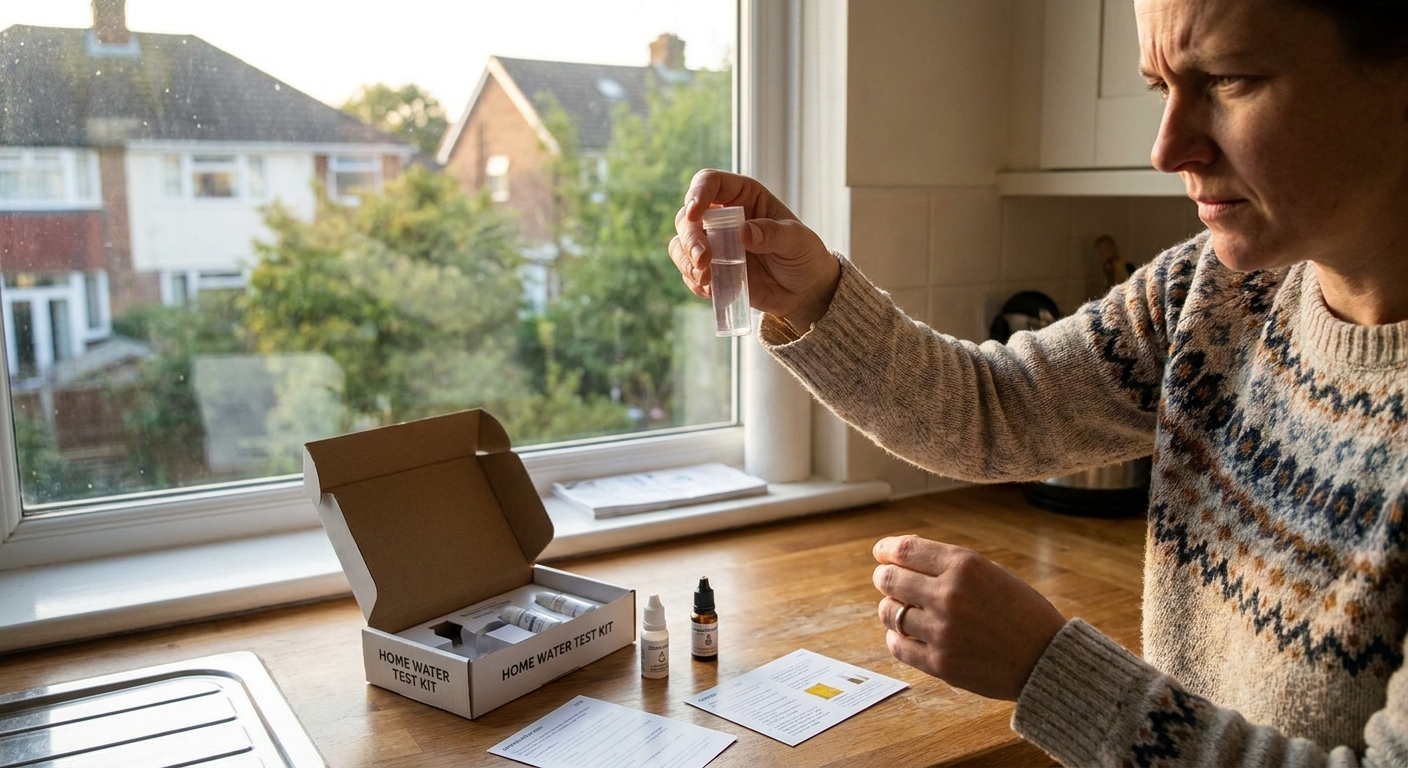
Understanding whether PFAS are present in your water is the critical first step. True at-home PFAS analysis isn't possible with consumer test strips. You'll need a certified laboratory to get accurate results. Our home water quality testing guide walks through the broader process for any water contaminant.
Step-by-Step: Getting Your Water Tested
- Purchase a certified PFAS sampling kit from a reputable provider. Kits include contamination-free sample containers and detailed instructions.
- Flush your pipes before collecting the sample, following kit instructions exactly to avoid cross-contamination.
- Mail your sample to the lab for analysis using EPA-approved methods (typically Method 537.1, 533, or 1633). Labs test for compounds like PFOA, PFOS, PFNA, PFHxS, and GenX, reporting results in nanograms per liter (ng/L), which is equivalent to ppt.
- Review your results against EPA MCLs and your state's standards.
What Does PFAS Testing Cost in 2026?
| Testing Type | Estimated Cost |
|---|---|
| Screening kit (e.g., Cyclopure) | Around $85 (not compliance-grade) |
| Mail-in certified PFAS panel (Tap Score, WaterCheck) | $175 to $299 |
| State-certified lab analysis | $250 to $500 per sample |
| Comprehensive panel (30+ compounds, EPA Method 537.1) | $299 to $600 |
| Rush turnaround or extended panel (>20 PFAS) | Up to $1,100 |
PFAS Filtration & Removal: Your Best Options
Once you know your PFAS levels, you have two primary categories of filtration to consider: point-of-use (POU) systems that treat water at a single tap, and whole-house (point-of-entry) systems that treat all water entering your home.
Point-of-Use vs. Whole-House Systems
The Most Effective Filtration Technologies
1. Reverse Osmosis (RO), the Gold Standard
RO systems force water through a semi-permeable membrane, achieving 99%+ removal of PFOA, PFOS, and most other PFAS compounds. Top-performing units like the Waterdrop G3P800 (roughly $300 to $700 depending on retailer) and AquaTru Classic or Carafe (about $349 to $449) have been independently tested to bring a full 14-analyte PFAS panel to non-detectable levels. Budget-friendly options like the iSpring RCC7AK ($220) and APEC ROES-50 ($200 to $300) also deliver 99%+ removal.
2. Activated Carbon Filtration
Granular activated carbon (GAC) and carbon block filters certified to NSF P473 are effective at adsorbing longer-chain PFAS like PFOA and PFOS. Under-sink units like the Aquasana AQ-5300+ ($150 to $190) and Clearly Filtered 3-Stage ($250) hit 96% to 99% PFAS removal without RO's wastewater. Whole-house catalytic carbon systems like the SpringWell CF+ treat all taps at around $120 per year in maintenance.
3. Ion Exchange Resins Anion exchange resins target a wider range of PFAS, including short-chain compounds that carbon alone may miss. Often paired with other technologies in advanced whole-house systems.
Cost Summary by System Type
| System Type | Upfront Cost | Annual Filter Cost | Best Use |
|---|---|---|---|
| Certified pitcher (Clearly Filtered, ZeroWater) | $25 to $100 | $80 to $150 | Budget drinking water |
| Countertop RO (AquaTru) | $349 to $449 | ~$100 | Renters, no plumbing changes |
| Under-Sink RO | $200 to $700 | $60 to $170 | Drinking/cooking |
| Under-Sink Carbon (Aquasana, Clearly Filtered) | $150 to $250 | $100 to $200 | No-wastewater alternative |
| Whole-House Carbon | $800 to $2,000 | $120 to $400 | All home water |
| Whole-House + POU Combo | $1,500 to $3,500+ | $300 to $500 | Maximum protection |
Which Plumbing Professionals Can Help With PFAS Testing & Remediation?
Navigating PFAS remediation on your own can be overwhelming. The right professional can test your water, recommend a properly sized system, and install it correctly, often saving you money versus DIY errors.
Who to Call
- Water Treatment Contractors: These specialists focus exclusively on water quality. They can coordinate certified lab testing, recommend NSF-certified PFAS filtration, and handle installation. Look for contractors associated with the Water Quality Association (WQA).
- Licensed Plumbers with Water Treatment Experience: Many licensed plumbers now offer water quality assessments alongside their standard services. They can install whole-house point-of-entry systems that require integration with your main supply line.
- State-Certified Water Testing Labs: Not a plumber, but an essential resource. Your state environmental or health department can direct you to accredited labs for PFAS analysis. Michigan, Massachusetts, Maine, and Minnesota all publish public lists of certified labs that accept homeowner samples.
What to Ask Before Hiring
- Are you familiar with NSF/ANSI 58 and NSF P473 certifications?
- Do you offer PFAS-specific water testing before recommending a system?
- Can you provide references from PFAS remediation projects?
- Do the systems you install carry third-party PFAS reduction certifications?
For more on evaluating water quality before you call a professional, revisit our water quality testing guide to understand what questions to ask and what to expect.
Frequently Asked Questions
What are PFAS and where do they come from?
PFAS (per- and polyfluoroalkyl substances) are a class of over 12,000 man-made chemicals used in industrial and consumer products since the 1950s. They enter water supplies through industrial discharge, leaching from contaminated sites, and the use of PFAS-containing products like firefighting foam. Because their carbon-fluorine bonds are virtually indestructible, they persist indefinitely in the environment and accumulate in the human body.
Did the EPA weaken PFAS rules in 2026?
The EPA proposed rolling back some PFAS drinking water standards in May 2026, specifically the limits for PFHxS, PFNA, GenX, and PFBS mixtures. However, these are only proposed changes, not finalized. The 4 ppt limits for PFOA and PFOS remain in place, and utilities must still plan for the April 2029 compliance deadline unless the proposed 2031 extension is finalized.
Do I need to test my water if I'm on a public water system?
If you're on a public water system, your utility is now required to test and report PFOA and PFOS levels under the 2024 EPA rule. However, contamination can occur in your home's plumbing after the water leaves the municipal system. Reviewing your annual Consumer Confidence Report is a good start, but homeowners with older pipes or those in high-risk areas may still want independent testing. Well water users must test entirely on their own since there are no automatic protections.
What is the most effective filter for removing PFAS?
Reverse osmosis (RO) systems are the gold standard, removing 99% or more of PFOA, PFOS, and most other PFAS compounds. The Waterdrop G3P800 and AquaTru Classic are consistently top-rated for verified PFAS reduction in independent tests. Whole-house activated carbon systems like the SpringWell CF+ are also effective and protect all water in the home. Always choose systems certified to NSF/ANSI 58 or NSF P473.
How much does it cost to remove PFAS from home water?
A certified pitcher filter starts around $25 to $100, while under-sink RO systems range from $200 to $700. Whole-house systems cost $800 to $3,500 or more, with professional installation adding $500 to $1,500. Annual filter replacement runs $100 to $500 depending on the system. Some states, including New York, now reimburse up to $5,000 for filtration systems and $1,500 for ongoing testing for eligible private well owners.