
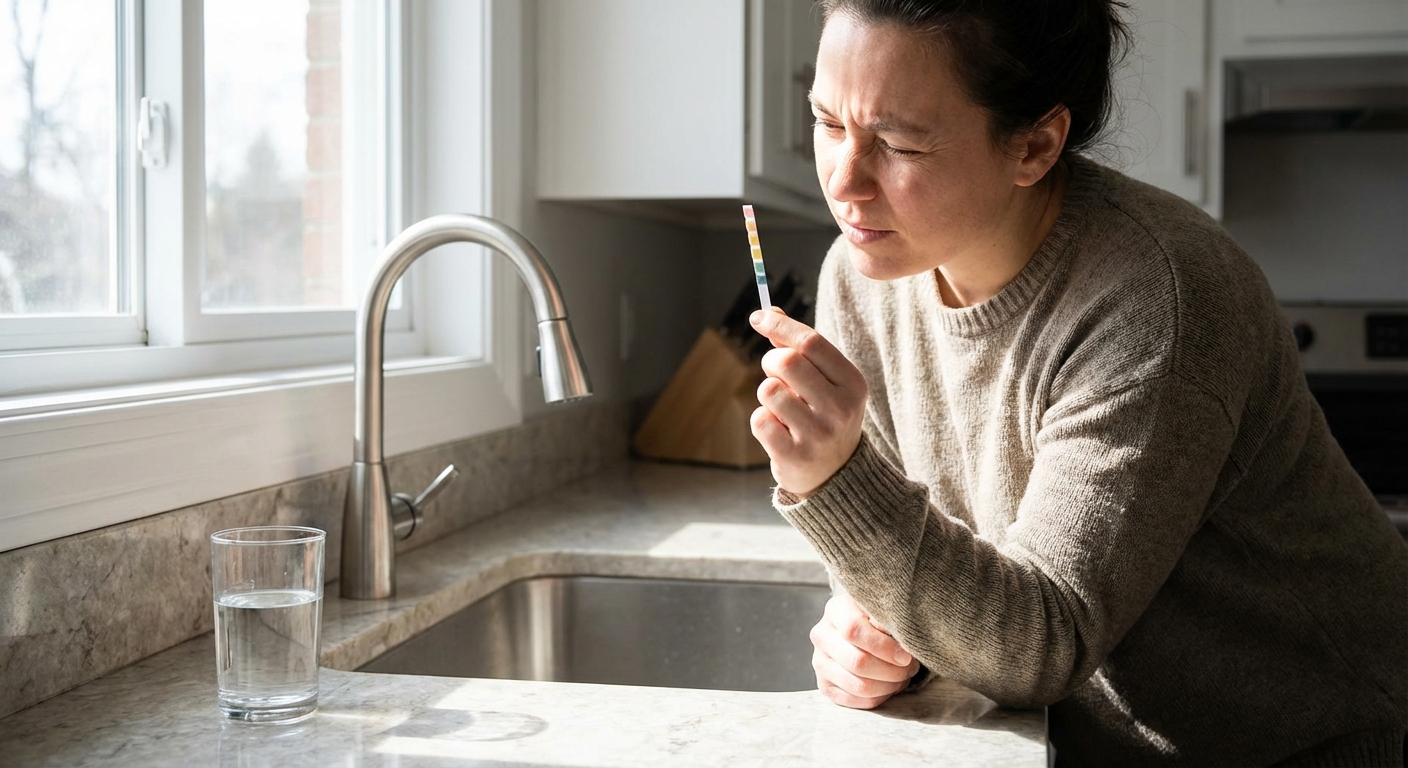
When Should You Test Your Home's Water Quality?
Water quality isn't something most homeowners think about until something feels or smells off. But by then, you may have been drinking or bathing in compromised water for months. Knowing when to test is the first step toward protecting your household.
Key Triggers for Testing
There are several situations where testing is strongly recommended:
- Moving into a new home. Especially if the home has older plumbing or a private well. You don't know the history of the pipes or the local groundwater.
- Well water users. Private wells are not regulated by the EPA. You are fully responsible for your own water safety.
- Older homes with legacy plumbing. Homes built before 1986 may have lead solder or lead service lines. Under the EPA's Lead and Copper Rule Improvements (LCRI), utilities must complete full replacement of all lead and galvanized-requiring-replacement service lines within 10 years of the November 1, 2027 compliance date. For a broader look at aging systems, see our guide to old house plumbing problems.
- Changes in taste, odor, or color. Sulfur smells, metallic taste, or cloudy or discolored water are warning signs that need immediate attention.
- Health concerns. Gastrointestinal illness in multiple household members warrants urgent testing.
- After local contamination events. Flooding, nearby chemical spills, or agricultural runoff can infiltrate groundwater.
- New infant or pregnant household member. Elevated nitrates are especially dangerous for infants and should be checked before any formula feeding begins.
Recommended Testing Schedule
| Situation | Recommended Frequency |
|---|---|
| Private well water | At least once per year (bacteria + nitrate) |
| Well after repairs or flooding | Immediately after event |
| Municipal water (older home) | Every 1 to 2 years for lead/copper |
| Municipal water (new construction) | Review annual CCR + test if concerns arise |
| Homes with infants/pregnant women | Test nitrates before formula use |
| After installing a treatment system | Test every 6 months to verify performance |
| PFAS screening (near industrial/military site) | Every 3 to 5 years, or after any advisory |

Find Trusted & Licensed Plumbers in Ohio
Get matched with companies for your specific needs
What Does a Water Quality Test Actually Check?
Not all tests are equal. Depending on your home's age, location, and water source, you'll want to test for different contaminants. Here's a breakdown of the most common parameters and why they matter.
Common Water Contaminants Explained
Bacteria (Coliform & E. coli)
The EPA standard is zero detectable coliform per 100 mL of water. Any detection of E. coli is a serious red flag; it indicates fecal contamination and requires immediate action. Legionella is now the most common cause of drinking-water outbreaks in the U.S., followed by Campylobacter, Giardia, and norovirus.
Lead
Under the current Lead and Copper Rule Revisions (LCRR), the lead action level remains 15 ppb, and any exceedance triggers Tier 1 public notification within 24 hours. Starting November 1, 2027, the EPA's Lead and Copper Rule Improvements (LCRI) will lower the action level to 10 ppb, require stronger corrosion control, and mandate additional public outreach for systems that exceed the level three or more times in a five-year period. Lead typically leaches from corroded pipes, fixtures, and solder rather than the source water. There is no safe level of lead exposure for children.
Nitrates
The EPA maximum contaminant level is 10 mg/L. High nitrate levels often come from fertilizers or septic systems. They're particularly dangerous for infants under 6 months, potentially causing "blue baby syndrome" (methemoglobinemia).
PFAS ("Forever Chemicals")
The EPA's 2024 PFAS rule set enforceable limits of 4 parts per trillion (ppt) for PFOA and PFOS, with initial monitoring required by 2027 and compliance by April 26, 2029. On May 18, 2026, EPA proposed two new rules: one would rescind the federal limits for PFHxS, PFNA, HFPO-DA (GenX), and the Hazard Index mixture, while the second would create an exemption process letting eligible public water systems apply for two extra years (until April 26, 2031) to comply with the PFOA and PFOS limits. As of July 2026, neither proposal has been finalized. The public comment period closed on July 20, 2026, and the 2024 rule remains in force until EPA issues a final decision. Systems that don't opt in to the proposed extension would still need to meet the original 2029 deadline. This regulatory uncertainty makes independent testing more important than ever if you want to know your true PFAS exposure. Learn more about PFAS testing and removal.
pH
Safe drinking water should fall between 6.5 and 8.5. Acidic water below 6.5 corrodes pipes and can cause heavy metals to leach into your water. High pH water can cause scale buildup.
Hardness (Calcium & Magnesium)
Hard water isn't a health risk, but it damages appliances, leaves scale on fixtures, and makes soaps less effective. Water above 7 grains per gallon (gpg) is considered hard. For more on how to fix it, see our guide to hard water treatment options.
Other Contaminants Worth Testing
- Arsenic. Common in well water in certain regions.
- Manganese. A newer concern for private wells, especially for infants.
- Chlorine byproducts (TTHMs, HAA5). Found in treated municipal water and affect millions of households.
- Volatile Organic Compounds (VOCs). Can enter groundwater from industrial contamination.
- 1,4-Dioxane. A probable human carcinogen found in numerous monitored public systems.
DIY Test Kits vs. Professional Laboratory Testing
Once you've decided to test, you need to choose how. There are two main approaches: DIY home test kits and professional laboratory analysis. Each has its place depending on your goals and budget.
DIY Home Test Kits (2026 Pricing)
- Test strips. Kits like Health Metric or Watersafe test 9 parameters for under $40. Best for pH, hardness, chlorine, and basic screening.
- Digital TDS meters. Measure total dissolved solids in seconds. Useful for monitoring RO or filter systems. Cost: $10 to $30.
- Contaminant-specific kits. Lead-only or bacteria-only DIY kits run about $16 to $20 at major retailers.
- All-in-one DIY kits. The Safe Home Ultimate Water Quality Test Kit retails for around $28 to $35 and covers 14 parameters with up to 25 uses for most tests.
- Mail-in lab kits. Bridge the gap between DIY speed and lab accuracy. 2026 pricing from Tap Score: Essential City Water Test ($189, 49 analytes), Essential Well Water Test ($209, 54 analytes), and EPA 8327 PFAS Screen ($274, 24 PFAS compounds).
When to Use a Professional Lab
For private wells, homes with lead concerns, new homebuyers, and households with infants or immunocompromised members, certified lab testing is essential. Labs use EPA-approved methods 537.1, 533, and 1633 for PFAS and can detect contaminants at parts-per-trillion levels that home strips simply can't reach.
2026 professional lab pricing:
- Basic bacterial and nitrate panel: $0 to $50 through many county health departments, or $50 to $150 through private labs
- Focused post-event panel (bacteria, nitrates, VOCs): $50 to $150
- PFAS-specific testing (EPA Methods 533 or 537.1, specialized lab): $150 to $300
- Comprehensive well panel (metals, VOCs, pesticides, bacteria): $199 to $450
- Full "test-for-everything" panel with PFAS: $400 to $800+
The EPA's Drinking Water Hotline (800-426-4791) can direct you to state-certified labs and identify free testing programs in your area. Many county health departments offer free or subsidized testing for private well owners, and states like Minnesota, New York, Michigan, and Pennsylvania have expanded free PFAS or nitrate testing in affected communities.
Treatment Options for Common Water Problems
A positive test result isn't a reason to panic. It's a roadmap. Here's how to address the most common water quality issues found in American homes, using 2026 pricing.
Treatment by Problem Type
Hard Water and Water Softener or Salt-Free Conditioner
Salt-based ion exchange softeners are the most effective solution for hard water above 7 gpg. Salt-free conditioning systems are a good alternative if you're watching sodium. 2026 installed cost: $1,500 to $3,000 for a typical residential softener. Pair this upgrade with other water conservation plumbing improvements to maximize savings.
Bacteria and UV Purification System
Ultraviolet purification destroys bacteria, viruses, and pathogens without adding chemicals. Often paired with a sediment pre-filter. 2026 installed cost: $500 to $1,500, plus $150 to $200/year for lamp replacement.
Lead and Point-of-Use Reverse Osmosis or Certified Carbon Filter
An NSF/ANSI 53 or 58-certified reverse osmosis system at your kitchen sink is the most practical solution. 2026 installed cost typically runs $329 to $1,178 nationally, with a broader range of $121 to $2,902 depending on complexity.
PFAS and Reverse Osmosis or Activated Carbon
Standard filters do not remove PFAS at 4 ppt levels. A certified RO system or dedicated PFAS carbon filter is required. Cost: $300 to $1,200 for point-of-use, more for whole-house systems.
High Nitrates and Reverse Osmosis or Ion Exchange
Nitrates are not removed by standard carbon filters or UV systems. Cost: $300 to $1,100 for a certified under-sink RO system installed.
Low or High pH and Neutralizing Filter
For acidic water, a calcite neutralizing filter raises pH naturally. Cost: $500 to $1,500 installed.
2026 Cost Summary Table
| Problem | Recommended Treatment | Estimated Installed Cost |
|---|---|---|
| Hard water | Softener or TAC conditioner | $1,500 to $3,000 |
| Bacteria/pathogens | UV purification system | $500 to $1,500 |
| Lead | Under-sink reverse osmosis | $329 to $1,178 |
| PFAS | RO + activated carbon | $500 to $2,500 |
| Nitrates | Reverse osmosis (certified) | $300 to $1,100 |
| Low pH (acidic water) | Calcite neutralizing filter | $500 to $1,500 |
| Chlorine, taste, and odor | Whole-house carbon filtration | $850 to $1,400 |
| Whole-house RO (comprehensive) | Multi-stage RO system | $2,000 to $8,000 |
Frequently Asked Questions About Home Water Quality Testing
How much does a home water quality test cost in 2026?
DIY test kits range from about $15 to $50 for basic screening. Professional laboratory tests start around $0 to $50 for a basic bacterial and nitrate panel through your county health department, or $150 to $300 for private lab work. Comprehensive well water analysis with PFAS can exceed $500. Many local health departments and university extension programs offer free or low-cost testing for well owners.
Is tap water safe to drink without testing?
If you're on a municipal system, your utility must test regularly and publish an annual Consumer Confidence Report. However, that testing happens before the water enters your home's plumbing, so lead from your own pipes won't show up in utility data. Personal testing is strongly advised if you have older pipes, live near known contamination sources, or notice any changes in taste, color, or odor.
Should I test for PFAS in 2026?
Yes, especially if you live near industrial facilities, airports, military bases, or firefighting training areas. EPA's May 2026 proposed rules would rescind federal limits for PFHxS, PFNA, and GenX and let eligible utilities push PFOA/PFOS compliance from 2029 to 2031, but neither proposal has been finalized. Independent lab testing using EPA Methods 537.1, 533, or 1633 is the only way to confirm your water is below the 4 ppt health-based goal.
Can a Brita or similar filter make water safe?
Standard pitcher filters like Brita are designed to improve taste and reduce chlorine and some heavy metals, but they are not certified to remove bacteria, nitrates, PFAS, or high levels of lead. If your water tests positive for pathogens, elevated lead, or PFAS, you need a system certified to NSF/ANSI Standard 53, 58, or 401, such as a reverse osmosis unit or a dedicated PFAS-rated carbon block.
How long does it take to get water test results?
DIY test strips and meters give you results within seconds to minutes. Mail-in lab kits typically deliver results in about five business days after the lab receives your sample. For urgent situations, such as a newborn in the home or a recent contamination event, ask your lab about expedited processing, which is often available for an extra fee.