
Types of Greywater Systems: From Simple to Advanced
Not all greywater systems are created equal. The right system for your home depends on your yard's slope, household size, budget, and how you plan to reuse the water. Here's a breakdown of the three main types homeowners choose in 2026:
Laundry-to-Landscape (L2L)
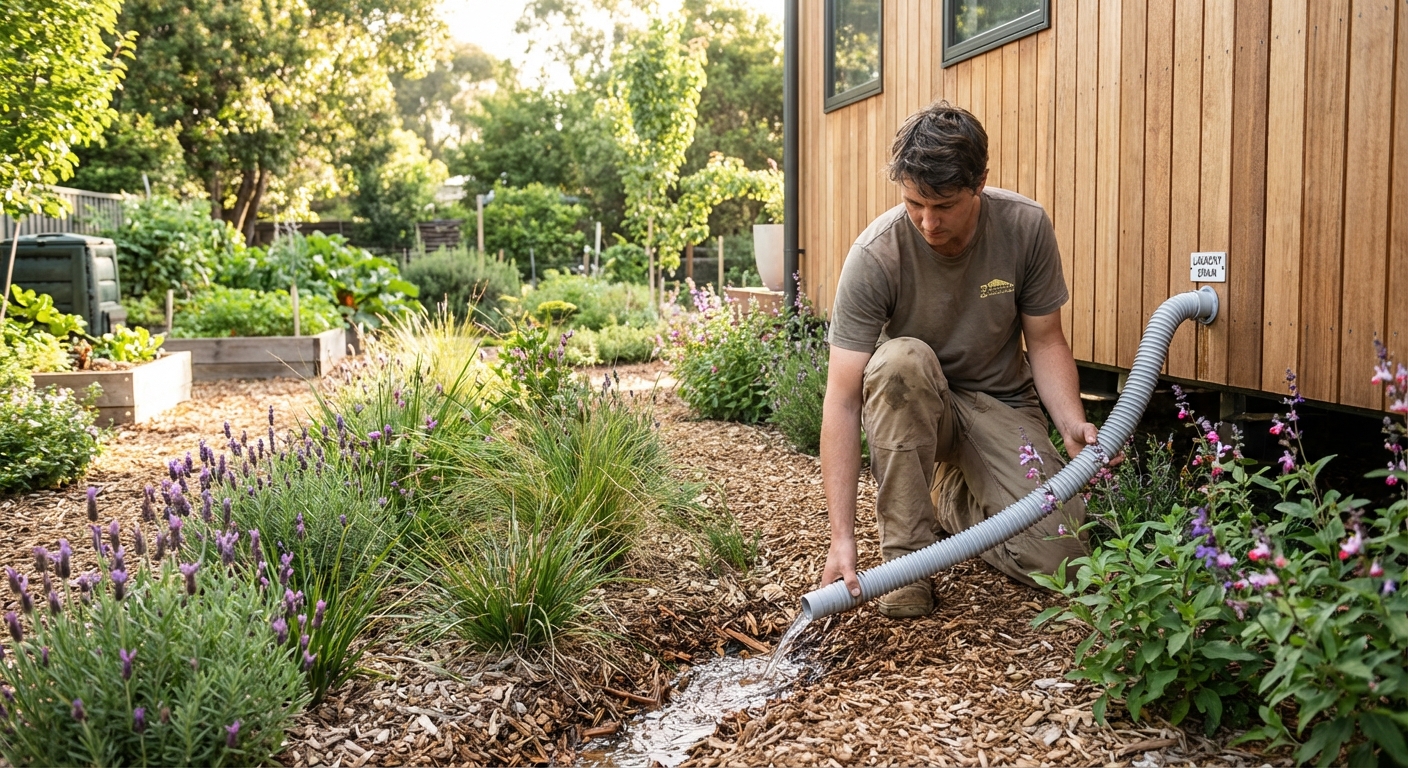
The simplest and most affordable entry point into greywater recycling. A laundry-to-landscape system connects your washing machine's drain hose directly to outdoor irrigation zones using gravity, with no pumps, tanks, or major plumbing changes needed. It's DIY-friendly, ideal for sloped yards, and works best where local codes allow it without a permit. DIY material costs typically run $150 to $300, while professionally installed L2L systems generally run $1,000 to $3,000 depending on site conditions.
Best for: Homeowners on a budget looking for a low-effort starting point.
Branched Drain Systems
A step up from L2L, branched drain systems divert greywater from showers and bathroom sinks to multiple irrigation outlets throughout your yard via gravity. This setup requires precise slope planning (at least 2% grade) to keep water moving, but it's still a relatively passive system with minimal maintenance needs.
Best for: Homeowners with naturally sloped properties who want to irrigate multiple garden zones.
Pumped and Filtered Systems
The most versatile (and most expensive) option. Pumped systems use active pumps, valves, and often multi-stage filtration to move greywater to any area of your property regardless of slope. Some advanced systems include UV treatment, smart controls, and storage tanks, making them suitable for toilet flushing and larger-scale irrigation.
Best for: Flat properties, larger homes, or anyone wanting to use greywater for toilet flushing.

Find Trusted & Licensed Plumbers in Ohio
Get matched with companies for your specific needs
Greywater System Installation Costs and Permitting
What Does a Greywater System Cost in 2026?
Greywater system installation cost varies widely based on system type, home size, local labor rates, and permitting requirements. The average homeowner installing a mid-range pumped system in 2026 spends between $2,200 and $5,500, with $4,000 being a common nationwide average. Here's the full breakdown:
| System Type | Estimated Cost Range (2026) | Permit Typically Required? |
|---|---|---|
| Simple diverter / Laundry-to-Landscape | $500 – $2,500 | Often no (varies by state) |
| Branched Drain | $1,000 – $4,000 | Sometimes |
| Pumped Distribution | $4,000 – $10,000 | Yes, in most states |
| Automated filtration (UV, smart controls) | $8,000 – $20,000 | Yes |
Permit fees, when required, typically run between $50 and $1,000 depending on your local jurisdiction. Always factor these into your budget before starting a project.
Permitting Requirements by State
Greywater regulations vary significantly across the US. Most states allow residential greywater systems to some degree, but the rules around permits, flow volume, and approved end uses differ considerably.
| State | Permit Required? | Max Flow (No Permit) | Key Notes |
|---|---|---|---|
| California | No (under 250 gal/day for L2L) | 250 gal/day | Most permissive; explicit code support for L2L systems |
| Arizona | No (under 400 gal/day) | 400 gal/day | Must meet design criteria; water table rules apply |
| Texas | No (under 400 gal/day) | 400 gal/day | Non-spray, divertable, single-family only |
| New Mexico | No (under 250 gal/day) | 250 gal/day | Use within 24 hours; toilet flushing allowed |
| Colorado | Default allowed in new construction (Jan 1, 2026) | N/A | HB24-1362 in effect; many local opt-outs |
| Montana | Yes | N/A | Regulated under Rule 17.36.319 |
| Oregon | Yes (all systems) | N/A | DEQ permit required even for small systems |
| Washington | Tier-based | 60 gal/day (Tier 1) | Larger tiers require permits and treatment |
| Florida | Indoor only | N/A | Toilet flushing allowed; outdoor reuse restricted |
| West Virginia / Massachusetts | Restricted | N/A | Generally only with composting toilet systems |
Learn more about smart plumbing upgrades that pair well with greywater systems, or compare options with our rainwater harvesting guide for whole-property water capture.
Environmental Benefits and Water Savings Potential
How Much Water Can You Actually Save?
A properly installed residential greywater system can save between 10,000 and 50,000 gallons of water per year, depending on household size, system type, and usage patterns. Recent 2026 data shows the average US household uses just over 300 gallons of water per day, with roughly 100 to 150 gallons of that coming from showers, faucets, and laundry, all potential greywater sources.
For a typical 2-to-4-person household, a moderate greywater diversion system reuses 20,000 to 40,000 gallons per year, which cuts the water bill by approximately 30 to 40%. A real 2024 case study in Oakland (reported in a 2026 market review) showed a combined rainwater and greywater install cut one home's water use from 124 gallons per day down to 39 gallons per day, a 68% reduction. Larger or multi-source systems serving both irrigation and toilet flushing can easily exceed 50,000 gallons in annual savings.
Greywater accounts for roughly 50 to 80% of total household wastewater, making it the single largest opportunity for on-site water reuse. By diverting it away from the sewer or septic system and putting it back to work in your yard or toilets, you're essentially doubling the value of every gallon that flows through your home.
Environmental Impact Beyond the Water Bill
The benefits extend well beyond individual savings:
- Reduced strain on municipal water systems, especially critical during droughts
- Lower energy consumption associated with water treatment and distribution
- Decreased wastewater volume entering sewer systems and treatment plants
- Groundwater recharge when greywater is applied as subsurface irrigation
- Reduced reliance on potable water for non-drinking uses (toilets, landscaping)
Pairing your greywater system with other water conservation plumbing upgrades like WaterSense certified fixtures and smart irrigation controllers can push your annual savings even further.
Safety, Maintenance, Best Plants, and Home Value
Safety Considerations
Greywater is not sewage, but it's not clean water either. It can contain bacteria, soap residues, skin cells, and trace chemicals. Following basic safety protocols keeps your family, landscaping, and neighbors protected:
- Never store greywater for more than 24 hours. Bacteria multiply rapidly in stored greywater, causing odors and health risks.
- Use subsurface irrigation only (below mulch or soil level). Avoid sprinklers or any method that creates airborne droplets or surface contact.
- Install backflow prevention valves to ensure greywater can never contaminate your home's drinking water supply.
- Keep greywater away from edible crops. It should never contact the parts of a plant that will be eaten, including root vegetables.
- Use eco-friendly, low-sodium cleaning products. Harsh detergents, bleach, and high-boron soaps can damage soil health and harm plants over time.
- Use purple piping or purple tape on any non-potable line as required by most state codes (including Texas and California).
Best Plants for Greywater Irrigation
Since greywater should be kept away from edibles, the best candidates for greywater irrigation are established ornamentals and landscape plants that tolerate slight sodium levels:
| Plant Type | Examples | Notes |
|---|---|---|
| Ornamental shrubs | Lavender, rosemary, oleander | Drought-tolerant; thrive with greywater |
| Fruit trees | Citrus, apple, avocado | OK if water doesn't touch fruit/leaves |
| Native plants | Ceanothus, manzanita, salvia | Ideal for low-water western landscapes |
| Lawn grass | Bermuda, fescue | Apply via subsurface drip only |
| Ornamental grasses | Muhly grass, pampas grass | Excellent for landscape beds |
Maintenance Needs
A well-installed greywater system requires minimal but consistent upkeep:
- Inspect filters and screens monthly to remove lint, hair, and debris
- Flush distribution lines periodically to prevent clogs
- Rotate irrigation zones to prevent sodium buildup in soil
- Flush soil with fresh water after periods of heavy greywater use
- Test for odors or sluggish drainage as early signs of system problems
Passive systems (L2L and branched drain) generally need less maintenance than pumped systems, which require pump checks and occasional component replacement. Pair regular maintenance with modern plumbing fixture upgrades to keep your entire water system running efficiently.
Do Greywater Systems Add Home Value?
Yes, particularly in water-scarce markets. Sustainable water features are increasingly appealing to eco-conscious buyers, and in drought-prone states like California, Arizona, and Nevada, a properly permitted greywater system can differentiate your property in a competitive market. While the value boost isn't as dramatic as a kitchen remodel, it contributes to a home's sustainability profile, especially if it aligns with green building certifications like LEED.
The return on investment is strongest for long-term homeowners. At typical 2026 water and sewer rates, a $2,000 professionally installed L2L system pays itself back in roughly 3 to 6 years, while larger pumped systems generally take 5 to 8 years. Homeowners who stay in their homes for 10+ years in high water-cost areas are typically the best candidates for a full pumped or filtered system.
Frequently Asked Questions About Greywater Systems
Is a permit required to install a greywater system?
It depends entirely on your state and municipality. States like Arizona and Texas allow basic systems under 400 gallons per day without a permit, while Oregon requires permits for essentially all residential greywater installations. Colorado's HB24-1362 (effective January 1, 2026) now defaults to allowing greywater in new construction statewide, but many local governments have already opted out, so always verify with your local building department.
How much does a greywater system cost to install in 2026?
Greywater system installation costs range from about $500 for a basic diverter setup to $20,000 or more for a fully automated, filtered system with UV treatment and smart controls. The average homeowner installing a mid-range system spends between $2,200 and $5,500, with $4,000 as a typical national average. Utility rebates from districts like Tucson Water, Santa Clara Valley Water, and Pasadena's L2L program can meaningfully reduce that out-of-pocket cost.
Can I use greywater to water my vegetable garden?
No, greywater should never be used on edible crops, especially root vegetables or anything where the water might contact the portion you eat. Greywater can contain bacteria, soap residues, and trace pathogens that pose food safety risks. Stick to ornamental plants, established trees, shrubs, and lawns when using greywater for irrigation.
How much water can a greywater system actually save?
A typical residential greywater system saves between 10,000 and 50,000 gallons of water per year, depending on household size and system type. For a 2-to-4-person home, a moderate diversion system commonly reuses 20,000 to 40,000 gallons annually, cutting indoor water demand by up to 30%. This usually translates to 20 to 50% lower combined water and sewer bills, with a payback period of 3 to 8 years.
Are greywater systems worth it for homeowners in 2026?
For most homeowners in water-stressed regions or areas with high water rates, greywater systems are a worthwhile long-term investment. The combination of ongoing bill savings, available utility rebates, reduced environmental impact, and potential home value benefits makes them financially attractive, especially for those planning to stay in their homes for five or more years. Simpler systems like laundry-to-landscape offer the fastest payback with the lowest upfront cost and complexity.