
Ohio Life Insurance - Save up to 70% Off
See what plans you qualify for in just a few minutes
What Are Life Insurance Wellness Programs?
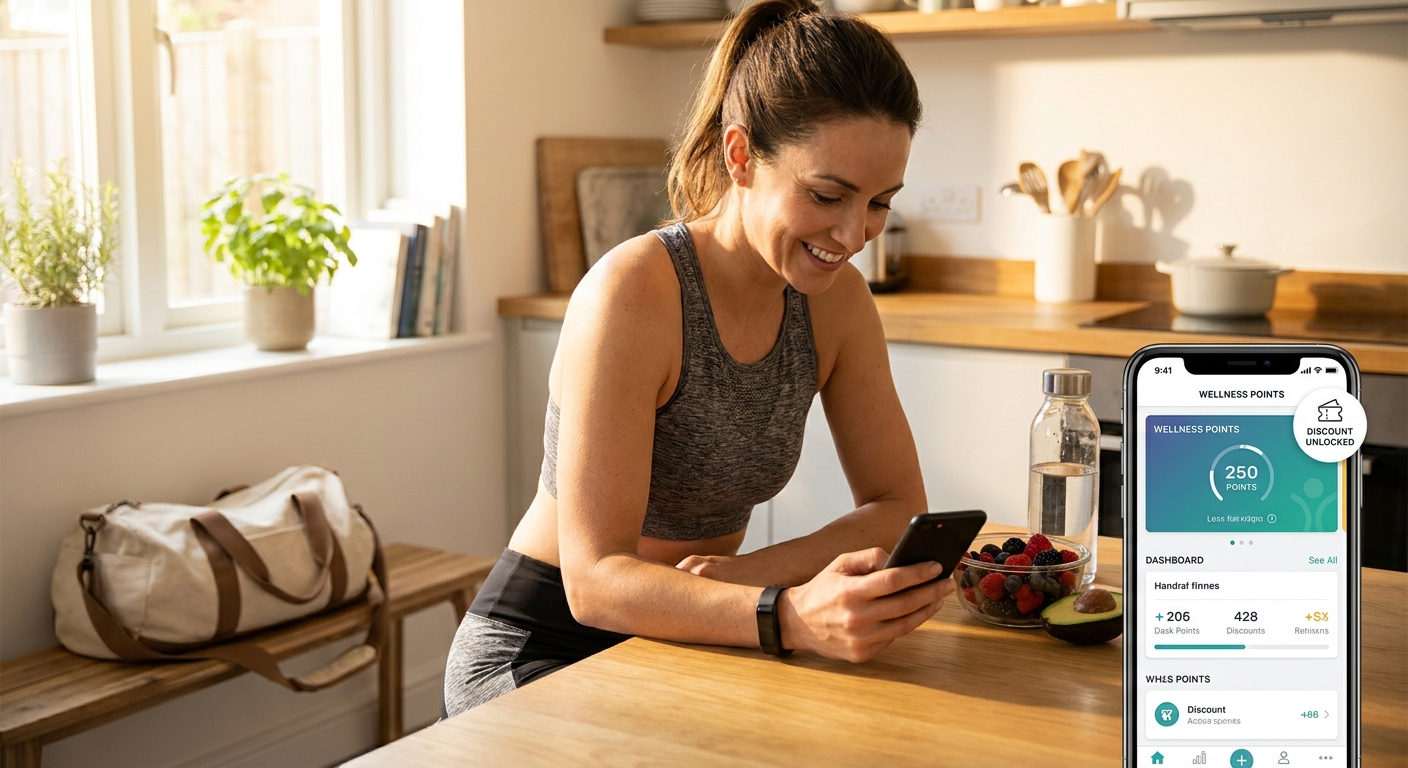
Life insurance wellness programs are incentive-based platforms offered by insurers that reward policyholders for engaging in healthy behaviors. Instead of simply setting a premium at the time of underwriting and leaving it unchanged, these programs create a dynamic relationship between your daily habits and the cost of your coverage. The concept is straightforward: the healthier your lifestyle, the more points you earn, and the more you save.
These programs typically operate through a mobile app or digital portal where you log qualifying activities, sync wearable devices, and complete health assessments. Your engagement is tracked and converted into points or status levels that translate directly into premium discounts, cashback rewards, gift cards, or partner perks. Understanding what affects your life insurance rates is the first step, and wellness programs give you a direct, ongoing way to influence those rates after your policy is already in place.
How the Points and Tier System Works
Most wellness programs use a tiered status model. As you accumulate points through healthy activities, you advance through levels, typically Bronze, Silver, Gold, and Platinum (or Diamond). Each tier unlocks progressively better rewards and discounts.
| Status Tier | Typical Activities Required | Estimated Premium Savings |
|---|---|---|
| Bronze / Blue | Basic enrollment, health review completed | 0-5% |
| Silver | Regular fitness activity + 1 screening | 5-10% |
| Gold | Consistent exercise + preventive care | 10-15% |
| Platinum / Diamond | High daily steps + multiple screenings + healthy purchases | 15-25% |
Points are generally earned across several activity categories:
- Annual physical exams and Vitality Health Reviews (VHRs)
- Biometric screenings (blood pressure, cholesterol, BMI, glucose)
- Gym workouts and fitness class attendance
- Wearable fitness tracking (daily step counts, heart-rate zones, VO2 max)
- Sleep quality tracking (a core points category as of 2026)
- Preventive care (flu shots, colonoscopies, mammograms, PSA tests)
- Healthy food purchases at partner grocery or meal-kit retailers
- Smoking cessation programs and weight management coaching
- Advanced screenings (multi-cancer detection, whole-body MRI, continuous glucose monitoring)

Ohio Life Insurance - Save up to 70% Off
See what plans you qualify for in just a few minutes
Major Programs: Discovery, AIA, John Hancock, and New U.S. Entrants
The dominant life insurance wellness programs each have their own structure, but all share the same philosophy: reward engagement and penalize passivity. Following John Hancock's landmark exclusive partnership with Vitality in 2015, new entrants into the U.S. life insurance interactive wellness space appeared with Foresters Financial in 2021, State Farm in 2022, MassMutual in 2023, and Guardian in 2024. Multi-carrier competition intensified further in 2026 as carriers layered on new preventive-care partnerships and expanded rewards.
Discovery Vitality (2026 Updates)
Discovery Vitality, launched in South Africa in 1997, is the pioneer of insurance-linked wellness and today impacts tens of millions of lives globally. For 2026, Discovery rolled out significant enhancements focused on sleep, expanded fitness options, and richer partner rewards.
2026 highlights:
- Vitality Sleep Rewards: Members receive dynamic, personalised weekly sleep goals that apply the proven behavioural economics of Vitality Active Rewards to sleep, turning healthy behaviour into everyday benefits
- Weekly reward choice: Once you meet your weekly sleep goal, you can choose 200 Discovery Miles, a partner reward, or donate through Vitality MoveToGive
- Sleep points: Members can earn up to 500 Vitality points per month by tracking at least 25 nights and averaging a Sleep Score of 75 or higher, adding up to as many as 6,000 points per year
- Oura Ring 5 funding: Vitality members can fully fund select styles of Oura Ring 5 by achieving weekly sleep goals with Vitality Sleep Rewards over 24 months
- Vitality Sleep Tracker app: For members without a compatible wearable, Discovery launched an in-app tracker in 2026 that links to Apple Health or Health Connect
- HealthyFood rewards of up to 25% cashback on qualifying purchases at partner grocers
- Compatible sleep devices include the Oura Ring 4 and 5, Apple Watch, Garmin, and Samsung wearables
AIA Vitality
AIA Vitality is a joint venture between Discovery and AIA Group, operating across Asia-Pacific markets. It integrates wellness benefits directly into life insurance products, offering financial protection alongside fitness challenges, health tracking, and engagement-based rewards. In 2026, AIA continued to build out preventive care partnerships and mental health support, mirroring the broader industry shift toward holistic wellness.
There have been meaningful structural changes to note in 2026. In New Zealand, the AIA Vitality Membership Fee increased from $11.50 to $13.50 per month from 2 July 2026 for all retail AIA Vitality Memberships, with existing members moving to the new fee at the start of their next Membership Year after that date. In Australia, AIA Health confirmed that from 1 April 2026 it would apply an annual industry-wide premium rate rise and remove the 5% AIA Vitality discount from all in-force policies. Some legacy AIA Vitality memberships tied to certain policies were also closed on 1 April 2026 if members did not transfer to an eligible plan. Factor those ongoing program costs into your total value calculation.
John Hancock Vitality (U.S.)
For American consumers, John Hancock's Vitality program remains the most accessible and best-known option. Customers who enroll in the Vitality program can get lower premiums, of up to 25% savings, depending on which version of the program they opt for. Effective savings for most engaged policyholders typically land in the 10-15% range depending on activity level.
New and expanded 2026 features:
- Vitality PRO for advisors: Launched in May 2026 as a newly launched distributor version of the John Hancock Vitality Program designed to more closely align financial professionals with their clients' outcomes
- Enhanced product access: Protection VUL now offers access to John Hancock Vitality, a program offering tools, technology, resources, incentives and rewards to help customers take small, everyday steps toward a longer, healthier, better life
- Early detection screening bundle: Eligible Vitality customers can get access to a Galleri multi-cancer early detection test, a Prenuvo whole-body MRI scan, and a membership to Function Health
- Galleri eligibility rules: The Galleri test is only available to registered John Hancock Vitality PLUS members age 40 or older who have completed the Vitality Health Review, and John Hancock subsidizes 100% of the test cost for eligible policies with $500,000 or more in coverage
- Function Health membership: John Hancock was the first life insurer to offer eligible Vitality members access to Function Health's 160+ lab tests and comprehensive results dashboard
- Vitality GO remains available at no cost on select policies, offering rewards, wearable-device discounts through partners like REI, and access to expert fitness and nutrition tips, though Vitality GO is not available with policies issued in New York or Puerto Rico
New U.S. Entrants: MassMutual and Guardian
Two large mutuals have significantly expanded their offerings in 2025 and 2026, giving consumers meaningful new alternatives.
- MassMutual Living Well Rider: Launched in May 2026, the new Living Well rider provides eligible policyowners with access to multi-cancer early detection, genetic risk assessment for common diseases, and AI-powered mental health support, at no additional cost. It gives eligible clients access to the GRAIL Galleri test, Genomics Health Insights Test, and the Wysa Assure app as part of MassMutual's whole life insurance offerings.
- MassMutual WELL Rider: A separate optional rewards rider for eligible term life policyowners. Users connect a supported fitness tracker in the LivingWELL by MassMutual app to earn cash rewards for physical activity and sleep, deposited directly to a bank account.
- Guardian Well-being Rider: When you purchase a Guardian whole life insurance policy, you also get a rider on your policy that gives you an opportunity to earn a wellness dividend by downloading and using GuardianWell-being, a wellness app. It is automatically included on eligible whole life policies issued after April 7, 2025 in specified states, and choosing not to participate does not affect guaranteed policy benefits.
- Guardian's broader dividend context: Guardian announced a $1.7 billion dividend allocation to participating policyholders in 2026, the largest dividend payout in the company's 165-year history, with the Dividend Interest Rate increasing to 6.25%. The wellness dividend earned through GuardianWell-being is separate from that standard whole-life dividend.
Benefits Beyond Cost Savings
The financial discounts are compelling, but wellness programs deliver several additional benefits worth considering, both for policyholders and insurers.
Lower Policy Lapse Rates
Engaged policyholders are far less likely to let their coverage lapse. Research on Discovery's Vitality program has shown engaged members maintain significantly lower life insurance lapse rates than non-participants, and AIA Vitality members in Australia have historically been much less likely to lapse coverage. This matters because lapsing a life insurance policy, especially a permanent one, can mean forfeiting accumulated cash value and leaving your family unprotected. Learn more about life insurance health classifications to understand how your tier is assigned at issue.
Measurable Health Improvements
Research from reinsurer RGA indicates that wellness-linked life products can improve insured mortality and produce a healthier pool of policyholders, allowing insurers to pass savings back through discounted premiums and program rewards. Independent research on wellness-linked underwriting suggests policyholders who actively participate can achieve annual premium discounts ranging from roughly 10% to 30% depending on the carrier, program structure, and level of engagement demonstrated.
Growing but Uneven Consumer Adoption
Life insurance wellness features are becoming a key differentiator for insurers competing for health-conscious buyers, but adoption is still uneven across the market. As more carriers move off the sidelines, integrated programs are increasingly seen as a competitive necessity rather than a premium add-on. If your improved biometrics push you into a better underwriting tier upon policy renewal or conversion, you could see compounding savings.
Cashback and Retail Rewards
Many programs go beyond premium savings by offering tangible everyday rewards:
- Grocery and healthy food purchase rebates through partners like HealthyFood and Healthy Savings
- Amazon Prime perk: Vitality PLUS members who reach Platinum Status for three consecutive program years qualify for an Amazon gift card in the amount of a one-year Amazon Prime membership
- Fitness gear and activewear discounts through partners like REI
- Gift cards and points-based rewards currency like Discovery Miles
- Free or subsidized wearables including Apple Watch, Oura Ring 4 and 5, and Garmin devices
For fully engaged members, these non-premium perks can easily add $100 to $600+ per year in additional value, on top of any premium savings.
Privacy Concerns: What Happens to Your Health Data?
Wellness programs collect a significant amount of personal health information, and that raises legitimate privacy questions every consumer should consider before enrolling. Regulators and industry watchers have flagged growing concerns about how insurers use external consumer data, including wearables and app data, for underwriting decisions.
What Data Is Typically Collected
- Daily step counts and heart rate data from wearables
- Sleep quality metrics from devices like Oura Ring, Apple Watch, or Fitbit
- Biometric screening results (BMI, blood pressure, cholesterol, glucose)
- Health risk assessment responses
- Grocery and retail purchase habits through partner integrations
- Fitness class attendance and gym check-in records
The HIPAA Gap
The most important thing to understand is that life insurers are generally not HIPAA covered entities in their role as insurers. According to a Consumers Union background memo, it does not appear that life insurers are considered "covered entities" under HIPAA, and there are no clearly applicable federal privacy protections for wellness programs sponsored and operated by life insurers.
That means when a wellness program is offered directly by a life insurer (rather than through a group health plan), the data it collects is typically not protected by HIPAA's Privacy and Security Rules. Unlike traditional medical records, data from wearables often falls outside the scope of HIPAA, which leaves consumers vulnerable to the sale of their personal information, so consumers are largely relying on state privacy laws, contractual terms, and each insurer's voluntary practices.
Other Key Privacy Risks
- Data commercialization: Wellness apps and partner platforms may share de-identified health data with advertisers or aggregators for targeted marketing
- Underwriting implications: Insurers can legally use health-related data to segment risk and price policies, so long as they comply with state insurance law
- Wearable data vulnerabilities: Fitness tracker data isn't protected by HIPAA, and "free" wellness apps may sell heart rate logs to data brokers while insurance providers eye those numbers for premium discounts
- FDA guidance gap: On January 6, 2026, the FDA issued its General Wellness: Policy for Low Risk Devices guidance, signaling that it does not intend to enforce traditional medical device requirements for general wellness products, including many wearables. Oversight of consumer health data remains a patchwork of FTC rules, state privacy laws, and the Health Breach Notification Rule for certain non-HIPAA health apps.
This gap matters because AI-driven underwriting is now a major factor in modern policies. Learn more about how AI life insurance underwriting uses wearable and consumer data to make automated approval decisions.
Is the Trade-Off Worth It?
For most health-conscious consumers, the financial and health benefits of wellness programs outweigh the privacy risks, particularly when choosing programs from large, reputable insurers with transparent data policies. However, individuals with sensitive health conditions or those who highly value data privacy may prefer a traditional affordable life insurance policy with a locked-in rate and no ongoing data sharing.
Frequently Asked Questions
How much can I realistically save with a life insurance wellness program in 2026?
Most engaged participants can expect to save 5% to 15% on their annual premium, with maximum-tier members reaching up to 25%. John Hancock Vitality PLUS advertises up to 25% premium savings for highly engaged members, while Discovery Vitality Diamond-tier members typically achieve the highest discount bands plus significant partner retail savings. When you factor in cashback and rewards, total annual value can reach $200 to $600 or more for fully engaged users.
Do I need a fitness tracker to participate in a wellness program?
A fitness tracker is not always required, but it significantly amplifies the rewards you can earn. Most programs accept data from popular wearables like Apple Watch, Fitbit, Garmin, and the Oura Ring 4 or 5. Without a tracker, you can still earn points through manual gym check-ins, uploading screening results, and completing health assessments, but your earning potential will be limited. Many programs now offer fully-funded or heavily discounted devices as an enrollment incentive.
Will my health data be shared with my employer or other third parties?
This depends on how the program is structured. Life insurers are generally not HIPAA covered entities, so data collected by a wellness program is often not classified as protected health information. Third-party wellness vendors may share de-identified data with advertisers or aggregators depending on their privacy policies. Always read the program's privacy policy carefully and look for explicit commitments about data use, retention, and any impact on life insurance rates before enrolling.
Are life insurance wellness programs worth it if I'm already healthy?
Healthy individuals are often the biggest beneficiaries of these programs because they can reach higher engagement tiers more easily and unlock the maximum premium discounts with relatively little extra effort. If you already exercise regularly, visit your doctor annually, and maintain a healthy diet, you may be leaving significant money on the table by not enrolling. Compare the annual savings against any program fees before committing, since Vitality PLUS carries a paid rider while Vitality GO does not.
Can a wellness program replace traditional underwriting for life insurance?
No, wellness programs supplement underwriting but do not replace it. Your initial premium is still determined by traditional factors such as age, health history, family medical history, and lifestyle, though accelerated underwriting is speeding up the process considerably in 2026. Wellness programs create an ongoing mechanism to reduce that premium over time based on your actual health behaviors. Think of it as a reward system layered on top of your existing policy, not a shortcut around the initial qualification process.