
Compare Home Insurance Plans in Ohio
Find your best options in less than 2 minutes



When Your Policy Steps In: Covered Perils Explained
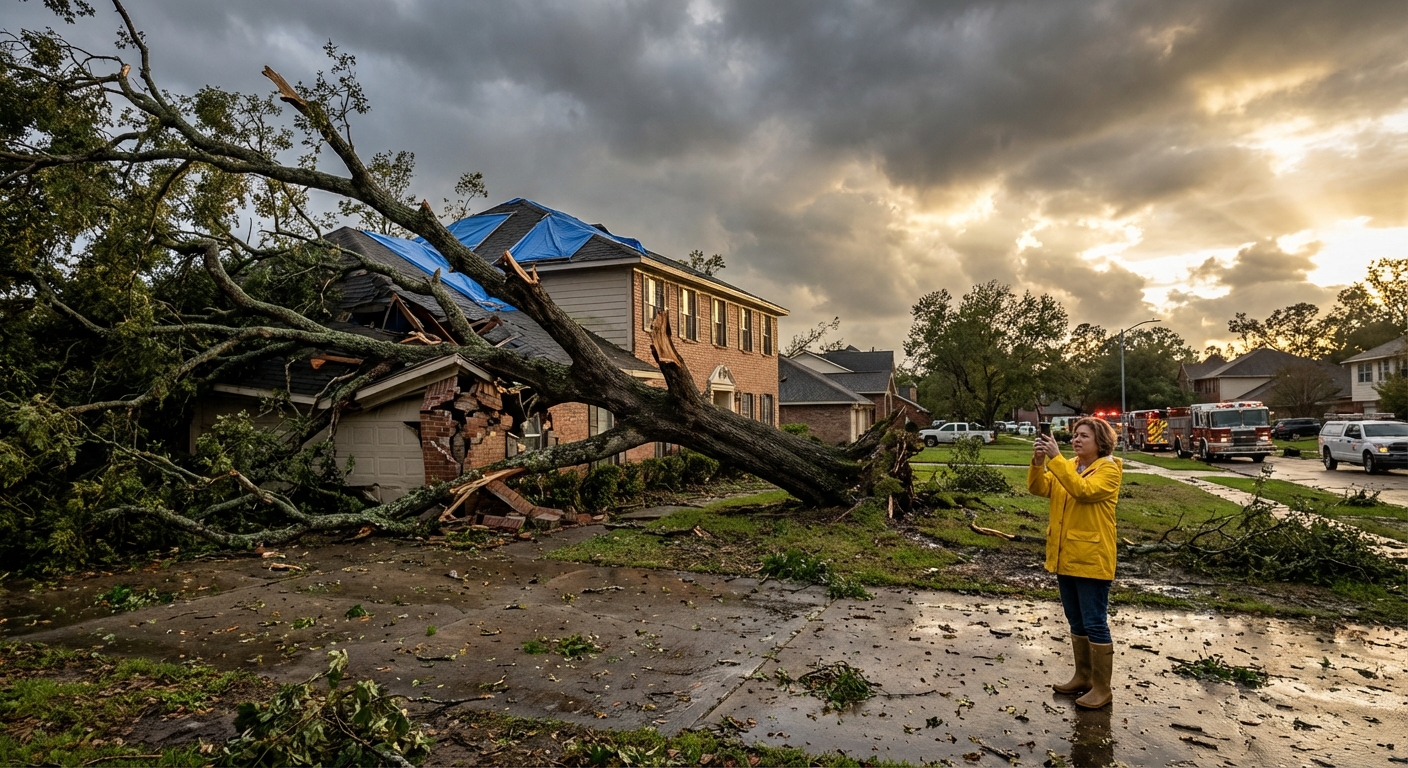
Most standard homeowners insurance policies cover tree damage caused by a sudden, accidental event, known as a "covered peril." If a tree crashes into your roof during a violent storm or a lightning strike splits your oak in two and it lands on your garage, your dwelling coverage (Coverage A) or other structures coverage (Coverage B) will typically pay for repairs, minus your deductible.
Here are the most commonly covered perils for tree damage:
| Covered Peril | What It Means for Your Claim |
|---|---|
| Wind / Windstorm | A tree blown over by high winds that hits your home is covered |
| Lightning | A direct lightning strike that fells a tree onto a structure is covered |
| Hail | Hail-related damage that causes a tree to fall onto your property is covered |
| Weight of Ice / Snow | A tree limb that snaps under ice or snow load and damages your roof is covered |
| Fire | A fire-damaged tree that collapses onto your home is covered |
| Vandalism | If someone deliberately causes a tree to fall on your property, coverage may apply |
Important: Even if the tree that falls on your property originated from your neighbor's yard, your own homeowners policy will generally cover the damage, regardless of whose tree it technically was, as long as the cause was a covered peril.
For a deeper look at how related events affect coverage, see our guides on wind damage and home insurance and lightning damage coverage.

Compare Home Insurance Plans in Ohio
Find your best options in less than 2 minutes
When Home Insurance Does NOT Cover Tree Damage
Just as important as knowing what's covered is understanding the exclusions. With the five largest home insurance firms failing to pay out on more than 44% of resolved claims, and insurers now using drones and AI to scrutinize property condition, tree-related claims are being evaluated more aggressively than ever in 2026.
Neglect and Known Hazards
If a tree on your property was dead, visibly diseased, or noticeably leaning and you failed to address it, your insurer may deny the claim on the basis of negligence. Allstate explicitly notes that homeowners insurance may cover tree damage if a healthy tree falls due to a covered peril like wind, but a policy likely will not cover damage caused by neglected or rotting trees. The same principle applies to a neighbor's tree. If you can prove they were warned in writing of the hazard and ignored it, liability may shift to them. Without documented negligence, however, each party typically handles damage on their own property. Learn more about avoiding these pitfalls in our guide to home insurance maintenance requirements.
No Structural Damage
One of the most commonly misunderstood exclusions: a tree that falls in your yard but doesn't hit a covered structure is generally not covered for removal. If a storm topples a tree into your lawn, away from your home, garage, or fence, you're paying for cleanup out of pocket. The only common exception is if the fallen tree blocks a driveway or an accessibility ramp, in which case limited removal coverage may apply.
Preventive Tree Removal
Proactively removing a tree, even a dangerous-looking one, is considered routine property maintenance. Standard policies do not pay for preventive removal, no matter how risky the tree appears.

Protect your home with State Farm
Average Rate:
Homeowners who bundle and save with State Farm save an average of $1,000 per year!

You're in Good Hands® with Allstate
Average Rate:
Get comprehensive home coverage with flexible policy options.

Customize your home coverage
Average Rate:
Only pay for the coverage you need with personalized home insurance.

Smart coverage for your home
Average Rate:
Protect what matters most with award-winning home insurance.
Your Tree vs. Your Neighbor's Tree: Who Pays?
This is one of the most frequently asked questions, and the answer often surprises homeowners. The general rule: each homeowner files a claim with their own insurer for damage that occurs on their own property.
If Your Neighbor's Tree Falls on Your Property
If a neighbor's tree falls on your house, your insurance will cover the damage regardless of whose property the tree was on. Your homeowners insurance covers the damage if a tree falls on your home or another structure on your property. Your insurer may then pursue subrogation (reimbursement from the neighbor's insurer) if they can prove the neighbor was negligent. For example, if the tree was known to be dead or diseased and the neighbor was warned about it in writing. If subrogation succeeds, you may even get your deductible reimbursed months later.
If Your Tree Falls on Your Neighbor's Property
If a healthy tree on your property falls onto your neighbor's home due to a storm, you are generally not liable. The storm is considered the proximate cause (an "act of God"), and your neighbor is expected to file under their policy. If your tree was visibly hazardous and they had notified you in writing, you could be found negligent, and your personal liability coverage may pay for their damages.
If your tree also takes out a shared boundary fence, our guide on fence damage coverage explains how Coverage B and neighbor disputes play out.
Debris Removal Limits
Whether the tree is yours or your neighbor's, most standard homeowners insurance policies cap tree removal coverage at $500 to $1,000 per tree, with a total loss limit around $1,000, and only when the tree hits a covered structure or blocks a driveway or handicap ramp. Landscaping coverage is typically capped at about 5% of your dwelling limit, with per-tree/plant limits usually around $500 to $750 including debris removal. If you live in a storm-prone area or have many large trees, ask your insurer about an endorsement to raise this limit. Many policies also cover up to $500 or $1,000 for reasonable expenses to remove tree debris from the residence property for sudden and accidental direct physical loss caused by windstorm, hail, or weight of ice, snow or sleet.
Watch Out for Higher 2026 Deductibles and Roof Settlement Changes
A major shift heading into 2026 is that insurers are pushing more storm-related costs back onto homeowners. This directly affects tree-fall claims when wind, hail, or hurricanes are involved.
- Most homeowners policies in 2026 carry two deductibles, not one, a flat all-other-perils deductible ($1,000 to $2,500 typical) and a percentage-based named-storm or wind/hail deductible (1% to 5% of dwelling value).
- In West Texas and other high-risk regions, most carriers moved to 2% wind and hail deductibles in 2026, and many homeowners can no longer choose a 1% wind/hail deductible because carriers raised the floor due to rising claim costs.
- In Florida and similar coastal states, standard homeowners policies cover wind damage from hurricanes subject to a separate 2% to 10% hurricane deductible. On a $400,000 home that could mean $8,000 or more out of pocket.
- Insurify projects the national average annual home insurance premium will rise about 4% in 2026 to $3,057, following a 12% jump in 2025.
- Many insurers now settle older roof damage at actual cash value (ACV) instead of replacement cost, factoring in depreciation. If a tree crushes a 15-year-old roof, your payout may be a fraction of what you'd expect.
To understand how this affects you if a tree damages your roof, see our guide on home insurance and roof replacement, or read up on how hail damage claims work and how severe convective storms are reshaping deductible structures.
How to File a Tree Damage Insurance Claim
When a tree damages your home, acting quickly and methodically maximizes your payout.
Step 1: Secure the Area
Look for downed power lines, unstable structures, and other hazards. Do not begin cleanup until it's safe.
Step 2: Document Everything
Take time-stamped photos and videos of:
- The fallen tree and point of impact
- Roof damage, broken windows, crushed gutters, or siding
- Interior damage like ceiling leaks or water intrusion
- Any personal property that was destroyed
Step 3: Implement Temporary Repairs
Place tarps over exposed roof areas, cover broken windows, and remove water-damaged items. This prevents further damage, which your insurer expects you to mitigate. Keep all receipts. These costs are typically reimbursable.
Step 4: File Your Claim Promptly
Contact your insurance company within 24 to 72 hours of the incident. Have your policy number, documentation, and a description of events ready.
Step 5: Meet With the Adjuster
Your insurer will send an adjuster within 3 to 10 business days. Be present, point out all areas of concern, and present your documentation. Consider getting an independent contractor estimate as a benchmark.
Step 6: Watch for Hidden Damage
Don't overlook secondary issues like structural damage, shifting foundations, developing wall cracks, or water intrusion that surfaces weeks later. Report these to your adjuster before closing the claim.
How to Protect Yourself Before a Tree Falls
The best time to think about tree damage is before it happens.
- Schedule annual tree inspections with a certified arborist, especially after severe weather seasons
- Document tree conditions with dated photos to protect yourself from negligence claims
- Send written notice to neighbors whose trees you believe are hazardous (via certified mail)
- Keep records of any trimming, removal, or maintenance performed on your property
- Review your policy's tree debris limits and consider an endorsement if your coverage seems low
- Understand your wind, hail, and hurricane deductibles, which may be percentage-based and far higher than your standard deductible
Your home insurance liability coverage is your financial safety net if a neighbor ever sues you over tree damage. Most experts recommend at least $300,000 in personal liability coverage, and a personal umbrella policy for those with significant assets. Trees aren't the only storm hazard to plan for. Homeowners in tornado alley should also review tornado damage coverage, and anyone whose property includes outbuildings or hardscape should read our guides on fence damage and driveway damage.
Frequently Asked Questions
Q: Will insurance cover a tree that falls on my house if it was already dead? If you knew the tree was dead and failed to remove it, your insurer may deny the claim citing negligence. However, if the tree appeared healthy with no obvious signs of disease, coverage will typically apply as long as the fall was caused by a covered peril. In 2026, adjusters increasingly use AI, drones, and aerial imagery to verify pre-loss tree conditions, so document tree health with dated photos each year to prove you acted responsibly.
Q: Does homeowners insurance pay for tree removal if the tree didn't hit my house? Generally, no. If a tree falls and causes no structural damage, meaning your house doesn't need any repairs, your homeowners insurance policy typically will not cover tree debris removal. If the tree lands in your yard without hitting anything, you'll typically pay for removal yourself. A limited exception applies in some policies if the fallen tree blocks your driveway or an ADA-required accessibility ramp.
Q: What if my neighbor's tree falls on my property, does their insurance pay? In most cases, your own homeowners insurance covers the damage to your property, even if the tree came from your neighbor's yard. Your neighbor is only liable if the tree was a known hazard they neglected to address. If negligence is proven, your insurer may pursue subrogation against your neighbor's insurer to recover costs and potentially reimburse your deductible.
Q: How much will insurance pay for tree removal after storm damage? Most standard HO-3 policies cap tree debris removal at about $500 to $1,000 per tree, and often around $1,000 total per occurrence. This applies only when the tree damaged a covered structure and is separate from the cost of repairing the structural damage itself. With standard tree removal averaging roughly $850 to $906 nationally in 2026 and emergency removal after storms reaching $2,000 to $8,000 (or $10,000+ when cranes and after-hours work are needed), ask your insurer about an endorsement to increase this limit.
Q: Can I get reimbursed for having a dangerous tree removed before it falls? No. Preventive tree removal is considered routine property maintenance and is not covered by any standard homeowners policy. Even if a tree is visibly leaning, rotting, or poses a clear risk, your insurer will not pay for its removal in advance. The financial burden of proactive removal falls on the homeowner, but it's almost always cheaper than dealing with storm damage and a higher deductible later.