
Compare Home Insurance Plans in Ohio
Find your best options in less than 2 minutes



What Is Other Structures Coverage (Coverage B)?
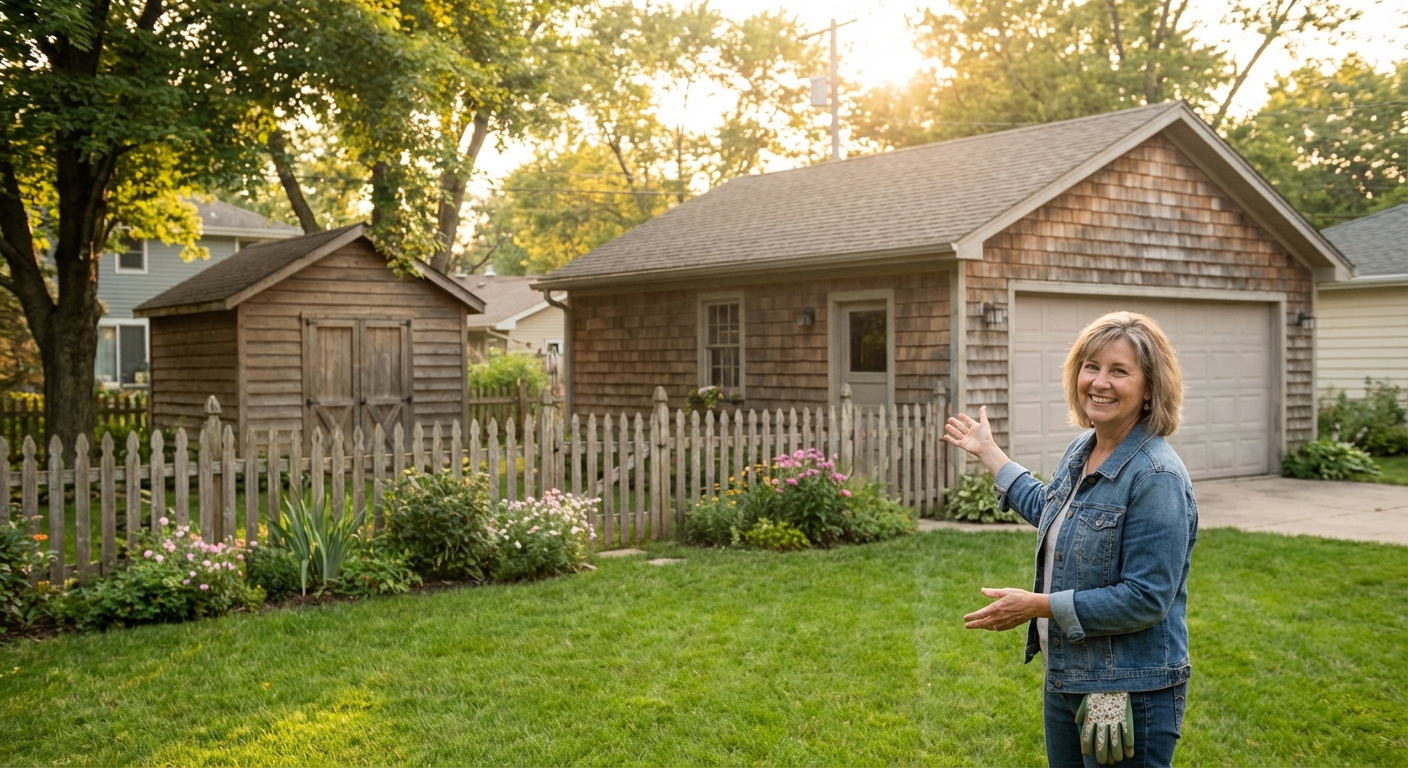
Other structures coverage, formally known as Coverage B, is the section of your homeowners insurance policy that protects detached buildings and structures on your property. If a storm, fire, falling tree, vandalism, or another covered peril damages your detached garage, fence, or backyard shed, Coverage B is what pays to repair or rebuild it.
Unlike dwelling coverage, which protects the physical structure of your home, Coverage B specifically covers structures that are separated from your main house by open space. If a structure is attached to your home (like a deck built onto the side of the house or an attached garage), it falls under dwelling coverage instead.
Coverage B is automatically included in most standard homeowners insurance policies (HO-3 and HO-5 forms) at no additional cost, making it one of the most overlooked but valuable parts of your policy. To see how it fits alongside the other five parts of a standard policy, review our complete guide to Coverages A through F.

Compare Home Insurance Plans in Ohio
Find your best options in less than 2 minutes
What Qualifies as an "Other Structure"?
Any building or structure on your property that is physically detached from your home can potentially qualify under Coverage B. In 2026, insurers are also more carefully classifying newer property additions like ground-mounted solar panels, EV charging pads, and detached ADUs. Since the federal residential solar tax credit expired at the end of 2025, more homeowners are self-financing systems, making proper Coverage B classification even more important.
Common Covered Structures
| Structure | Typically Covered Under Coverage B? |
|---|---|
| Detached garage | ✅ Yes |
| Storage shed | ✅ Yes |
| Fence or wall | ✅ Yes |
| Gazebo or pergola | ✅ Yes |
| In-ground swimming pool | ✅ Yes (usually) |
| Pool house | ✅ Yes |
| Guest house / casita | ✅ Yes (personal use only) |
| Driveway or walkway | ✅ Yes (in many policies) |
| Mailbox or flagpole | ✅ Yes |
| Carport | ✅ Yes |
| Ground-mounted solar panels | ✅ Yes (often, verify with insurer) |
| Detached EV charging pad or station | ✅ Yes (if not business use) |
| Detached backyard office / studio | ✅ Yes (if not used for business) |
What Is NOT Covered Under Coverage B?
- Attached structures. A garage, porch, deck, or roof-mounted solar panel physically connected to your home is covered under Coverage A (dwelling coverage), not Coverage B.
- Structures used for business. If you run a business out of a detached building (like a home office where you meet clients, a salon, or storage of commercial inventory), it is typically excluded. A shed converted into an Airbnb rental is a common example insurers now flag for exclusion.
- Rented-out structures. A guest house or ADU rented out long-term or on Airbnb usually requires a separate landlord or commercial policy. Check our guide to guest house and ADU insurance for details.
- Land beneath structures. The ground or soil under any structure is never covered.
- Damage from excluded perils. Flooding, earthquakes, normal wear and tear, pest infestations, mold, and intentional damage are not covered under Coverage B (or most standard homeowners policies).
- Contents inside structures. Tools, equipment, or belongings stored inside a shed or detached garage are covered under Coverage C (personal property coverage), not Coverage B.

Protect your home with State Farm
Average Rate:
Homeowners who bundle and save with State Farm save an average of $1,000 per year!

You're in Good Hands® with Allstate
Average Rate:
Get comprehensive home coverage with flexible policy options.

Customize your home coverage
Average Rate:
Only pay for the coverage you need with personalized home insurance.

Smart coverage for your home
Average Rate:
Protect what matters most with award-winning home insurance.
Coverage B Limits: The 10% Rule and When You Need More
How the 10% Rule Works
In most standard homeowners policies in 2026, Coverage B is automatically set at 10% of your dwelling coverage (Coverage A). This means:
| Your Dwelling Coverage (Coverage A) | Standard Coverage B Limit (10%) |
|---|---|
| $200,000 | $20,000 |
| $300,000 | $30,000 |
| $400,000 | $40,000 |
| $500,000 | $50,000 |
| $800,000 | $80,000 |
This 10% limit applies to all of your other structures combined, not individually. So if you have a detached garage, a fence, and a shed, they all share that single pool of coverage.
Some states have started allowing more flexibility. In Virginia, a regulatory change that took effect October 1, 2025 requires insurers to provide at least 10% of the dwelling limit for other structures by default, but permits homeowners to request a limit as low as 5% to reduce premiums. Household and personal property must also be covered at not less than 25% of the dwelling limit. Some insurers now allow increases up to 20% or higher when you have valuable detached structures.
When the 10% Limit May Not Be Enough
With 2026 construction costs still elevated (Insurify projects the average U.S. homeowners premium at roughly $3,057 per year by the end of 2026, up 4% from 2025), the default 10% Coverage B limit is often inadequate. A standard 2-car detached garage now costs roughly $28,800 to $49,000 to rebuild at $50 to $85 per square foot for a finished, permitted, code-built structure. Higher-end builds with living space above can push $110 to $180 per square foot, and a fully finished 3-car garage with electricity and drywall can easily exceed $70,000.
Regional differences matter too. A 576 sq ft 2-car detached garage that costs about $37,440 in California runs roughly $27,648 in Georgia. That 35% spread across states makes it critical to base your Coverage B limit on your local rebuild costs, not a national average.
You can increase your Coverage B limit by requesting an endorsement from your insurer. The default 10% level doesn't carry a separate premium (it's built into your base homeowners rate), but raising it above 10% or scheduling a specific high-value structure will modestly increase your annual premium. Given that premiums have climbed 46% since 2021 (roughly three times the rate of inflation), while dwelling limits at many carriers have not kept pace, most homeowners find the extra Coverage B is well worth the cost. Learn more about setting the right base dwelling coverage limit that drives your Coverage B calculation.
How Coverage B Claims Work
Filing a claim for a damaged detached structure follows the same general process as any homeowners insurance claim, but there are a few Coverage B specific things to keep in mind. Insurers are now scrutinizing claims more closely than ever. According to a 2026 Weiss Ratings analysis of 2025 claims, 15 large U.S. home insurers closed at least 50% of homeowner claims with no payment, and a Wall Street Journal review of NAIC data found the five largest carriers (State Farm, Allstate, Farmers, Liberty Mutual, and USAA) collectively denied more than 44% of claims resolved that year. Farmers led that group at 52%.
Step-by-Step: Filing an Other Structures Claim
1. Document the damage immediately Take photos and videos of the damaged structure from multiple angles. Gather any receipts, permits, or records showing the structure's value and materials. Ideally, you should also have "before" photos taken during routine maintenance. This documentation has become critical to defeating claim denials, which now average over 40% nationally per NAIC data. For more, see our guide on structural damage and home insurance.
2. Report the claim to your insurer Contact your insurance company via phone, their app, or online portal. Describe the covered peril (e.g., "a storm knocked a tree onto my detached garage"), the structure affected, and the estimated extent of the damage. Be aware that many coastal and high-risk states apply a separate wind or hurricane deductible that also applies to other structures claims. The average home insurance deductible rose to about 22% in 2025, up from 15% in 2024, which can wipe out smaller claims entirely.
3. Work with the insurance adjuster Your insurer will send an adjuster (in-person or virtually) to assess the damage. They'll confirm the structure qualifies as a detached other structure, estimate repair or rebuild costs, and determine the payout after applying your deductible.
4. Receive payment and make repairs Once the claim is approved, you'll receive a payout up to your Coverage B limit. Depending on your policy, this may be based on actual cash value (ACV), which factors in depreciation, or replacement cost value (RCV), which pays for a brand-new equivalent without depreciation deductions. RCV is strongly preferred when available, especially for fence damage claims where wood fences depreciate quickly.
5. Know your limits before disaster strikes If your total detached structures exceed your Coverage B limit, you'll be responsible for the difference out of pocket. Debris removal is also typically capped (often around $500 for tree removal if the tree damaged a covered structure), which caught many homeowners off guard in 2025.
Frequently Asked Questions
Does home insurance cover a detached garage?
Yes. A detached garage is one of the most common structures covered under Coverage B. As long as the garage is physically separate from your home and not used for business purposes, it should be protected against covered perils like fire, storms, theft, and vandalism. With 2026 detached garage rebuild costs running $50 to $85 per square foot for a finished code-built structure (and $110+ for units with living space above), make sure your Coverage B limit is high enough for a full rebuild.
Does homeowners insurance cover a shed?
In most cases, yes. A detached storage shed qualifies as an "other structure" and is covered under Coverage B against covered perils such as wind damage, fire, or falling objects. However, any tools, lawn equipment, or belongings stored inside the shed fall under your personal property coverage, not Coverage B. Damage from flooding, earthquakes, or long-term neglect is excluded regardless of what structure is affected.
Are ground-mounted solar panels covered under Coverage B?
Yes, in most cases. Roof-mounted solar panels are treated as part of your dwelling (Coverage A), but ground-mounted systems or panels installed on a detached structure like a carport are typically covered under Coverage B. Because a large ground-mount system can cost $25,000 to $40,000 or more (and out-of-pocket costs increased after the 30% federal residential solar tax credit expired at the end of 2025), you may exhaust your 10% Coverage B limit quickly if you also have a detached garage or shed. Learn more about solar panel home insurance and consider adding a solar-specific endorsement.
Is an in-ground swimming pool covered under Coverage B?
An in-ground swimming pool is generally covered under Coverage B as part of other structures coverage. However, coverage can vary by insurer, and some policies may have specific requirements such as mandating fencing around the pool because pools are considered attractive nuisances. Above-ground pools may be treated as personal property instead. Always confirm with your insurer whether your pool is covered and at what valuation method (ACV vs. replacement cost).
Does homeowners insurance cover a driveway?
Many homeowners policies do include driveways and walkways under other structures coverage, though this can vary. If a covered peril like a severe storm or a vehicle collision damages your driveway, Coverage B may pay to repair it. However, damage from normal settling, cracking over time, or tree root growth is typically excluded as wear and tear. See our full guide on driveway damage coverage for the specifics.
What's the difference between Coverage A and Coverage B?
Coverage A (dwelling coverage) protects the physical structure of your main home, including the walls, roof, floors, and built-in systems. Coverage B (other structures coverage) covers structures that are physically detached from your home and located on the same property. The key distinction is connectivity: if a structure is attached to the house, it falls under Coverage A; if it's separate, it's Coverage B. Because Coverage B defaults to 10% of Coverage A, your dwelling coverage limit directly determines how much protection your detached structures automatically receive.
Are ADUs and guest houses covered by Coverage B?
It depends on how they're used. A guest house used occasionally by family members is typically covered as an "other structure," though limits may be lower for units with full kitchens and bathrooms. If you rent the unit out (long-term or as an Airbnb), it's usually treated as a business exposure and excluded from standard Coverage B. Learn more in our guide to granny flat and in-law suite insurance, which covers how attached versus detached classification affects your coverage.