
Compare Home Insurance Plans in Ohio
Find your best options in less than 2 minutes



What Is Loss of Use Coverage (Coverage D)?
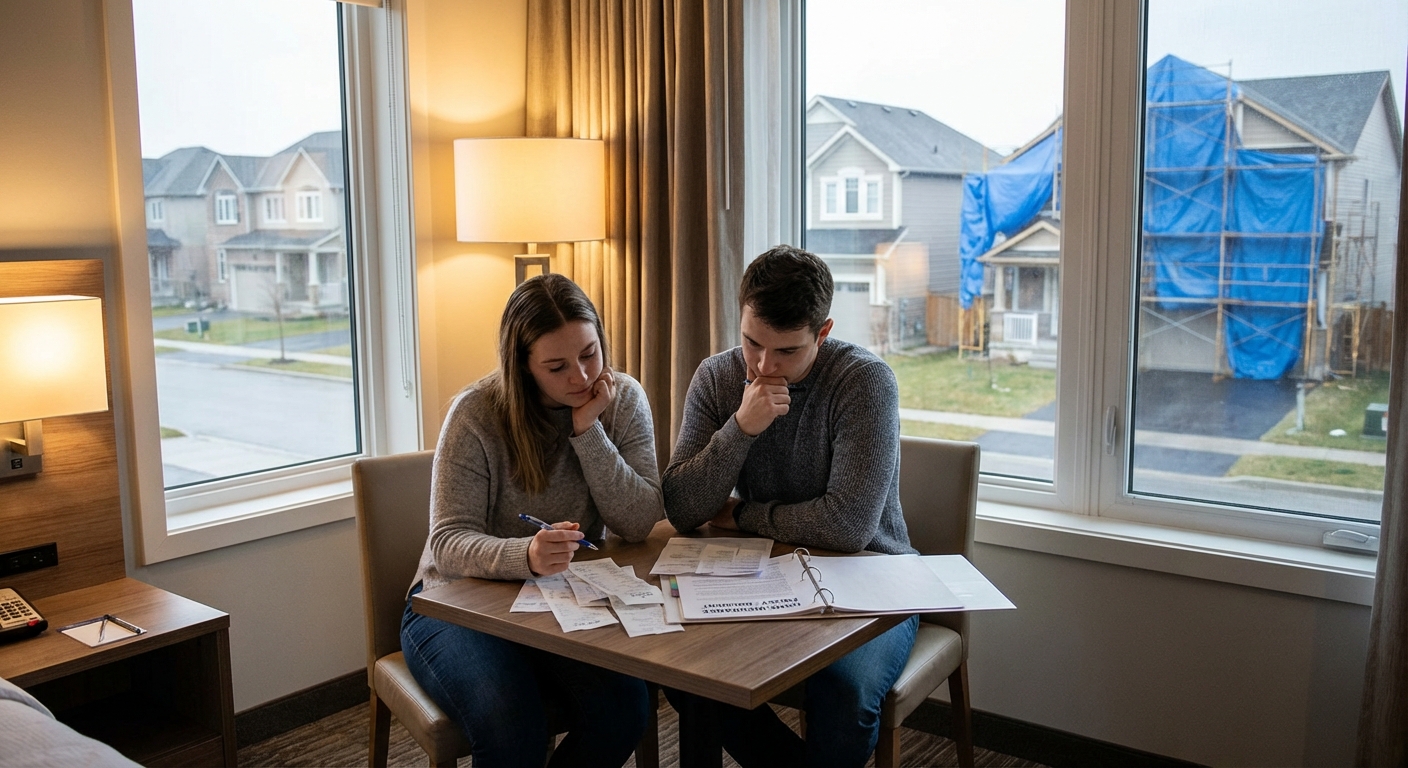
Loss of use coverage, officially known as Coverage D on a standard homeowners policy, is the part of your home insurance that pays for additional living expenses (ALE) when a covered loss makes your home temporarily uninhabitable. Think of it as your financial safety net while contractors repair your house after a fire, a severe windstorm, or a burst pipe.
The key word here is additional. Coverage D doesn't reimburse what you were already spending before the loss. It covers the extra costs you now face because you can no longer live in your home. If your weekly grocery bill was $250 but you're now spending $500 on restaurant meals because you have no kitchen access, your insurer may reimburse the $250 difference.
This coverage is standard in most homeowners, renters, and condo insurance policies and is typically activated automatically once a qualifying covered claim is filed. If you want the full picture of every coverage letter on a standard policy, our complete guide to Coverages A through F walks through how Coverage D fits into the rest of your homeowners policy.
When Does Loss of Use Coverage Apply?
Coverage D kicks in when a covered peril renders your home unfit to live in. Common triggers include:
- Fire or smoke damage
- Windstorm or hail damage
- Water damage from burst pipes (not flooding)
- Vandalism
- Government-mandated evacuation due to a covered event nearby
If the damage was caused by a flood or earthquake, a standard homeowners policy will not trigger loss of use coverage. Those perils require separate policies (NFIP flood insurance or a standalone earthquake policy). Homeowners in fire-prone regions should also review our guide on wildfire insurance coverage to confirm their policy will actually respond when it counts.
The Home Must Be Uninhabitable
Simply being inconvenienced is not enough. Your insurer (and sometimes a claims adjuster) must determine that the damage makes the home unsafe or impossible to live in during repairs. A small roof leak that leaves the rest of the house intact may not qualify, whereas extensive fire or structural damage almost certainly would. Under California Insurance Code §2060(b)(2), amended after the 2018 Camp Fire and reinforced following the 2025 Los Angeles wildfires, "uninhabitable" also includes homes affected by toxic smoke, ash contamination, or blocked utility and road access, even if the structure itself is still standing. Insurers may substitute a reasonable alternative remedy (like professional smoke remediation) but cannot simply refuse ALE because physical damage was limited.

Compare Home Insurance Plans in Ohio
Find your best options in less than 2 minutes
What Does Loss of Use Coverage Pay For?
Coverage D reimburses a broad range of reasonable and necessary additional living expenses. Here's a breakdown of what's typically covered versus what's excluded:
| Expense Category | Covered? | Details |
|---|---|---|
| 🏨 Hotel / Short-Term Rental | ✅ Yes | Comparable to your home's size and location |
| 🍽️ Restaurant Meals | ✅ Yes | Only the extra cost above your normal food budget |
| 🐾 Pet Boarding | ✅ Yes | If your temp housing doesn't allow pets |
| 📦 Storage Unit | ✅ Yes | To store belongings during repairs |
| 🚗 Extra Commuting Costs | ✅ Yes | Mileage/gas for a longer commute from temp housing |
| 🔌 Utilities at Temp Home | ✅ Yes | If higher than your normal utility bills |
| 🧺 Laundry Services | ✅ Yes | If no laundry access at temp housing |
| 🪑 Furniture Rental | ✅ Yes | For the temporary residence |
| 🏠 Your Mortgage/Rent | ❌ No | You were paying this before the loss |
| 🌊 Flood/Earthquake Damage | ❌ No | Requires separate policy |
| 👶 Childcare | ❌ No | Considered a pre-existing expense |
| 🏥 Medical / Dental Bills | ❌ No | Not related to additional living costs |
| 🐛 Pest Infestation Damage | ❌ No | Not a covered peril |

Protect your home with State Farm
Average Rate:
Homeowners who bundle and save with State Farm save an average of $1,000 per year!

You're in Good Hands® with Allstate
Average Rate:
Get comprehensive home coverage with flexible policy options.

Customize your home coverage
Average Rate:
Only pay for the coverage you need with personalized home insurance.

Smart coverage for your home
Average Rate:
Protect what matters most with award-winning home insurance.
How Much Loss of Use Coverage Do You Have?
Typical Coverage Amounts
Most standard HO-3 homeowners policies in 2026 set Coverage D somewhere between 20% and 30% of your dwelling coverage (Coverage A), according to the Insurance Information Institute, NerdWallet, and multiple 2026 policy guides. The ISO HO-3 default is 20%, though several carriers write the enhanced form at 30% and a handful of budget insurers still offer just 10%. Your specific limit is tied directly to your dwelling coverage amount, so reviewing Coverage A is the first step to knowing what Coverage D you actually have.
Here's how that plays out in real dollar amounts:
| Dwelling Coverage (Coverage A) | 10% Limit | 20% Limit | 30% Limit |
|---|---|---|---|
| $200,000 | $20,000 | $40,000 | $60,000 |
| $300,000 | $30,000 | $60,000 | $90,000 |
| $400,000 | $40,000 | $80,000 | $120,000 |
| $500,000 | $50,000 | $100,000 | $150,000 |
The 2026 national average home insurance premium sits at roughly $2,490 per year for $400,000 in dwelling coverage according to NerdWallet, with other 2026 trackers reporting anywhere from $2,395 (LendingTree) to $2,543 (Insurance.com) to $2,868 (Insurify) and Insurify projecting the national average will climb another 4% to $3,057 by year-end. Even at the standard 20% Coverage D allocation, that translates into around $80,000 of ALE protection for a typical $400,000 home. If you're not sure whether your overall limits are enough, our guide on how much home insurance coverage you need can help you pressure-test the numbers.
Time Limits
Beyond the dollar cap, many policies also impose a time limit, often 12 to 24 months, during which ALE benefits can be used. Your coverage ends when either the dollar limit is exhausted or the time limit is reached, whichever comes first.
For declared disasters in California, however, state law (Insurance Code §2060(b)(1)) mandates a minimum of 24 months of ALE from the inception of the loss, plus a required 12-month extension (36 months total) if rebuilding is delayed by factors beyond the policyholder's control. Additional six-month extensions must be granted for good cause. Section 2060(c) also guarantees at least two weeks of ALE when a state of emergency includes a civil authority evacuation order, with two-week good-cause extensions. Several other wildfire- and hurricane-prone states have adopted similar consumer-protection standards through 2026.
Should You Increase Your Loss of Use Coverage?
You may want to increase your Coverage D limit if:
- You live in a high-risk area (wildfire, hurricane, or tornado zones). Rebuilding 50% of homes destroyed in major wildfires like Paradise, Tubbs, and the Marshall Fire has historically taken about five years, and residential completion typically peaks 20-40 months after the event.
- You live in a high cost-of-living city where hotel and rental rates are expensive
- You have a larger home that would take longer to repair
- You have pets that require boarding arrangements
The cost to increase this coverage is usually minimal, often just a few dollars per month, making it one of the most cost-effective upgrades you can make to your policy.
How to File a Loss of Use Claim
Filing a Coverage D claim doesn't have to be complicated, but being organized from the start will help you get reimbursed faster. Follow these steps:
Step 1: Report the Damage Immediately Contact your insurer as soon as the loss occurs. Provide your policy number, the date of loss, the cause, and a brief description of the damage. Nearly every major insurer in 2026 allows you to file via phone, mobile app, or online portal within minutes.
Step 2: Request Coverage D / ALE Benefits Specifically ask your claims representative to review your additional living expenses coverage. Let them know you are displaced and need temporary housing. Don't assume they'll bring it up. In California, insurers are also required to provide you with a written list of items they believe would be covered under your ALE section if you request one.
Step 3: Ask About Advance Payments In federally or state-declared disasters, California law entitles you to an advance payment of no less than four months of ALE benefits on request. Many national carriers now issue an initial check even outside a declared emergency so you can secure a hotel or short-term rental right away.
Step 4: Work With the Adjuster An adjuster will inspect the damage and estimate repair timelines. Their assessment determines how long you qualify for ALE benefits. Be present during the inspection if possible.
Step 5: Start Tracking All Expenses Immediately From the first night in a hotel, save every receipt. Keep a log of:
- Hotel or rental agreements
- Restaurant and grocery receipts
- Gas mileage and transportation costs
- Pet boarding invoices
- Storage unit contracts
- Furniture rental invoices
Step 6: Submit Documentation Regularly Submit your receipts and expense logs to your insurer weekly or bi-weekly. The insurer compares your current spending to your pre-loss baseline to determine reimbursement amounts.
Step 7: Appeal if Needed If your insurer's settlement seems too low, you have the right to appeal. Consider hiring a public adjuster, a licensed professional who advocates on your behalf and typically takes 5-15% of the recovered amount as their fee. This matters more than ever: a 2026 Weiss Ratings analysis of NAIC data found a weighted 41.3% no-payment rate across 124 large insurers in 2025, and a Wall Street Journal review showed the five largest carriers (Allstate, Farmers, Liberty Mutual, State Farm, USAA) collectively failed to pay out on more than 44% of settled claims, up from 36% a decade earlier. Fifteen large insurers denied more than half of all claims in 2025 according to Weiss.
Frequently Asked Questions
Does loss of use coverage apply if I voluntarily leave my home?
No. Coverage D only applies when your home has been deemed uninhabitable due to a covered loss. If you choose to stay elsewhere for convenience while minor repairs are made, and the home is still safe to live in, your insurer will not cover those costs. The bar for "uninhabitable" is set by the adjuster, often with input from local building or health officials.
Does loss of use coverage have a deductible?
In most cases, loss of use claims are subject to your policy's standard deductible. However, the deductible is typically applied to the overall claim (like the fire damage), not separately to Coverage D. Confirm this with your insurer when you file, since hurricane and wildfire deductibles in 2026 are frequently percentage-based (1-10% of dwelling coverage) rather than flat dollar amounts.
How long does loss of use coverage last?
Most policies provide benefits for 12 to 24 months, or until your Coverage D dollar limit is exhausted, whichever comes first. In California, declared-disaster claims now guarantee a minimum 24-month ALE period with a mandatory extension to 36 months under Insurance Code §2060(b)(1) if rebuilding delays are outside your control, plus six-month good-cause extensions after that. If repairs are delayed due to contractor or permit issues, contact your insurer to request an extension in writing.
Can renters get loss of use coverage?
Yes. Renters insurance typically includes loss of use or additional living expenses coverage under a standard HO4 policy. The coverage limit for renters is usually 20-40% of the personal property coverage limit, depending on the insurer and state. If your landlord's property becomes uninhabitable due to a covered loss, your renters policy can help cover temporary housing.
What happens if my loss of use limit isn't enough?
If your Coverage D limit runs out before repairs are complete, you'll be responsible for covering the remaining temporary housing costs out of pocket. Given that major wildfire rebuilds now routinely take 3-5+ years (with fewer than 40 homes fully rebuilt across the entire LA burn zone 15 months after the January 2025 fires), reviewing your limits and potentially upgrading to a higher percentage is worth doing before a loss occurs. Talk to your insurance agent about increasing Coverage D to 25-30% if you're in a high-risk or high cost-of-living area.