
Compare Home Insurance Plans in Ohio
Find your best options in less than 2 minutes



Understanding Who Your Adjuster Really Works For
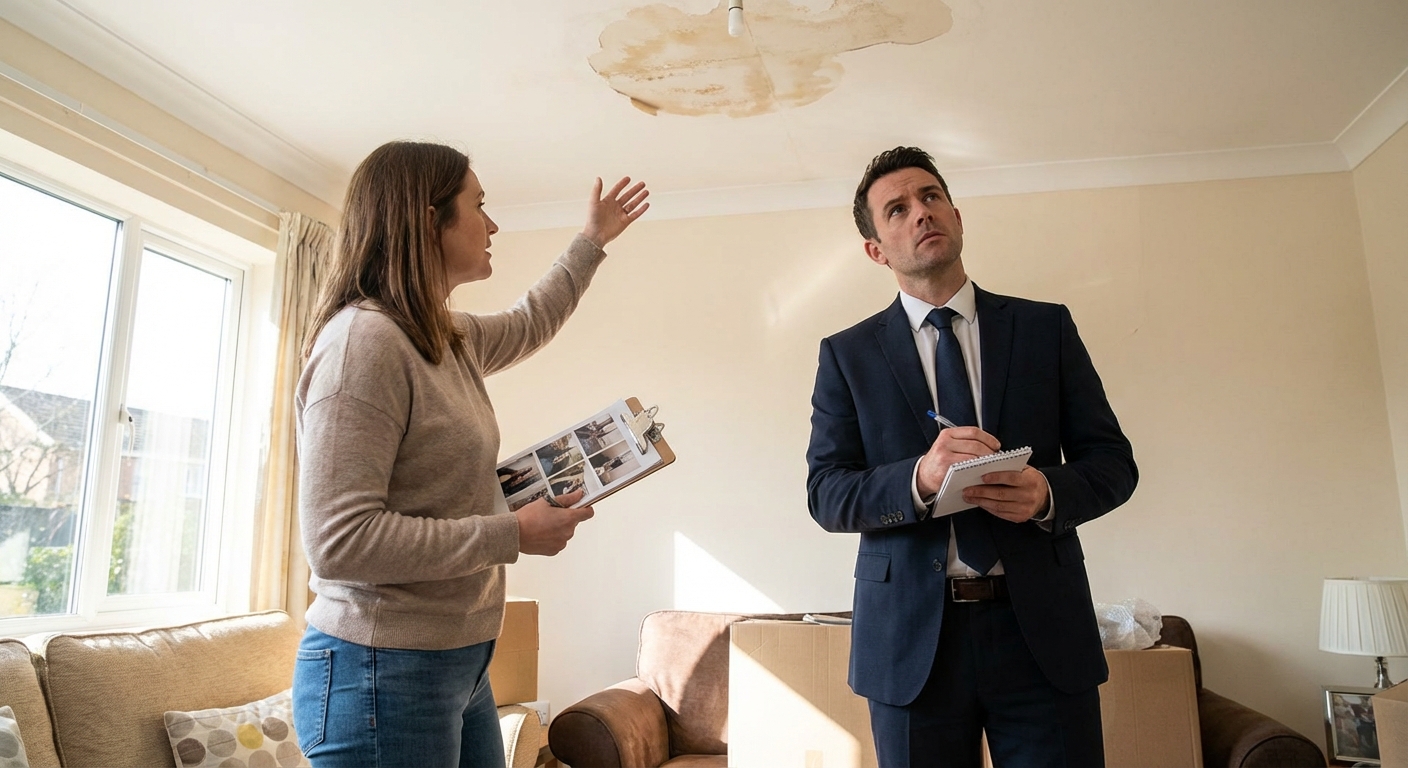
When a home insurance adjuster knocks on your door after a loss, it's easy to assume they're there to help. The reality is more complicated. The adjuster's primary goal is to protect the insurance company's bottom line, not to make sure you receive every dollar you're owed. Understanding who you're dealing with is the first step toward maximizing your claim.
Staff Adjusters vs. Independent Adjusters
There are two main types of adjusters you'll encounter during a home insurance claim:
| Type | Who They Work For | How They're Paid | When You'll See Them |
|---|---|---|---|
| Staff Adjuster | Direct employee of your insurance company | Salaried by the insurer | Routine, everyday claims |
| Independent Adjuster | Third-party contractor hired by the insurer | Paid per claim they close | Catastrophe events (storms, wildfires, floods) |
Staff adjusters are full-time employees loyal to the insurer. Their performance metrics often reward cost containment, so they have a systemic incentive to keep payouts low.
Independent adjusters are brought in during high-volume disasters when staff can't handle the workload. While they aren't direct employees, they are still paid by and working on behalf of the insurer. Don't mistake their outsider status for neutrality. They are still incentivized to close claims quickly and within company cost targets.
The Rise of AI-Assisted Adjusting in 2026
A major shift in 2026 is how deeply AI is embedded in the claims process. Major carriers now deploy computer-vision platforms like Tractable and CCC Intelligent Solutions, both trained on hundreds of millions of damage photographs, to analyze homeowner-submitted images, feed drone and aerial imagery into damage models after catastrophes, and run agentic AI at First Notice of Loss (FNOL) to triage severity, verify coverage, and gather documentation. CCC has launched the first AI-powered straight-through-processing estimating solution, meaning some routine property claims can now be scoped, priced, and paid with minimal adjuster involvement. Tractable reports that its models can remove roughly eight days from claim cycle times and review about half of claims without human involvement. Industry reporting shows AI triage, image extraction, and fraud scoring have all moved from experimental to production-ready inside U.S. carriers.
For homeowners, that means faster initial responses but also more reliance on software-generated estimates that may not reflect local repair costs. If your insurer's estimate seems disconnected from real contractor pricing in your area, that disconnect is increasingly worth challenging in writing. Learn more about the home insurance claims process and how to spot AI-driven undervaluations.

Compare Home Insurance Plans in Ohio
Find your best options in less than 2 minutes
What Not to Say to a Home Insurance Adjuster
Words matter enormously during an adjuster's visit. Certain phrases can be used against you to justify reducing or denying your claim. Here are the statements you should never make:
Phrases That Damage Your Claim
- "It's not that bad" or "The damage seems minor." Downplaying damage gives the adjuster justification to undervalue repairs. Let the evidence speak for itself.
- "I've had issues with this before." Mentioning prior problems with your roof, plumbing, or any system signals pre-existing damage or deferred maintenance, both of which can be used to classify damage as non-covered wear and tear. Review our guide on maintenance requirements before you speak.
- "I already cleaned it up or made the repair." Permanently altering or cleaning damage before the adjuster inspects it removes critical evidence and can void parts of your claim.
- "Your offer sounds fair to me." Never verbally accept an offer on the spot. First offers are almost always lower than what you're entitled to.
- "I don't have receipts or photos." Admitting incomplete documentation weakens your negotiating position immediately.
- "Sure, I'll give a quick recorded statement." Recorded statements taken casually can be replayed later to argue you contradicted yourself or downplayed damage. Stick to written communication when possible.

Protect your home with State Farm
Average Rate:
Homeowners who bundle and save with State Farm save an average of $1,000 per year!

You're in Good Hands® with Allstate
Average Rate:
Get comprehensive home coverage with flexible policy options.

Customize your home coverage
Average Rate:
Only pay for the coverage you need with personalized home insurance.

Smart coverage for your home
Average Rate:
Protect what matters most with award-winning home insurance.
How to Prepare for the Adjuster's Inspection
Preparation is your most powerful tool. Homeowners who show up organized, documented, and knowledgeable consistently secure better settlements than those who are caught off guard. That matters more in 2026 than ever. According to Weiss Ratings' April 2026 analysis of NAIC filings, 15 large insurers closed at least half of their homeowner claims with no payment, including Mid-Century Insurance Co. of Texas (78.4%), Lemonade (64%), Spinnaker (61%), and Citizens Property of Florida (60.6%). State-level patterns are equally striking: California-domiciled insurers closed about 52.4% of claims with no payment, Texas insurers 48.6%, and Florida insurers 44.1%, all above the national weighted average.
Before the Adjuster Arrives
- Read your policy carefully. Know your coverage limits, deductibles, and whether you have Replacement Cost Value (RCV) or Actual Cash Value (ACV) coverage. Learn how payout options work and review the claim payout timeline.
- Document all damage thoroughly. Take timestamped photos and videos from multiple angles. Capture close-up shots of serial numbers and model info on damaged items. A complete home inventory speeds this step up dramatically.
- Make only temporary repairs. Tarp a damaged roof, cover broken windows, but don't permanently fix anything before the inspection. Keep all receipts, as these are typically reimbursable.
- Create a room-by-room damage inventory. List every affected item with purchase date, estimated value, and condition.
- Get at least one independent contractor estimate. Having your own written estimate gives you a concrete counter when the adjuster's number comes in low.
Documentation Checklist
| Documentation Type | What to Include |
|---|---|
| 📷 Photos & Videos | Wide shots plus close-ups of all damage, timestamped |
| 🧾 Receipts & Invoices | Original purchases, recent renovations, appliance upgrades |
| 📋 Damage Inventory | Item name, model, purchase date, estimated replacement cost |
| 🔧 Maintenance Records | Proof of upkeep (roof inspections, HVAC service, etc.) |
| 📝 Contractor Estimates | At least one independent written estimate |
| 📞 Communication Log | Dates, times, and summaries of all adjuster and insurer contacts |
Common Lowball Tactics and How to Counter Them
Insurance adjusters are trained in a range of tactics designed to minimize what they pay out. Knowing these strategies in advance puts you ahead of the game.
Top Adjuster Tactics to Watch For
ACV vs. RCV: The Depreciation Trap
One of the most misunderstood adjuster tactics involves how depreciation is applied. Under an Actual Cash Value (ACV) policy, the adjuster subtracts depreciation from the repair or replacement cost. For example, a roof that would cost $20,000 to replace today may only net you $4,800 after a 76% depreciation deduction on a 15-year-old structure, leaving you with a massive gap to cover out of pocket.
Under a Replacement Cost Value (RCV) policy, you receive the full cost to repair or replace, minus your deductible. If you have RCV coverage and the adjuster is applying ACV-style deductions, push back immediately and cite your policy language. Our recoverable depreciation guide explains how to claim the depreciation holdback after repairs are complete, including the enacted Texas HB 4268 24-month rule and California's 36-month total-loss window.
Other Common Lowball Tactics
- The "cash-out" approach. The adjuster minimizes damage during a quick walk-through, then immediately offers a check based on a pared-down scope and asks "does that sound fair?" The number is low because the scope is intentionally narrow.
- Rushed or surface-level inspections. Especially after catastrophes, adjusters often use "being busy" as an excuse for skipping hidden areas like attics, crawl spaces, wall cavities, and mechanical systems where the most expensive damage often hides.
- "Our software says" pricing. Adjusters lean on Xactimate or similar systems with preset labor and material rates that often lag behind local market prices, especially in post-disaster ZIPs where demand spikes. Ask which ZIP code and price list they used.
- Patch instead of replace. Insurers push spot repairs on roofs, siding, or flooring even when building code or manufacturer requirements call for full replacement. Cite your matching endorsement and local code.
- Scope creep omissions. Writing estimates that leave out debris removal, code upgrades, permits, overhead and profit, or matching materials.
- Preferred contractor pressure. Insisting you use the insurer's contractor whose low estimate then defines your loss. In most states you can pick your own.
- Serial documentation requests. Asking for paperwork in stages rather than all at once to stall the claim and wear you down.
- Recorded statement "gotchas". Recording informal interviews hoping you'll guess about causes, downplay damage, or contradict prior statements.
- Pressure to settle fast and sign a full release. Creating urgency so you accept and give up the right to file supplements later.
- The "under your deductible" bluff. Claiming damage is worth less than your deductible even when your contractor's estimate is much higher.
How to counter: Always request a detailed, itemized estimate in writing. Compare it against your contractor's quote line by line and submit a formal written rebuttal citing specific discrepancies. Keep all communication in writing. If the offer falls short, the home insurance appraisal clause gives you a powerful tool to challenge it.
Red Flags Your Claim Is Being Undervalued
Watch for these warning signs that your settlement is falling short:
- The offer is a round number with no itemized breakdown
- The adjuster spent very little time on the inspection or relied only on photos and aerial imagery
- Hidden damage (mold, structural issues) was not investigated
- Your contractor's estimate is significantly higher than the adjuster's
- Depreciation was applied aggressively or without explanation
- Additional living expenses were excluded despite displacement
- The adjuster discourages you from getting a second opinion
If your claim is outright rejected, our breakdown of common denial reasons explains your appeal options, and our guide on when to hire an attorney covers what to do if the insurer is acting in bad faith.
Public Adjuster vs. Handling It Yourself
Not every claim requires outside help, but for large or complex losses, a public adjuster can be the difference between a fair settlement and a severe underpayment.
When to Handle the Claim Yourself
For minor, straightforward claims where the damage scope is clear and the insurer's offer aligns closely with your contractor estimate, handling it yourself is perfectly reasonable. You'll avoid the cost of a public adjuster's fee and maintain direct control. Our guide on when to file a claim walks through the deductible math.
When to Hire a Public Adjuster
A public adjuster is a licensed professional who works exclusively for you (the policyholder) to document, file, and negotiate your claim. They're especially valuable when:
- Your loss involves fire, water, storm, or hurricane damage
- The insurer has issued a lowball offer or outright denial
- You don't fully understand your policy's coverage terms
- The claim involves complex documentation like detailed inventories or business income loss
What does a public adjuster cost? Most work on contingency. As of 2026, fees typically range from 10% to 20% of the final settlement, with several states imposing statutory caps or contract rules:
| State | Standard Cap | Emergency / Catastrophe Cap |
|---|---|---|
| Florida (§ 626.854) | 20% (non-emergency) | 10% first year after Governor's declaration; 1% if insurer pays policy limit within 14 days of loss |
| New York | 12.5% (residential) | Same |
| Illinois | 10% (personal residence) | Same |
| Kentucky (2026 HB 568) | 5% | 5% |
| West Virginia (2026 HB 5392) | 10% / 5% split | Same |
| Texas | No statutory percentage cap; TDI requires reasonable, disclosed fees (market is 10 to 15%) | Same |
| California (AB 597, pending) | No statewide percentage cap yet; contract and disclosure rules apply | Proposal includes cap on "new money" for disaster claims |
Florida's statute (§ 626.854) sets the strictest published caps: 20% for non-emergency claims, 10% for claims filed within one year of a Governor-declared state of emergency, and just 1% when the insurer pays or agrees to pay at or above the policy limit within 14 days of the loss (or 10 days after the public adjusting contract is signed, whichever is later). Kentucky's HB 568 introduced a new 5% cap in 2026, and West Virginia's HB 5392 set a 10% / 5% split structure. Texas does not have a Florida-style statutory percentage cap, but TDI enforces licensing, disclosure, and reasonableness rules. California's AB 597 remains in the Legislature and is focused primarily on tightening contract, disclosure, and solicitation rules.
For more detail on contracts and fee structures, see our guide on hiring a public adjuster and learn how to evaluate a public adjuster contract before signing.
How to Negotiate Effectively
If you choose to negotiate on your own, follow these steps:
- Never accept the first offer. It is almost always the insurer's opening position, not their final one.
- Request a line-by-line breakdown of how every figure was calculated, including which pricing software and ZIP code were used.
- Submit a written counter-proposal citing your contractor estimate, photos, and policy language.
- Stay professional and persistent. Document every conversation with dates and summaries.
- Know your minimum acceptable number before negotiating so you don't settle under pressure.
- Escalate if needed. Request appraisal, file a complaint with your state's Department of Insurance, or consult an attorney. Understanding how settlements are paid out helps you spot underpayment quickly, and knowing your filing deadlines protects your right to sue.
Frequently Asked Questions
Can I dispute my insurance adjuster's estimate?
Yes, and you should if it doesn't cover your actual repair costs. Start by requesting an itemized, written breakdown of the estimate, then compare it against independent contractor quotes and submit a formal written dispute. Most insurers have an internal appeals process, and many policies include an appraisal clause that lets both sides bring in neutral appraisers to resolve disagreements.
How long does a home insurance adjuster have to settle a claim?
Timelines vary by state. California requires insurers to acknowledge a claim within 15 calendar days, accept or deny within 40 days of receiving proof of loss, and issue payment on undisputed amounts within 30 days of acceptance. Texas requires acknowledgment within about 15 business days, a decision within 15 business days after receiving all required information (extendable in some cases), and payment within 5 business days of approval. Florida's recent reforms push acknowledgment to about 14 days, with investigation and decision windows generally in the 60 to 90-day range depending on the specific statute. Simple property claims settle in about 2 to 4 weeks on average, while disaster-related claims can take considerably longer.
Do insurance adjusters always lowball?
Not always, but initial offers are often lower than what policyholders are entitled to, particularly on large or complex claims. The Wall Street Journal's 2026 analysis found the five largest U.S. home insurers didn't pay out on more than 44% of resolved homeowner claims last year, up from 36% a decade ago, and Weiss Ratings' April 2026 review found 15 large insurers closed at least half of their claims with no payment (led by Mid-Century of Texas at 78.4%). That doesn't mean every adjuster acts in bad faith, but it does mean you should verify any offer against your own documentation before accepting.
What is the appraisal clause in a home insurance policy?
The appraisal clause is a dispute resolution provision found in most homeowners insurance policies. If you and your insurer can't agree on the value of a claim, each side selects an independent appraiser, and the two appraisers then choose a neutral umpire. A decision agreed upon by any two of the three parties becomes binding, and this process is often faster and less expensive than litigation.
Is it worth hiring a public adjuster for a small claim?
Generally, no. Public adjusters typically charge 10% to 20% of the settlement (subject to state caps), so on a small claim (say, under $5,000) the fee may eat significantly into your recovery without much added benefit. Public adjusters are most valuable for large, complex, or disputed claims where their expertise and negotiating leverage can yield a substantially higher settlement than you'd achieve on your own.