
Compare Home Insurance Plans in Ohio
Find your best options in less than 2 minutes



When Home Insurance Covers Food Spoilage
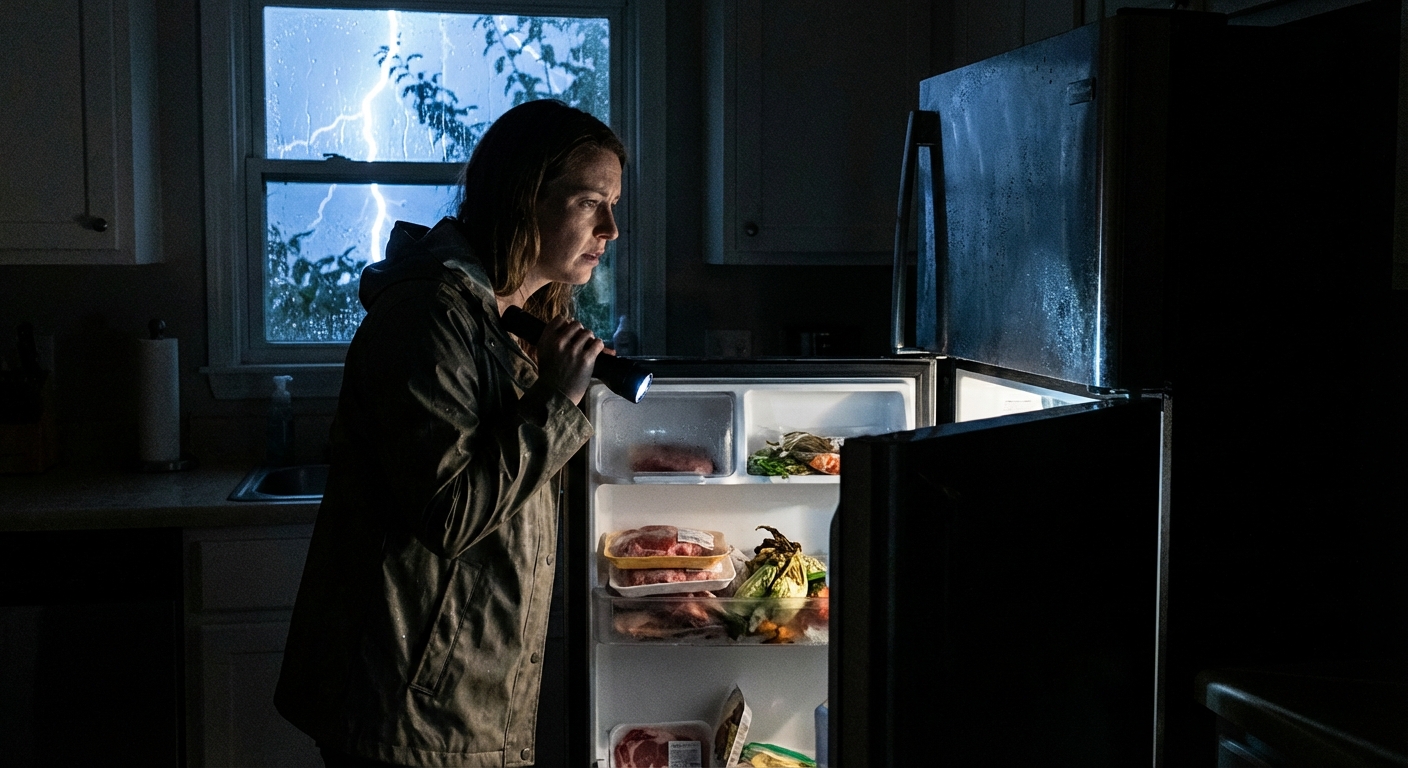
Most homeowners don't realize their policy can reimburse them for a refrigerator or freezer full of spoiled groceries, but coverage is far from automatic. Standard homeowners insurance policies typically include some level of food spoilage protection, usually capped at $500 per event, though limits can range from $250 to $2,500 depending on the insurer. Coverage only applies when the loss is caused by a covered peril. That means a storm knocking out your power qualifies, but a forgotten freezer door does not.
With outage durations climbing (45% of U.S. utility customers experienced at least one outage in the first half of 2025, and customers in the South are seeing longest outages average 18.2 hours), understanding your policy has never been more important. For a full overview of how policies work, review our guide to common home insurance exclusions.
Covered vs. Not Covered: What Triggers a Valid Claim?
The single most important factor in a food spoilage claim is what caused the loss. Your insurer will only pay if the trigger is a peril already listed in your policy.
✅ Scenarios That ARE Typically Covered
Power outages from storms are the most commonly covered scenario. In 2024 alone, three major hurricanes (Beryl, Helene, and Milton) drove the largest single-year jump in customer outage hours in a decade, and 2025 continued the trend with a derecho-scale wind event cutting service to over 450,000 Pennsylvania customers in April and Texas storms knocking out power to more than 130,000 customers in May. If a windstorm, tornado, or lightning strike causes your power to go out and your food spoils as a result, your homeowners policy will typically step in, up to your coverage limit. Off-premises outages caused by widespread grid failures or utility company problems are commonly excluded unless your policy specifically includes off-premises power failure coverage. Learn more about lightning damage coverage if a strike caused your outage.
❌ What's Excluded
- Negligence: Leaving the freezer door open or forgetting to plug the unit back in after cleaning
- Gradual failure: A refrigerator that slowly stops cooling over weeks due to age or poor maintenance
- Floods and earthquakes: These are standard policy exclusions unless you carry separate coverage
- Utility shutoffs: Power cut for nonpayment or planned maintenance
- Dry goods and canned items: Coverage is limited to refrigerated and frozen perishables only, not rice, flour, or canned goods

Compare Home Insurance Plans in Ohio
Find your best options in less than 2 minutes
Does Equipment Breakdown Coverage Fill the Gap?
Standard homeowners insurance does not cover appliance failure due to mechanical breakdown. If your refrigerator's compressor suddenly burns out with no storm involved, you're typically out of luck unless you've added equipment breakdown coverage to your policy. Read more about when home insurance covers appliances to see where this add-on fits.
What Equipment Breakdown Coverage Does
Equipment breakdown coverage is an affordable add-on that protects against sudden and accidental mechanical or electrical failures like motor burnouts, compressor surges, or electrical shorts. It bridges a major gap left by standard homeowners policies, and it shares similarities with power surge damage coverage, which is another gap most people overlook.
In 2026, equipment breakdown coverage typically costs about $25 to $50 per year and provides up to $50,000 to $100,000 per occurrence, usually with a separate $500 deductible. Nationwide, for example, offers $50,000 in coverage plus a dedicated $3,000 food spoilage sublimit for roughly $39 to $45 per year depending on state. Edison Insurance offers a similar $100,000 limit product for a flat $50 per year with a $500 deductible. It does not cover gradual deterioration or appliances that fail from lack of maintenance.

Protect your home with State Farm
Average Rate:
Homeowners who bundle and save with State Farm save an average of $1,000 per year!

You're in Good Hands® with Allstate
Average Rate:
Get comprehensive home coverage with flexible policy options.

Customize your home coverage
Average Rate:
Only pay for the coverage you need with personalized home insurance.

Smart coverage for your home
Average Rate:
Protect what matters most with award-winning home insurance.
How to Document and File a Food Spoilage Claim
Filing a food spoilage insurance claim successfully comes down to one thing: documentation. The more evidence you provide, the stronger your claim. This matters more than ever now that the five largest carriers close about 44% of claims without payment, and denial rates for smaller claims can be even higher.
Step-by-Step: Filing Your Food Spoilage Claim
Step 1, Confirm coverage first Review your policy declarations page or call your agent to confirm the cause of spoilage is a covered peril and that your food spoilage limit exceeds your deductible. If your deductible is higher than your loss, filing a claim may not be worthwhile.
Step 2, Take photos and video immediately Before throwing anything away, photograph or video every item in your refrigerator and freezer. Capture:
- Thawed meats and seafood
- Melted frozen goods
- Spoiled dairy and produce
- The fridge/freezer interior showing the extent of the loss
Step 3, Create a detailed inventory list Write down every item that spoiled, along with estimated quantities and replacement costs. Use recent grocery receipts, bank statements, or even store websites to establish accurate values. Focus especially on high-value items like steaks, seafood, and specialty foods.
Step 4, Gather proof of the cause
- For storm outages: save utility company outage notifications, weather reports, or news coverage
- For appliance failures: document the malfunction with a repair technician's written diagnosis
Step 5, File promptly Contact your insurer as soon as possible. Most now offer online portals or mobile apps in addition to phone claims. Provide your policy number, the date and cause of the loss, your photo documentation, and your itemized food inventory.
Food Spoilage Endorsements: Increase Your Coverage Limits
If your standard policy's $500 limit feels inadequate, especially if you bulk-buy meat or keep a well-stocked deep freezer, a food spoilage endorsement (also called a rider or refrigerated property coverage) is a low-cost way to increase your protection. With the average U.S. homeowners premium now roughly $2,490 to $2,966 per year in 2026, and Insurify projecting it will top $3,057 by year-end after a 12% jump in 2025, adding under $50 for this endorsement is a small fraction of your total bill.
What Endorsements Typically Offer
| Feature | Standard Policy | With Endorsement |
|---|---|---|
| Coverage Limit | $250 to $500 | Up to $2,500+ |
| Deductible | Standard policy deductible | Often a separate lower deductible ($100) or none |
| Mechanical Breakdown | Usually excluded | Often included |
| Off-Premises Outages | Usually excluded | May be included |
| Annual Cost | Included in base | Under $50/year |
A food spoilage endorsement broadens what's covered and raises your payout ceiling, without raising your standard policy deductible in most cases. Some insurers offer a separate, lower deductible (such as $100) or even waive the deductible entirely for food spoilage claims, making it much more practical to actually use the coverage.
If you store expensive items like grass-fed beef, wild-caught seafood, or specialty frozen meals in bulk, adding an endorsement is one of the smartest, most affordable upgrades you can make. For more ways to protect your budget as premiums rise, see how water damage coverage gaps can create similar problems worth patching, and review the power surge claim checklist if lightning was involved.
Frequently Asked Questions
Does home insurance automatically cover food spoilage?
Many standard homeowners policies include a limited amount of food spoilage coverage, typically $250 to $500, but it is not universal. Coverage only applies when the loss results from a covered peril, such as a storm-caused power outage. You should review your declarations page or call your agent to confirm whether your policy includes it and what the limit is.
Does home insurance cover food loss from a power outage caused by the utility company?
Generally, no. Standard policies cover on-premises power failures tied to a covered peril, like a storm damaging your home's electrical system or nearby power lines. Widespread grid failures or utility company outages unrelated to a covered peril on your property are typically excluded. In those situations, you may be able to seek reimbursement directly from your utility provider, though most utilities do not reimburse for spoiled food.
Does homeowners insurance cover food spoilage if my refrigerator breaks down?
Not under a standard homeowners policy. Appliance breakdowns are typically excluded from standard coverage. However, if you've added equipment breakdown coverage to your policy for roughly $25 to $50 per year, a sudden and accidental mechanical failure like a compressor burnout can be covered, and that coverage often extends to the food spoiled as a result, with dedicated food spoilage sublimits (such as Nationwide's $3,000).
How much can I expect from a food spoilage insurance claim?
The average food spoilage claim payout is limited by your policy's coverage cap, which is typically $250 to $500 on a standard policy. After applying your deductible, the actual check may be smaller, or nothing at all if your deductible exceeds the loss. Adding a food spoilage endorsement can raise limits to $2,500 or more, with a lower separate deductible (or none) that makes smaller claims more viable.
Is it worth filing a home insurance claim for spoiled food?
It depends on the value of the food lost and your deductible. If your deductible is $1,000 and you lost $600 worth of food, filing a claim results in no payout and could still impact your premiums at renewal. However, if you lost a freezer full of expensive meat and seafood worth $1,500 or more, and your food spoilage limit is high enough, filing a claim makes financial sense. With the average longest outage now 12.8 hours (and averaging much longer in the South after extreme weather events), doing the math before calling your insurer is more important than ever.