
Compare Home Insurance Plans in Ohio
Find your best options in less than 2 minutes



What Is the California FAIR Plan?
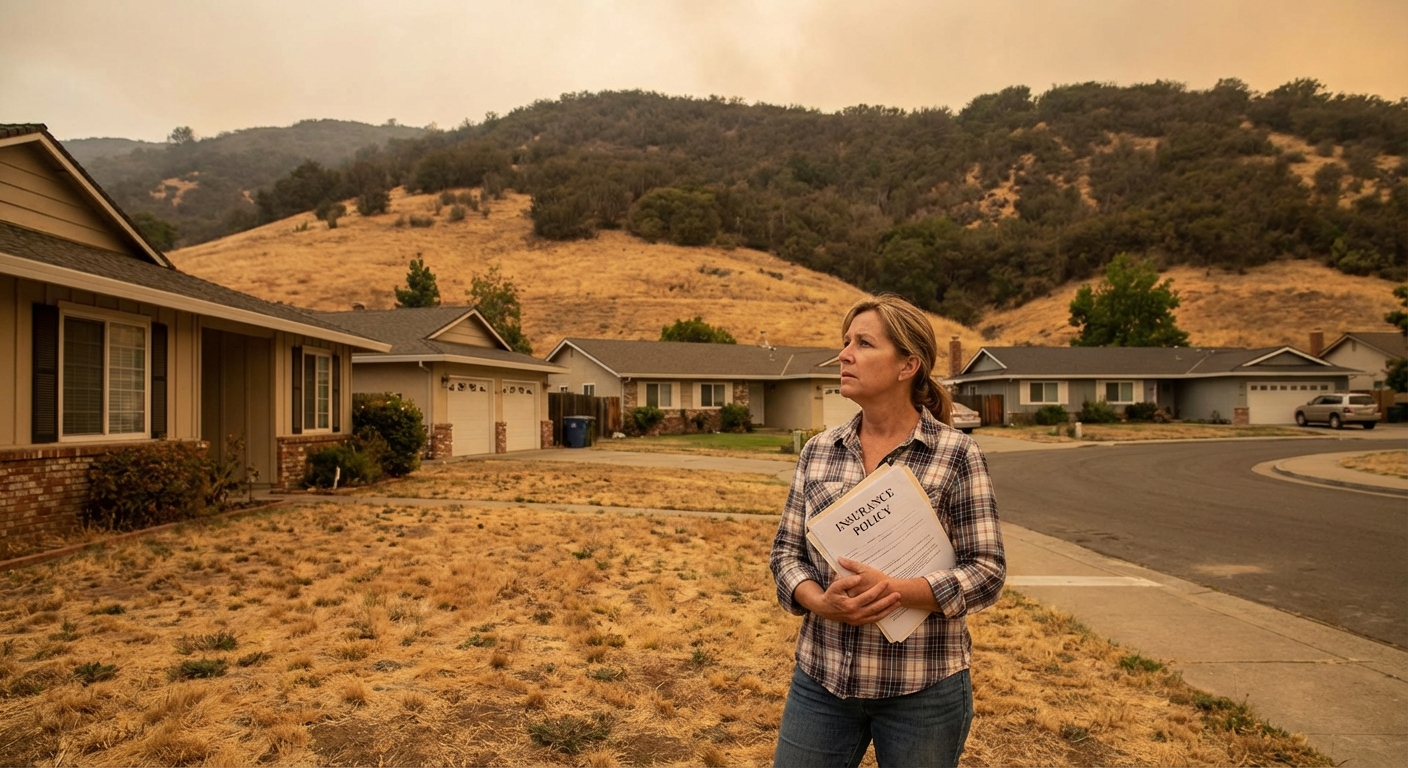
The California FAIR Plan, short for Fair Access to Insurance Requirements, is the state's insurer of last resort. It was established in 1968 under California Insurance Code sections 10090 et seq. to guarantee basic property insurance to homeowners who cannot obtain coverage from any private insurer in the voluntary market. It is not a government agency. Instead, it is a syndicated pool backed by all licensed property and casualty insurers in California, who share profits, losses, and expenses proportional to their market share.
The FAIR Plan's role has never been more critical than it is today. As of March 2026, the FAIR Plan's total policies in force reached 684,388, a 6% increase since September 2025 and a 152% increase since September 2022. Total exposure has hit a staggering $750 billion, up 242% over the same period, and written premium is now roughly $2.02 billion. Encouragingly, growth has begun to slow: only about 16,000 residential policies were added in Q1 2026, a sharp decline from prior quarters when new policies ranged from 35,000 to 50,000. This is an early sign that California's Sustainable Insurance Strategy may be starting to stabilize the market.
Two landmark laws are reshaping the plan in 2026:
- AB 226 (FAIR Plan Stabilization Act, 2025) added liquidity tools such as catastrophe bonds and emergency loans so the plan can reliably pay claims after major disasters.
- AB 1680 (Make It FAIR Act) cleared the Assembly Insurance Committee and, on June 24, 2026, passed the Senate Insurance Committee on a 6-0 vote before being re-referred to Senate Appropriations. If enacted, it would mandate comprehensive homeowners coverage options, strengthen claims handling, add transparency requirements, and improve clearinghouse programs to move policyholders back to the private market.
For broader context on what's happening in the state, read our full breakdown of the California home insurance crisis.

Compare Home Insurance Plans in Ohio
Find your best options in less than 2 minutes
Who Qualifies for the California FAIR Plan?
Eligibility is straightforward but requires documentation. You qualify for FAIR Plan coverage if you:
- Own property located in California, in any area, though it is most commonly used for properties in high wildfire-risk zones such as the foothills, mountain communities, and WUI (Wildland-Urban Interface) areas.
- Have been unable to obtain coverage from the private market. You must document a good-faith effort to secure insurance from admitted insurers. Your broker will need to show denial letters or non-renewal notices from private companies to support your application.
- Are not denied coverage due to your own fault. The FAIR Plan is designed for homeowners denied "through no fault of their own" due to environmental hazards like wildfire proximity, not due to poor property maintenance or unpaid premiums.
The 2026 California Insurance Crisis Context
California's insurance market remains under severe stress, but there are real signs of stabilization. State Farm, the state's largest private home insurer, has not written new home insurance policies since 2023 and, under a March 2026 settlement, locked in a 17% emergency rate increase. Allstate paused new homeowners business in late 2022. Farmers joined the Sustainable Insurance Strategy in May 2026 as the state's second-largest home insurer and has since expanded availability.
As of mid-2026, six homeowners insurance groups have submitted SIS rate filings: Mercury, CSAA, USAA, Pacific Specialty, Farmers, and California Casualty. Four of those (Mercury, CSAA, USAA, and Pacific Specialty) have been approved. Travelers announced voluntary participation and AAA / Auto Club of Southern California submitted a rate filing under the strategy in 2026, while Zurich U.S. filed a commercial property growth plan under the same framework in June 2026. In exchange for regulatory flexibility, these carriers must write at least 85% of their statewide market share in wildfire-distressed and historically underserved areas. If you've received a non-renewal notice or been told your area is uninsurable, the FAIR Plan exists precisely for this situation. You may also want to explore what to do when your insurer leaves your state.

Protect your home with State Farm
Average Rate:
Homeowners who bundle and save with State Farm save an average of $1,000 per year!

You're in Good Hands® with Allstate
Average Rate:
Get comprehensive home coverage with flexible policy options.

Customize your home coverage
Average Rate:
Only pay for the coverage you need with personalized home insurance.

Smart coverage for your home
Average Rate:
Protect what matters most with award-winning home insurance.
What the FAIR Plan Covers and What It Leaves Out
Understanding exactly what you're buying is essential. The FAIR Plan is a named-peril policy, meaning it only covers specific events listed in the policy, not everything except what's excluded (like a standard HO-3 policy).
What the FAIR Plan Covers
The basic policy covers:
- 🔥 Fire and lightning
- 💨 Smoke damage
- 💥 Internal explosions
Optional endorsements can add:
- Windstorm and hail
- External explosions
- Riots and civil commotion
- Aircraft and vehicle damage
- Volcanic eruptions
- Vandalism and malicious mischief
- Other structures (e.g., detached garages)
- Personal property (contents)
What the FAIR Plan Does NOT Cover
FAIR Plan Coverage Limits (2026)
| Property Type | Maximum Coverage Limit |
|---|---|
| Residential (owner-occupied, rented, condo) | Up to $3 million per location |
| Vacant residential (up to 1 year) | Up to $3 million per location |
| Commercial Fire (per building) | Up to $20 million per structure |
| Commercial Fire (per location) | Up to $100 million per location |
The expanded commercial limits of $20 million per building and $100 million per location took effect July 26, 2025 under a 3-year High Value Commercial program and apply to housing developments, HOAs, farms, wineries, and businesses with multiple buildings. For most California homeowners, the $3 million residential cap is sufficient, but in high-value markets like Los Angeles, Marin County, or the Bay Area foothills, it may fall short of full replacement cost. Reconstruction costs have increased 30% to 50% in recent years due to inflation.
FAIR Plan Costs vs. Standard Home Insurance
The FAIR Plan is not cheap. Because it covers the highest-risk properties in the state, premiums are considerably higher than what you'd pay for a comparable standard homeowners policy. And rates are about to climb sharply.
Typical Cost Comparison
| Factor | California FAIR Plan | Standard Homeowners Policy |
|---|---|---|
| Average annual premium (est.) | ~$3,200+/policy | Approx. $1,700 to $2,000 nationally |
| California market average | $3,900 to $6,100+ | Varies widely by ZIP code |
| Approved 2026 rate change | +29.1% statewide, effective Oct. 15, 2026 | +17% (State Farm settlement) |
| Coverage scope | Basic named perils (fire/smoke) | Comprehensive (fire, liability, theft, water, etc.) |
Keep in mind that FAIR Plan premiums represent only part of your total insurance cost if you pair it with a DIC policy (which you almost certainly should, more on that below). The combined FAIR Plan + DIC cost is still typically more expensive than a single HO-3 policy from a private insurer, but for homeowners with no private market options, it's often the only path to comprehensive coverage. For more strategies, see our home insurance affordability crisis guide and read up on why rates keep climbing in 2026.
How to Apply for the California FAIR Plan
You cannot apply directly to the FAIR Plan as a homeowner. All applications must go through a licensed California insurance broker who is registered with the FAIR Plan. Here's how the process works:
Step-by-Step Application Process
Step 1: Find a Registered FAIR Plan Broker. Use the FAIR Plan's Broker Finder tool at cfpnet.com or call 800-339-4099 to locate a licensed broker registered to write FAIR Plan policies. There is no extra cost to you for using a broker.
Step 2: Document Your Eligibility. Your broker must demonstrate that you cannot obtain coverage from traditional insurers. This means gathering denial letters, non-renewal notices, or other documentation proving you've made a good-faith effort to find private coverage. Understanding what makes a property hard to insure can also help you plan.
Step 3: Select Your Coverage Options. Your broker will help you choose the right base policy and any optional endorsements (windstorm, vandalism, personal property, etc.) that fit your needs and budget.
Step 4: Submit the Application. The broker submits your application to the FAIR Plan on your behalf and handles all communication through approval and policy issuance.
Step 5: Set Up Payment. The FAIR Plan offers autopay enrollment for the duration of the policy term, along with no-fee monthly payment plans and electronic transfer options.
Do You Need a DIC Wrap-Around Policy?
For most FAIR Plan policyholders, the answer is yes. Because the FAIR Plan only covers fire and select named perils, you'll have significant gaps in protection that a Difference in Conditions (DIC) policy is specifically designed to fill. (Note: AB 1680, if enacted in its current form, may eventually require the FAIR Plan to offer a more comprehensive homeowners option, but the bill is still moving through Senate Appropriations as of mid-2026.)
What a DIC Policy Adds
A DIC policy wraps around your FAIR Plan to create coverage that closely mirrors a full HO-3 homeowners policy. Providers such as IAT Insurance, Stillwater, and others offer customizable DIC policies with deductibles and limits designed to match your FAIR Plan policy, often up to $3 million in dwelling coverage. For a deeper dive, see our complete FAIR Plan insurance guide.
It's also worth noting that many mortgage lenders require liability coverage as a condition of your loan. Since the FAIR Plan doesn't include liability, a DIC policy (or a standalone personal liability policy) is often a mortgage compliance requirement, not just a nice-to-have.
Frequently Asked Questions (FAQ)
Can I get the California FAIR Plan if I still have private insurance options?
No. The FAIR Plan is strictly an insurer of last resort and is only available to homeowners who have made a documented, good-faith effort to obtain coverage in the private market without success. If even one admitted carrier is willing to insure your property, you are not eligible for the FAIR Plan. Your broker must demonstrate this in your application.
How long can I stay on the California FAIR Plan?
There is no defined time limit, but the plan is intended as a temporary bridge. You should periodically work with your broker to check whether private market options have become available, especially as California's Sustainable Insurance Strategy brings more carriers back to the state. AB 1680 specifically aims to improve clearinghouse programs to expedite policyholders returning to the regular market.
Is the California FAIR Plan the same as earthquake insurance?
No. The FAIR Plan does not cover earthquake damage. If you live in a seismically active area, which includes most of California, you'll need a separate policy through the California Earthquake Authority (CEA) or a private carrier. Similarly, flood damage requires a separate flood insurance policy through the NFIP or a private flood insurer.
What happens to my FAIR Plan if there is a major wildfire and many homes are destroyed at once?
This is a legitimate concern. The FAIR Plan's total exposure has reached $750 billion as of March 2026, and it absorbed roughly $4.8 billion in claim exposure from the January 2025 Palisades and Eaton fires alone. AB 226 (2025) was enacted specifically to strengthen the plan's financial stability through tools like catastrophe bonds and emergency loans. All licensed California insurers are legally required to backstop the FAIR Plan, but recovery timelines after a major disaster can still be lengthy. Learn more about what happens when insurers become insolvent.
Will the California FAIR Plan rates go down in the future?
Not in the near term. The Department of Insurance has already approved a 29.1% statewide rate increase taking effect October 15, 2026, though about a quarter of policyholders may actually see decreases under the new filing. Long-term rate relief depends on broader market stabilization, including more private insurers returning under the Sustainable Insurance Strategy and a reduction in wildfire severity. Homeowners should plan for continued premium increases for the foreseeable future, while taking advantage of climate-related insurance trends and mitigation discounts.