
Compare Car Insurance Rates in Ohio
See if you qualify for a lower rate in less than 2 minutes



The Four Main Types of Rental Car Insurance
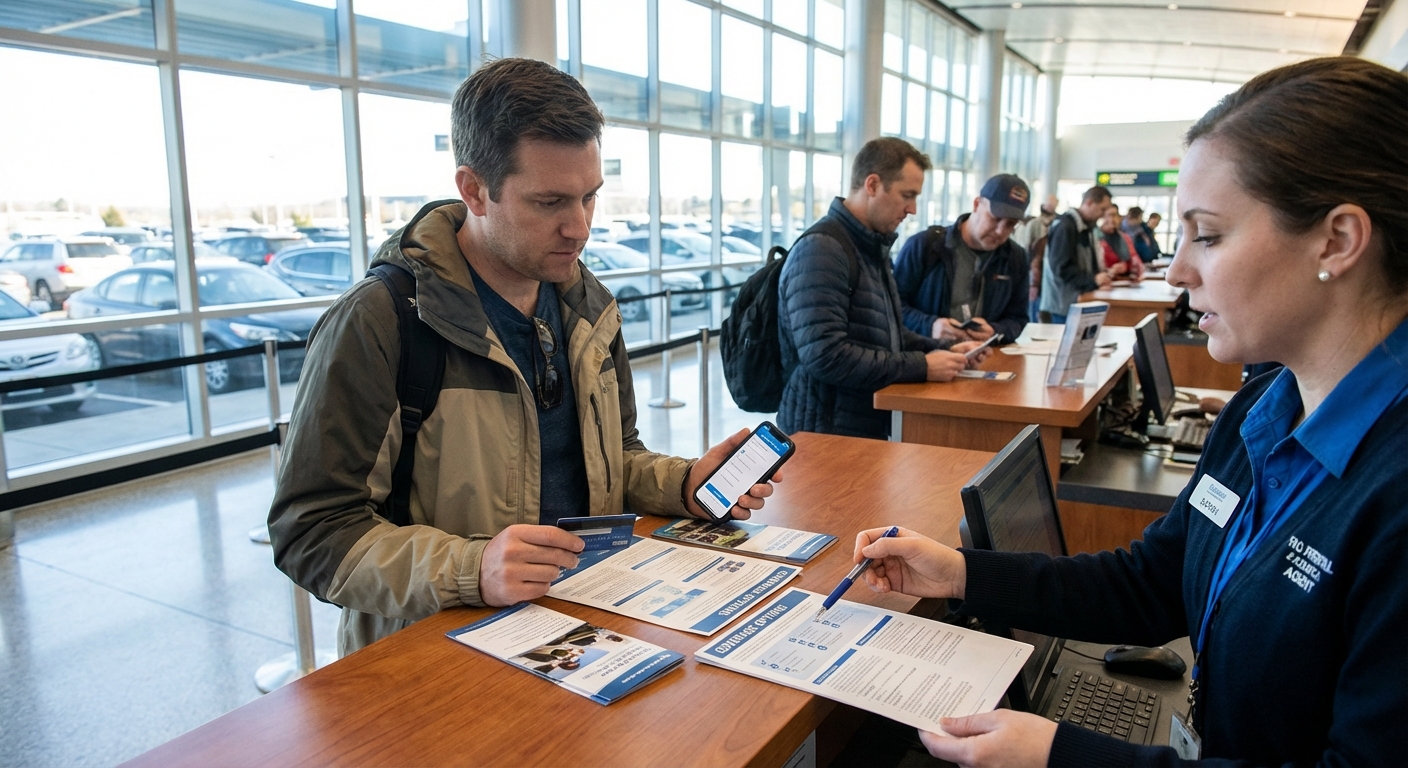
The rental counter agent will typically offer you four optional coverages. Each one targets a specific type of risk, and understanding what they actually cover is the first step to making a smart decision.
Loss Damage Waiver (LDW / CDW)
The Loss Damage Waiver (LDW) — also called a Collision Damage Waiver (CDW) — is the most commonly purchased rental add-on. Technically, it's not insurance. It's a waiver that eliminates or reduces your financial responsibility if the rental vehicle is damaged, stolen, or vandalized during your rental period. It also typically covers loss-of-use fees, which are charges the rental company bills for income lost while the car is being repaired — a cost that many personal auto policies do not cover.
Typical cost: $15–$30 per day at major rental counters (some budget options like Avis start from ~$9/day). Third-party options like Allianz's OneTrip Rental Car Protector run as low as $13 per day and can cover up to $75,000 in damage, while providers like RentalCover and Bonzah can cost up to 50% less than the rental desk.
Supplemental Liability Protection (SLP)
Supplemental Liability Protection (SLP) — sometimes called Supplemental Liability Insurance (SLI) — covers bodily injury and property damage you cause to other people in an accident. Coverage limits typically range from $300,000 to $1 million, and several major rental companies (including Budget) now list $500,000 as a standard SLI limit.
Typical cost: $13–$20 per day
If your personal auto policy carries only your state's minimum liability limits — which are rising in several states — this can be a genuinely valuable add-on. A serious accident can generate claims well into six figures, and low liability limits leave your personal assets exposed. For example, New Jersey's minimum liability limits increased to 35/70/25 for new and renewed policies starting January 1, 2026. Check your current policy carefully against your rental state's requirements.
Personal Accident Insurance (PAI)
Personal Accident Insurance (PAI) covers medical expenses for you and your passengers if you're injured in an accident while in the rental vehicle. Benefits can include ambulance costs, hospital care, and accidental death benefits.
Typical cost: Bundled with PEC at around $5–$7 per day
This coverage overlaps significantly with health insurance and any Personal Injury Protection (PIP) or Medical Payments (MedPay) coverage on your existing auto policy, which is why it's often easy to skip.
Personal Effects Coverage (PEC)
Personal Effects Coverage (PEC) reimburses you for theft of personal belongings — such as luggage, laptops, or cameras — from the rental car. Coverage typically extends to both the driver and passengers, though limits are modest (often $500–$600 per person after a deductible).
Typical cost: Bundled with PAI at $5–$7 per day
Your homeowners or renters insurance usually covers personal belongings stolen from a vehicle, making PEC a likely duplicate. Learn more about car insurance add-ons worth skipping before adding this at the counter.

Compare Car Insurance Rates in Ohio
See if you qualify for a lower rate in less than 2 minutes
Does Your Existing Insurance Already Cover You?
Before agreeing to anything at the rental counter, you need to understand what protection you already carry.
Your Personal Auto Insurance Policy
In most cases, your personal auto insurance extends to rental cars used for personal purposes within the United States and Canada. Your existing coverage mirrors what you have on your own vehicle:
| Your Policy Includes | What Carries Over to the Rental |
|---|---|
| Liability coverage | ✅ Covers damage/injury you cause to others |
| Collision coverage | ✅ Covers damage to the rental car |
| Comprehensive coverage | ✅ Covers theft, weather damage, vandalism |
| PIP / MedPay | ✅ Covers your medical expenses |
| No collision/comprehensive | ❌ Rental car damage is not covered |
Key limitations to be aware of:
- Your deductible still applies — if you have a $1,000 collision deductible, you'll pay that out of pocket
- Coverage often maxes out at 30 days of rental use
- Luxury, exotic, or high-value vehicles may be excluded
- Business use of a rental is typically not covered under a personal auto policy
- Loss-of-use fees charged by the rental company may not be covered by your personal policy
- Coverage generally does not extend internationally, with limited exceptions for Canada
Learn how to read your auto policy carefully before your next trip to identify gaps. You should also understand how driving other cars is treated under a standard personal auto policy.
Credit Card Rental Car Coverage
Many travel rewards credit cards include a Collision Damage Waiver (CDW) as a built-in benefit when you pay for the full rental with that card and decline the rental company's own CDW. Here's how the top options compare:
| Credit Card | Annual Fee | Coverage Type | Max Coverage | Rental Duration |
|---|---|---|---|---|
| Chase Sapphire Reserve | $795 | Primary | $75,000 | Up to 31 days |
| Chase Sapphire Preferred | $95 | Primary | $60,000 | Up to 31 days |
| Capital One Venture X | $395 | Primary | Varies | Up to 31 days |
| Chase Ink Business Preferred | $95 | Primary | $60,000 | Up to 31 days |
| United Explorer Card | $0–$150 | Primary | $60,000 | Up to 31 days |
| Amex Premium Car Rental Protection | $12.25–$24.95/rental | Primary | Up to $100,000 | Up to 42 days |
| Most other cards | Varies | Secondary | Varies | 15–30 days |
⚠️ Note: The Chase Sapphire Reserve annual fee is now $795 (increased from $550). It remains one of the strongest rental car coverage cards available, with primary CDW up to $75,000 and no country exclusions for most international destinations.
Primary vs. Secondary Coverage Explained:
Important credit card exclusions to know:
- Coverage is typically voided if you accept the rental company's CDW
- Luxury/exotic cars (often MSRP over $125,000) are excluded
- Certain countries are excluded even on premium cards — Ireland, Italy, Australia, Israel, Jamaica, and New Zealand are commonly excluded by Amex; Chase Sapphire cards do not exclude any countries
- Credit card coverage generally does not include liability protection — it only covers damage to the rental car itself

Protect your car with Farmers
Average Rate:
Find coverage options that fit your budget.

The insurance savings you expect.
Average Rate:
Enjoy personalized policies, comprehensive coverage & more.

See how much you could save today!
Average Rate:
Drivers who switch their auto insurance and save with State Farm save $764 on average!

Safe Drivers Save with Allstate®
Average Rate:
Get rewarded with savings for having a clean driving record.
International Rentals: Where Coverage Gaps Are Biggest
Renting a car abroad is where most travelers get blindsided. Most U.S. personal auto insurance policies do not cover rentals outside the United States or Canada. If you're driving through Europe, Latin America, Asia, or Australia, you're likely driving unprotected unless you've made separate arrangements.
What Typically Still Works Abroad
- Premium credit cards with primary CDW (Chase Sapphire Reserve, Sapphire Preferred, Capital One Venture X) generally cover international rentals — and notably, Chase Sapphire cards don't exclude any specific countries
- Third-party rental insurance providers (like Allianz Travel, RentalCover.com, Bonzah) offer worldwide coverage starting at $13–$20/day, often cheaper than rental desk prices — with some offering zero-deductible options up to $50,000–$75,000 in damage protection
- Some travel insurance policies include rental car damage protection as a bundled benefit, typically covering up to $35,000–$75,000 for $13–$15 per day
What Doesn't Work Abroad
- Your U.S. personal auto policy (with rare exceptions for Canada)
- Many secondary credit card coverages — they require a primary insurer claim first, which doesn't exist internationally
- American Express standard card coverage excludes Australia, Ireland, Israel, Italy, Jamaica, and New Zealand
- Rental company SLP is often the only way to get liability protection internationally
For drivers planning trips to Mexico specifically, U.S. insurance is legally invalid — you must purchase a Mexican auto policy. For broader international travel coverage, our car insurance for international travel guide covers what applies in each destination.
When to Decline vs. Purchase Rental Insurance
Here's the practical bottom line for most renters:
Safely Decline If...
- You have full coverage (collision + comprehensive) on your personal auto policy and your deductible is manageable
- You're paying with a credit card that offers primary CDW coverage
- You have solid health insurance that covers accident-related injuries (skip PAI)
- You have homeowners or renters insurance that covers belongings in vehicles (skip PEC)
- You're renting domestically for personal use for 30 days or fewer
Consider Buying If...
- You only carry liability-only coverage on your personal policy (you have no collision/comprehensive)
- You have a very high deductible ($1,000+) and can't easily cover it
- You're renting internationally where your U.S. policy doesn't apply
- You're renting a luxury or specialty vehicle excluded from your credit card benefits
- You're renting for business purposes (personal policies often exclude business use)
- Your current liability limits are low — SLP is worth considering to avoid personal exposure
If you don't own a car or don't have a personal auto policy at all, consider non-owner car insurance as an affordable year-round alternative to buying coverage at the counter every time you rent.
The Cost-Benefit Breakdown
| Scenario | Best Strategy | Estimated Savings (7-day trip) |
|---|---|---|
| Full coverage policy + premium travel card | Decline all rental add-ons | $210–$420+ |
| Full coverage policy, no travel card | Decline LDW/CDW only | $105–$210 |
| Liability-only policy | Buy LDW/CDW; consider SLP | Pay $105–$210 for LDW |
| International rental | Buy CDW + SLP at counter or use third-party | Varies by country |
| No auto policy at all | Purchase LDW/CDW + SLP at minimum | Required for protection |
If you're looking to upgrade your personal coverage so it works better for rentals and everyday driving, check out our guide on rental car insurance options to understand all your choices. You can also explore our rental reimbursement coverage guide if you want to understand how your policy covers you when your own car is in the shop. And if you're planning a long-distance trip, our road trip car insurance guide covers what you need for extended travel.
Frequently Asked Questions
Is rental car insurance worth it?
It depends entirely on your existing coverage. If you carry full coverage auto insurance and a premium travel credit card with primary CDW, you're likely already protected and buying rental insurance duplicates what you have. However, if you only carry liability insurance, have a high deductible, or are renting internationally, purchasing at least the LDW/CDW and possibly SLP makes financial sense. Always verify your existing coverage before declining anything at the counter.
Does full coverage auto insurance cover rental cars?
In most cases, yes — your collision and comprehensive coverage extends to rental cars for personal use in the U.S. and Canada, subject to your same deductible and policy limits. However, full coverage does not guarantee coverage for loss-of-use fees, luxury vehicles, rentals exceeding 30 days, or business use. Contact your insurer to confirm the exact terms before your trip, especially if your state updated its minimum liability requirements in 2025 or 2026. Learn more in our complete rental car insurance guide.
What is the difference between LDW and CDW?
LDW (Loss Damage Waiver) and CDW (Collision Damage Waiver) are used interchangeably by most rental companies and cover largely the same thing — protection from financial liability if the rental vehicle is damaged, stolen, or vandalized. LDW is technically broader, covering both collision damage and theft, while CDW historically referred only to collision. In practice, when you see either term at the counter, treat them as the same product and read the specific terms carefully before signing.
Does my credit card cover rental car insurance?
Many credit cards include a collision damage waiver as a benefit, but the quality of coverage varies dramatically. Premium cards like the Chase Sapphire Reserve ($795/year) and Sapphire Preferred ($95/year) offer primary coverage up to $75,000 and $60,000 respectively, meaning they pay before your personal insurance. Most basic credit cards offer only secondary coverage, which kicks in after your personal insurer pays. Crucially, credit card coverage almost never includes liability protection — only damage to the rental car itself.
What rental car insurance do I need when traveling internationally?
International rentals require careful planning since most U.S. auto policies don't extend abroad. At minimum, you need a Collision Damage Waiver (CDW) to cover damage to the rental vehicle and some form of liability protection (SLP) since your domestic policy won't apply. Chase Sapphire cards cover international rentals without country exclusions, while American Express excludes countries like Ireland, Italy, Australia, and others. For comprehensive peace of mind abroad, consider a third-party rental insurance plan through providers like Allianz, Bonzah, or RentalCover — our international travel car insurance guide has full destination-by-destination breakdowns.