
Compare Car Insurance Rates in Ohio
See if you qualify for a lower rate in less than 2 minutes



What Is Parametric Auto Insurance?
Parametric auto insurance is a fundamentally different approach to vehicle coverage. Instead of reimbursing you for the actual cost of a loss — which requires appraisals, repair estimates, and adjuster visits — a parametric policy pays a fixed, predetermined dollar amount the moment a specific trigger condition is met.
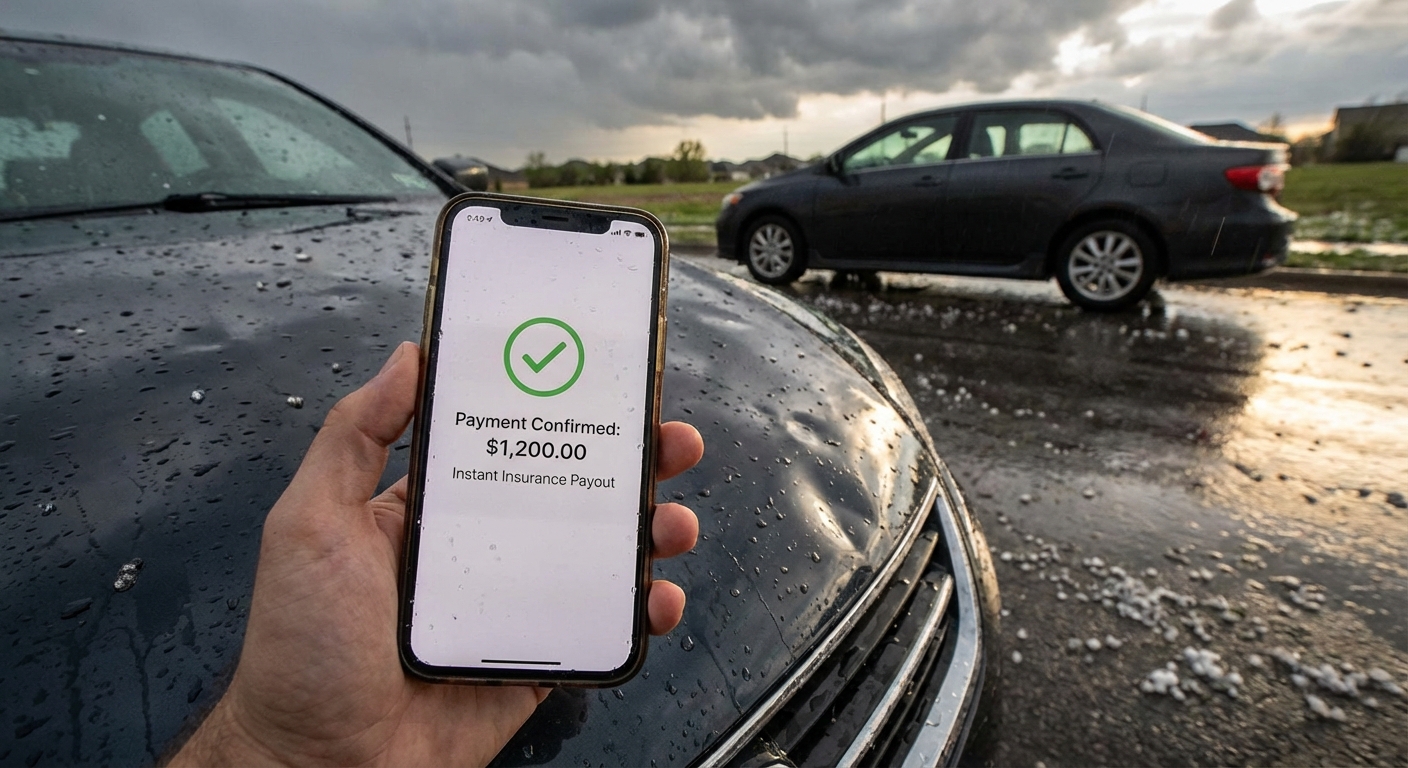
Think of it like this: if a hailstorm with a measured intensity above a defined threshold hits your zip code, your policy automatically fires and money lands in your account — often within 24 to 72 hours. No phone calls. No claim forms. No waiting weeks for a settlement.
The word parametric refers to the defined parameters (triggers) built into the policy contract. These triggers are objective and verifiable, typically sourced from:
- Telematics & vehicle sensors (e.g., sudden deceleration indicating a collision)
- Weather station data (e.g., hail size, wind speed, flood depth)
- Satellite or GPS data (e.g., vehicle location during a declared catastrophe zone event)
- Third-party indices (e.g., National Weather Service readings)
When the data confirms the trigger was met, payment is automatic — no human verification required. To understand how broader car insurance trends are evolving alongside parametric models, it helps to see the full picture of what's changing in auto coverage in 2026.
Parametric vs. Traditional (Indemnity) Auto Insurance
To understand why parametric insurance is gaining traction, it helps to see how it stacks up against traditional auto coverage:
| Feature | Parametric Auto Insurance | Traditional Indemnity Insurance |
|---|---|---|
| Payout Basis | Predefined trigger event | Verified actual loss |
| Payout Speed | Hours to days | Days to weeks (or months) |
| Claims Process | Fully automated | Requires adjuster, documentation |
| Payout Amount | Fixed regardless of damage | Matches assessed repair costs |
| Basis Risk | Yes — may over or underpay | No — pays exact loss |
| Availability | Limited, emerging | Widely available |
| Best For | Weather events, fleet disruption, EV gaps | Everyday collisions, theft, liability |
Traditional indemnity insurance remains the gold standard for comprehensive protection. Parametric policies are designed to complement that coverage — filling in the gaps where speed and certainty matter most.

Compare Car Insurance Rates in Ohio
See if you qualify for a lower rate in less than 2 minutes
How Parametric Auto Insurance Works: The Trigger-to-Payout Process
The mechanics are elegantly simple compared to traditional claims:
- Policy Setup: You and the insurer agree on a specific trigger (e.g., hail stones ≥ 1 inch in diameter at your registered address, or a telematics reading showing sudden deceleration from 60 mph to 0 in under 2 seconds).
- Monitoring: IoT sensors, telematics devices, weather APIs, or satellite feeds continuously monitor for the trigger condition in near real-time.
- Trigger Confirmed: When the data crosses the agreed threshold, the policy activates automatically. AI-driven systems cross-validate readings against multiple independent sources to reduce false triggers.
- Payout Issued: The predetermined payout amount is transferred to your account — typically within 24 to 72 hours. No adjuster visit. No paperwork. Some leading providers — like Lemonade — have demonstrated the ability to process parametric-style claims in a matter of seconds using AI-IoT integrations.
How AI & IoT Are Making This Possible in 2026
The rise of parametric auto insurance wouldn't be viable without a convergence of technologies. In 2026, the following tools are the backbone of these policies:
- In-vehicle telematics: Modern vehicles are equipped with sensors tracking speed, G-force, GPS position, braking, and more. This data feeds directly into parametric trigger systems and can support dynamic triggers such as accident alerts or driving score thresholds. Telematics-powered usage-based insurance (UBI) is already offered by 40% of auto insurers, growing 25% annually.
- AI & machine learning: AI models fuse multiple data streams — telematics, weather feeds, satellite imagery — to define hyperlocal trigger thresholds and reduce basis risk (the mismatch between a payout and the actual loss). Machine learning continuously refines these models using real-time incoming data. As of 2026, approximately 82% of insurers use AI in some form across underwriting and claims.
- Blockchain smart contracts: Some insurtech providers use blockchain to automate payout execution the instant a trigger is verified, creating a transparent and tamper-proof record. Blockchain-based smart contracts held a 55.6% share of all smart contracts used in parametric insurance as of 2024, driven by their transparency, automation, and fraud resistance.
- Real-time weather APIs & IoT sensors: For weather-related auto triggers (hail, flooding, hurricanes), real-time feeds from the National Weather Service and private weather networks confirm event parameters objectively. By 2025–2026, over 50 billion IoT devices are actively driving behavioral and usage-based parametric products globally.
Learn how AI-powered claims automation is already reshaping traditional insurance settlements — and why parametric's instant payout model fits naturally into this broader technological shift.

Protect your car with Farmers
Average Rate:
Find coverage options that fit your budget.

The insurance savings you expect.
Average Rate:
Enjoy personalized policies, comprehensive coverage & more.

See how much you could save today!
Average Rate:
Drivers who switch their auto insurance and save with State Farm save $764 on average!

Safe Drivers Save with Allstate®
Average Rate:
Get rewarded with savings for having a clean driving record.
Benefits & Drawbacks of Parametric Car Insurance
Before deciding if parametric auto insurance belongs in your financial toolkit, weigh these key pros and cons:
Understanding Basis Risk
Basis risk is the most important concept to understand before buying a parametric policy. It's the gap between what the policy pays and what your actual loss turns out to be. Researchers categorize basis risk into two types:
- Type 1 (over-compensation): The trigger fires and you receive a payout that exceeds your actual loss — which can happen due to imperfect indexing or spatial misalignment.
- Type 2 (under-compensation): Your loss occurs but the trigger threshold isn't crossed, meaning you receive nothing despite real damage.
The primary drivers of basis risk include:
- Spatial misalignment — the distance between your vehicle's location and the nearest measurement station increases basis risk significantly
- Poor data quality — sparse historical data or outdated records that weaken the index-to-loss correlation
- Timing misalignment — when the index timeframe doesn't perfectly align with when your loss actually occurred
Example: A hailstorm triggers your parametric policy and pays you $2,500. But the actual dent damage to your vehicle costs $4,200 to repair. You're left with a $1,700 shortfall. Conversely, if storm damage only amounts to $800 in cosmetic dings, you've received more than you lost.
The good news: AI/ML analytics, high-resolution satellite data, dynamic indices, and layered triggers are actively reducing basis risk by tailoring parametric products more precisely to individual risk profiles. Research also shows that at portfolio scale, aggregating independent parametric contracts can reduce overall basis risk volatility — though this benefits insurers and investors more than individual policyholders. Basis risk is still the core tradeoff — which is why parametric insurance works best alongside a traditional auto policy. Learn more about how parametric triggers and payouts work and the strategies providers use to manage this risk.
Who Benefits Most From Parametric Auto Insurance?
Parametric auto insurance isn't for everyone — but for certain drivers and vehicle types, it can deliver significant value. Here's a breakdown of who stands to benefit most:
Electric Vehicle (EV) Owners
EV batteries are expensive to diagnose and replace — and EV insurance now averages approximately $4,058 per year for full coverage in 2025–2026, which is 40% to 50% higher than comparable gas-powered vehicles (which average roughly $2,732 per year). Model-specific costs vary significantly: a Chevrolet Bolt EUV runs about $2,657 annually while a Tesla Model 3 averages $4,546 per year. Replacement battery packs alone can run anywhere from $5,999 for a 75-kWh Tesla pack to over $15,500 for a 100-kWh pack. Many standard auto policies are also slow to assess battery-specific damage from flooding, extreme cold, or heat events.
A parametric trigger based on measured flood depth, temperature extremes, or extended power outage duration can provide fast, automatic liquidity for EV owners while their standard insurer processes the full damage claim. Some newer insurtech startups are specifically targeting EV-related parametric perils like grid instability and charging infrastructure failures. Learn more about manufacturer EV insurance programs and how OEM-linked telematics are creating new coverage options for EV drivers.
Commercial Fleet Operators
Fleets exposed to weather corridors — delivery companies, rideshare operators, logistics firms — can face crippling downtime when natural events disrupt multiple vehicles simultaneously. A parametric policy keyed to hurricane wind speed or flash flood alerts can inject fast cash for temporary vehicle rentals or operational continuity before traditional claims are even filed. IoT-integrated fleet telematics have already demonstrated the ability to reduce claims by up to 20–72% in fleet operations, making parametric triggers even more precise.
Drivers in High-Frequency Weather Zones
If you live in a hail belt (Texas, Colorado, Nebraska) or a hurricane corridor (Florida, Louisiana, the Gulf Coast), parametric triggers tied to verified weather data can provide meaningful supplemental protection. Severe weather is already driving car insurance rates significantly higher across the U.S. — making proactive supplemental coverage increasingly important for drivers in high-risk regions.
Future: Autonomous Vehicle Owners
As autonomous vehicles become more mainstream, parametric insurance will likely evolve to cover sensor failures, software-triggered incidents, or connectivity outages — measurable, data-verifiable events perfectly suited to the parametric model.
Market Availability, Pricing & The Future of Parametric Auto Insurance
Who Offers Parametric Insurance Today?
Parametric insurance is currently more established in property, agriculture, and catastrophe risk sectors than in personal auto. However, the U.S. market is expanding rapidly, with regulatory support accelerating adoption. The top five global parametric insurance companies — AXA, Allianz, Munich Re, Zurich, and Chubb — collectively held approximately 35.5% of the global market share in 2025. Key players active in parametric insurance include:
| Provider | Known Parametric Focus |
|---|---|
| AXA / AXA Climate | Cloud-based climate risk programs, automated triggers |
| AIG | Climate risk protection with rapid automated payouts |
| Allianz | Tailored parametric solutions across multiple sectors |
| Munich Re | Advanced parametric risk products using satellite data & predictive analytics |
| Chubb | Global parametric catastrophe and specialty programs |
| Descartes Underwriting | AI-powered parametric covers including wind, tornado, and earthquake risk in North America |
| Jumpstart Insurance | Earthquake parametric payouts across 12+ U.S. states |
| FloodFlash | Sensor-triggered flood payouts |
| Understory | Hyperlocal weather sensor network for hail and wind parametric products |
| Swiss Re | Natural catastrophe parametric solutions |
| Aon | Worldwide parametric programs with real-time analytics |
Dedicated parametric auto products remain limited in the U.S. personal lines market as of 2026, but insurtechs are actively developing telematics-powered parametric add-ons. Expect broader availability within the next 2 to 3 years as AI, IoT, and real-time data infrastructure matures. For a broader look at flexible auto insurance alternatives, pay-as-you-go and on-demand models offer another way to layer coverage around your specific needs.
How Parametric Auto Insurance Is Priced
Pricing for parametric auto policies is data-driven and determined at underwriting by modeling:
- Historical trigger frequency — How often does the defined event (e.g., hail ≥ 1") actually occur in your location?
- Payout amount — The higher the predefined payout, the higher the premium.
- Trigger precision — Tightly defined triggers that are rare cost less; broadly defined or frequently occurring triggers cost more.
- Vehicle data — Telematics history may be used to assess how often your vehicle is exposed to trigger-eligible conditions.
AI and machine learning continuously refine these pricing models by ingesting real-time data from connected vehicle sensors, weather networks, and satellite feeds — resulting in increasingly accurate and personalized premiums over time.
Is Parametric Insurance the Future of Auto Coverage?
The global parametric insurance market is valued at approximately $23.85 billion in 2026 and is projected to reach $38.68 billion by 2030 at a compound annual growth rate (CAGR) of 12.8%, driven by AI-enhanced risk assessment and rapid data-triggered payouts. Broader forecasts extending to 2034 estimate the market could reach anywhere from $44 billion to $63 billion, depending on growth assumptions and scope. North America remains the largest regional market, while Asia-Pacific is the fastest-growing region globally.
The most likely future scenario is a hybrid model: traditional indemnity coverage handles the bulk of loss reimbursement (accidents, theft, liability), while parametric layers provide fast, automatic supplemental payouts for defined weather and sensor-triggered events. This layered approach gives drivers both the depth of traditional coverage and the speed of parametric payouts.
Frequently Asked Questions About Parametric Auto Insurance
What is parametric auto insurance in simple terms?
Parametric auto insurance is a policy that automatically pays you a fixed amount of money when a specific, measurable event occurs — like a hailstorm above a certain intensity or a detected collision via your car's sensors. Unlike traditional insurance, there's no claims adjuster, no damage inspection, and no waiting period. The payout is triggered by objective data, not by the verified cost of your loss. Most policies process payouts within 24 to 72 hours, and some AI-powered platforms are capable of settling claims in a matter of seconds.
Does parametric car insurance replace traditional auto insurance?
No — parametric auto insurance is designed to complement, not replace, traditional indemnity coverage. Traditional policies reimburse your actual verified losses (repairs, medical bills, liability), while parametric policies provide fast, fixed cash payouts for defined trigger events. Most drivers benefit from carrying both — a standard policy as the foundation and a parametric layer for specific high-frequency risks like weather events. Learn more about how parametric and traditional coverage compare.
What is basis risk and why does it matter in parametric insurance?
Basis risk is the possibility that your parametric payout doesn't match your actual financial loss — either paying too much (Type 1) or too little (Type 2). For example, if your policy pays $3,000 for a qualifying hail event but your repair bill is $5,000, you face a $2,000 shortfall. The main drivers of basis risk are spatial misalignment between your vehicle and the data measurement station, poor historical data quality, and timing misalignment between the trigger and the actual loss event. Basis risk is the central tradeoff of parametric insurance and the main reason it works best as supplemental coverage alongside a traditional auto policy.
Are parametric auto insurance policies available in all states?
As of 2026, dedicated parametric auto insurance products have limited availability in the U.S. personal lines market. Most auto-specific parametric products are offered through specialty channels and commercial fleet programs, though the overall U.S. parametric market is growing rapidly as part of a global market projected to reach $38.68 billion by 2030. Broader personal lines availability for auto is expected within the next few years as technology infrastructure and regulatory frameworks mature.
Who should seriously consider adding parametric auto insurance?
Drivers who stand to benefit most include EV owners worried about battery-specific weather damage (EV full coverage now averages approximately $4,058/year), drivers in hail belts or hurricane corridors, and commercial fleet operators who need fast liquidity after weather disruptions. Anyone carrying a high deductible who wants quick cash while a traditional claim processes can also benefit. If you live in a low-risk weather zone and carry standard comprehensive auto insurance with a low deductible, the incremental value of a parametric add-on may be limited.