
Compare Car Insurance Rates in Ohio
See if you qualify for a lower rate in less than 2 minutes



What Is Force-Placed Auto Insurance?
Force-placed auto insurance — also called lender-placed insurance or collateral protection insurance (CPI) — is a policy that your lender or leasing company purchases on your behalf when you fail to maintain the insurance coverage required by your loan or lease agreement. It sounds protective, but make no mistake: this coverage protects the lender's financial interest, not yours.
When you finance or lease a vehicle, the lender holds a financial stake in that car until you pay off the loan. If the vehicle is totaled, stolen, or severely damaged and you have no insurance, the lender loses their collateral. Force-placed insurance is their safety net — and you get to foot the bill.
Why Lenders Require Continuous Auto Insurance
Your loan or lease agreement contains an insurance clause requiring you to maintain at least comprehensive and collision coverage for the duration of the loan. This is separate from — and in addition to — your state's minimum liability requirements. Here's why lenders are so strict about it:
- The vehicle is collateral. Until the loan is paid off, the lender technically has a financial interest in the car. If it's destroyed or stolen with no insurance, they can't recover their investment.
- State minimums aren't enough. Liability insurance only covers damage you cause to others. It doesn't pay for your own vehicle's repair or replacement — which is what the lender cares about most.
- Loan agreements are binding. When you sign a car loan or lease, you agree to maintain required coverage. Failing to do so is a breach of that agreement.
- State minimums are rising. Several states updated their minimum liability requirements in 2025 — including California, Utah, Virginia, and North Carolina — making it even more critical to verify your policy meets both state and lender requirements.
Learn more about car loan insurance requirements to understand exactly what coverage levels your lender expects.

Compare Car Insurance Rates in Ohio
See if you qualify for a lower rate in less than 2 minutes
What Triggers Force-Placed Insurance?
Lenders today monitor your insurance status through a combination of renewal notices and increasingly sophisticated automated systems. The industry has largely shifted away from manual verification toward real-time electronic tracking services provided by third-party platforms like Unitas360 and MeasureOne. These systems verify coverage continuously — sometimes on a daily or weekly basis — checking comprehensive, collision, liability, and uninsured/underinsured motorist coverage simultaneously. Any of the following situations can trigger force-placed coverage being added to your loan:
| Trigger | Description |
|---|---|
| Policy lapse | You missed a premium payment and your policy was canceled |
| Policy cancellation | You intentionally canceled your coverage |
| Switching insurers | You changed providers but didn't notify your lender |
| Insufficient coverage | Your policy lacks collision or comprehensive as required |
| No proof received | Lender didn't receive renewal documentation (wrong address, etc.) |
| Refinancing | You refinanced but didn't update insurance info with the new lender |
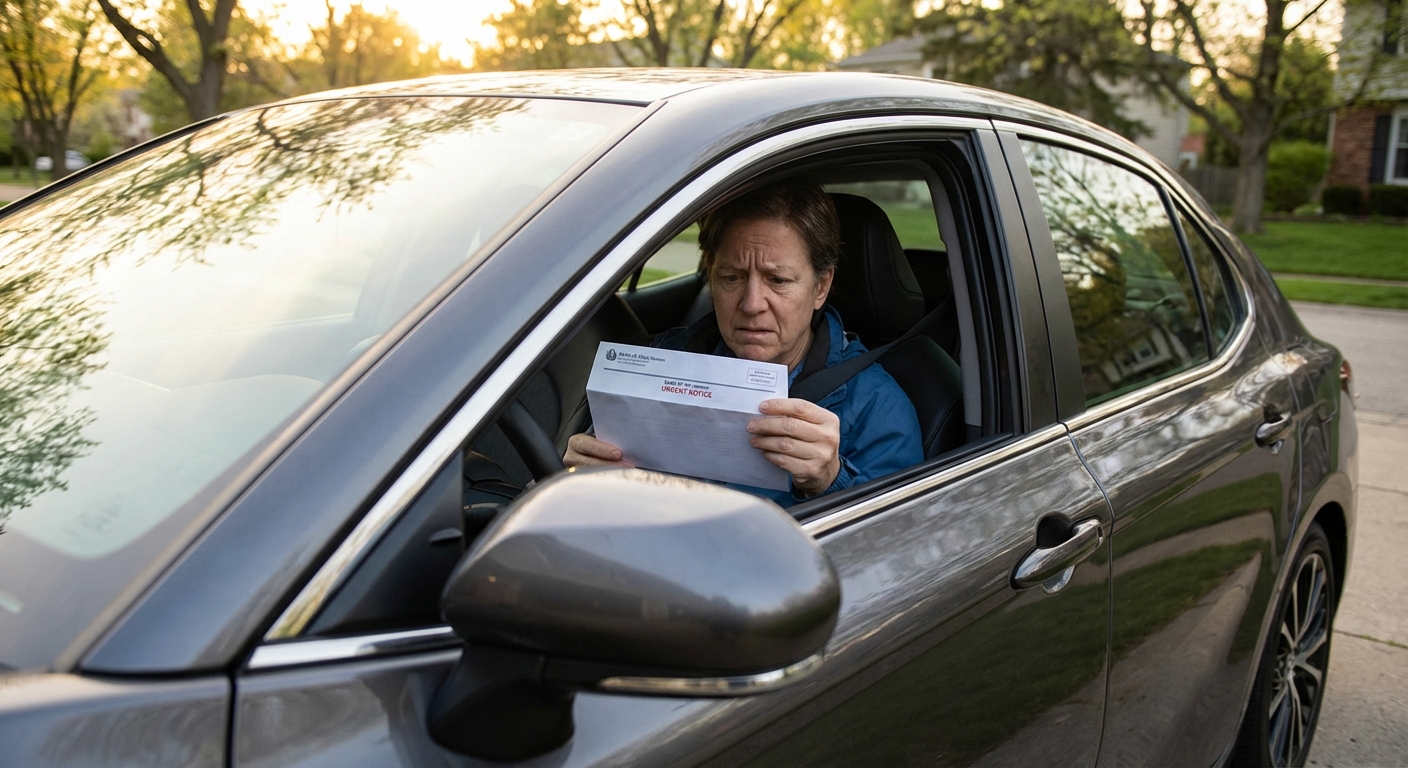
In most cases, lenders don't immediately force-place coverage. They'll send notices warning you of the lapse and giving you time — typically 45 days — to provide proof of compliant insurance. If you don't respond, the lender purchases the policy and adds the cost to your monthly payments or loan balance.
With an estimated 15.4% of U.S. drivers uninsured as of the most recent Insurance Research Council (IRC) data — approximately 1 in 7 drivers, representing more than 30 million uninsured motorists nationwide — lenders have strong financial incentive to track coverage closely and act quickly when a lapse is detected. Rising auto loan delinquency rates (subprime 60+ day delinquency reaching approximately 6.9% in January 2026) only intensify that scrutiny.

Protect your car with Farmers
Average Rate:
Find coverage options that fit your budget.

The insurance savings you expect.
Average Rate:
Enjoy personalized policies, comprehensive coverage & more.

See how much you could save today!
Average Rate:
Drivers who switch their auto insurance and save with State Farm save $764 on average!

Safe Drivers Save with Allstate®
Average Rate:
Get rewarded with savings for having a clean driving record.
Force-Placed Insurance Costs vs. Regular Auto Insurance
This is where force-placed insurance gets truly painful for borrowers. Because the lender — not you — selects the policy with no competitive shopping on your behalf, the premiums are dramatically inflated. Lenders may also earn undisclosed commissions on these policies, inflating your cost further.
Cost Comparison
| Factor | Regular Car Insurance | Force-Placed Insurance |
|---|---|---|
| Average Annual Cost | ~$2,317–$2,697/year (2026 estimates) | $2,400–$6,000+/year |
| Average Monthly Cost | ~$193–$225/month | $200–$500+/month |
| Coverage Selection | You choose | Lender decides |
| Liability Coverage Included? | Yes | No |
| Protects the Driver? | Yes | No |
| Personal Property Covered? | Sometimes | No |
| Meets State Legal Requirements? | Yes | Usually not fully |
National average full coverage auto insurance costs have risen meaningfully — NerdWallet estimates the 2026 average at ~$2,317/year, while Bankrate pegs it at approximately $2,697/year (~$225/month). Force-placed insurance typically costs 2 to 5 times more than a comparable policy you'd shop for yourself, with a typical CPI policy running $200–$500/month ($2,400–$6,000+/year). To put it in perspective: a force-placed policy at just $300/month over a 48-month loan adds roughly $14,400 to your total loan cost — plus the interest that accrues as it's rolled into your balance.
What Force-Placed Insurance Actually Covers
Force-placed auto insurance is narrowly designed to protect the lender's collateral, not you as a driver.
This is a critical distinction: force-placed insurance does not satisfy your state's minimum liability insurance requirements. If you're pulled over or involved in an accident while relying solely on a force-placed policy, you could face legal penalties for driving uninsured.
If your car is totaled, force-placed coverage may only pay out the lender's remaining loan balance — not the full market value of your vehicle. Understanding the differences between insuring a financed vs. owned car can also help you make smarter coverage decisions as your loan balance changes over time.
A Real-World Warning: CFPB Enforcement Action
In July 2024, the Consumer Financial Protection Bureau (CFPB) took enforcement action against Fifth Third Bank for placing duplicative force-placed insurance on more than 37,000 motor vehicle loans — charging customers for coverage they already had. The CFPB found that roughly 47–50% of all force-placed policies the bank issued were unnecessary, and that the practice led to wrongful repossessions. Fifth Third violated the Consumer Financial Protection Act (CFPA), the Fair Credit Reporting Act (FCRA), and the Electronic Fund Transfer Act (EFTA). The bank was ordered to pay a $5 million civil penalty and provide redress to affected borrowers.
As of May 2026, no new major CFPB enforcement actions specifically targeting force-placed auto insurance have been publicly announced. However, CFPB auto lending oversight remains active — in early 2025, the bureau took action against American Honda Finance Corp. for inaccurate credit reporting, and the termination of Toyota Motor Credit's 2023 consent order in May 2025 confirms that auto lending practices remain on regulators' radar. The Fifth Third order continues to define industry expectations for proper CPI notice, billing, cancellation, and refund practices.
How to Avoid or Remove Force-Placed Insurance
How to Avoid It
The best strategy is simple: never let your auto insurance lapse. Here's a checklist of proactive steps to stay protected:
- ✅ Pay your premiums on time — Set up auto-pay to prevent accidental lapses from missed payments
- ✅ Notify your lender immediately when you switch insurance providers
- ✅ Send your declarations page to the lender whenever your policy renews or changes
- ✅ Update your contact info with both your insurer and lender so notices reach you
- ✅ Maintain required coverage levels — typically comprehensive, collision, and lender-specified liability limits
- ✅ Verify your lender is listed correctly on your policy as the loss payee or additional insured
If you're struggling to afford adequate coverage, it's worth shopping around before your policy expires. Reviewing car loan insurance requirements can help you compare policies intelligently and ensure you meet both state and lender thresholds — which shifted in several states effective 2025.
How to Remove Force-Placed Insurance
If force-placed insurance has already been added to your loan, here's how to get it removed:
- Obtain or reinstate adequate coverage. Contact your insurer to get a compliant policy with the required coverages. If your policy was canceled for non-payment, ask about reinstatement options.
- Verify your policy details. Ensure your policy lists the correct lender name, address, and loan number as the loss payee. An incorrect lender address is a surprisingly common trigger for force-placement.
- Gather your insurance documents. You'll need your declarations page, policy effective dates, and proof of payment. A letter of experience from your insurer confirming continuous coverage can also help.
- Submit proof to your lender. Send the documents via certified mail or through the lender's official portal. Explicitly request cancellation of the force-placed policy in writing. Lenders are required to cancel within 15 days of receiving valid proof — and cancellation is retroactive to the start of your compliant policy.
- Request a refund for overlapping charges. If you had valid coverage during any period you were charged, you are entitled to a full refund for those overlapping premiums — including related fees. Request this reimbursement formally in writing.
- Follow up persistently. Keep records of all communications. If the lender delays or refuses to remove the force-placed policy, file a complaint with your state's Department of Insurance or the Consumer Financial Protection Bureau (CFPB).
Your Legal Rights as a Borrower
Federal regulations specifically addressing force-placed insurance are more robust for mortgages than for auto loans — but auto loan borrowers still have meaningful protections rooted in your loan contract and state consumer protection laws. Key borrower rights include:
- Right to receive notices before force-placed insurance is applied (typically 45 days' notice required)
- Right to provide proof of your own compliant insurance to cancel it
- Right to a refund for any period where your valid coverage overlapped with force-placed charges
- Right to dispute wrongful force-placement if your lender failed to properly process your proof of insurance
- Right to file complaints with your state insurance commissioner or the CFPB if your lender mishandles the situation
Lenders are also required to provide clear documentation of what coverage was placed, its effective date, and its cost. If the charges appear unreasonably high or you suspect undisclosed commissions inflating your premiums, that can form the basis of a formal complaint. The 2024 Fifth Third enforcement action demonstrates that regulators will hold lenders accountable — and the CFPB's continued attention to auto lending practices means those protections remain active in 2025–2026.
Understanding the full picture of financed vs. owned car insurance differences can help you make smarter coverage decisions at every stage of your loan. For a deeper look at how lenders track and enforce insurance requirements, see our guide on car loan insurance requirements.
Frequently Asked Questions
Is force-placed auto insurance the same as regular car insurance?
No. Force-placed auto insurance is fundamentally different from a standard policy. It is purchased by your lender — not you — and only protects the lender's financial stake in the vehicle. It does not cover your liability, medical costs, or personal property, and it typically does not satisfy your state's minimum auto insurance legal requirements. It also costs significantly more — a typical CPI policy runs $2,400–$6,000+/year compared to the 2026 national average of roughly $2,317–$2,697/year for standard full coverage.
Can I be penalized for driving with only force-placed insurance?
Yes, potentially. Force-placed auto insurance generally does not include the liability coverage required by most states. If you're driving with only a force-placed policy and are involved in an accident or pulled over, you could be considered legally uninsured in your state. This can result in fines, license suspension, and personal financial liability for any damages you cause to others. It's critical to maintain your own compliant policy at all times.
How long does it take for force-placed insurance to be removed?
Once you submit valid proof of compliant insurance to your lender, the force-placed policy should be canceled within 15 days. Cancellation is retroactive to the start date of your compliant policy, meaning you won't be charged for the overlapping period. Follow up persistently, keep copies of everything you submit, and confirm in writing that the policy has been removed and any applicable charges have been reversed or refunded.
Can I get a refund for force-placed insurance premiums I already paid?
Yes, in many cases. If you can demonstrate that you had valid, compliant insurance during a period when force-placed insurance charges were applied to your loan, you are entitled to a full refund of those overlapping premiums and any related fees. Provide your lender with documentation showing your coverage dates, and formally request reimbursement in writing. If the lender refuses, escalate to your state insurance commissioner or the CFPB — the 2024 enforcement action against Fifth Third Bank is a clear example of regulators holding lenders accountable for improper CPI charges.
Does force-placed insurance affect my credit score?
Force-placed insurance itself doesn't directly impact your credit score, but the consequences of it can. If the added premiums cause your monthly loan payment to increase and you can't keep up, missed payments will be reported to credit bureaus and can significantly damage your credit. With subprime auto loan delinquency rates approaching 6.9% in early 2026, the risk of a payment spiral from surprise CPI charges is very real — particularly for borrowers already stretched thin. The best protection is to address the issue quickly, maintain compliant coverage, and review your financed vs. owned car insurance options to ensure your policy keeps pace with your lender's requirements.