
Compare Car Insurance Rates in Ohio
See if you qualify for a lower rate in less than 2 minutes



What Is Comprehensive Car Insurance?
Comprehensive car insurance is an optional coverage that protects your vehicle from non-collision damages, often called "other than collision" coverage. This protection covers a wide range of incidents beyond typical accidents, including theft, vandalism, natural disasters, and animal strikes.
When you purchase comprehensive car insurance, your policy pays up to your vehicle's actual cash value (ACV) minus your chosen deductible. This coverage works independently from your collision insurance, though they're often purchased together as part of full coverage car insurance.
How Comprehensive Coverage Works
When you file a comprehensive claim, your insurance company assesses the damage and determines the repair cost or replacement value. You pay your deductible first, then the insurer covers the remaining amount up to your vehicle's ACV. For example, if a tree falls on your car causing $3,500 in damage and you have a $500 deductible, your insurer pays $3,000.
The most common comprehensive insurance claims include animal collisions (particularly deer strikes), glass damage, theft or stolen parts like catalytic converters, and weather-related incidents. According to the National Insurance Crime Bureau (NICB), nationwide vehicle thefts fell to a historic low of 659,880 in 2025, a 23.2% decline versus 2024 and the lowest annual total in decades. Despite this positive trend, a vehicle theft still occurs roughly every 48 seconds nationwide, keeping theft-related claims a leading reason drivers carry this coverage. Weather is another major driver of comprehensive claims, with hail alone generating billions in payouts annually across the insurance industry. Learn more about how a stolen vehicle claim works if the worst happens.

Compare Car Insurance Rates in Ohio
See if you qualify for a lower rate in less than 2 minutes
Comprehensive vs Collision Insurance: Understanding the Difference
Many drivers confuse comprehensive vs collision insurance, but these coverages protect against distinctly different scenarios. Understanding this distinction helps you make informed decisions about which protection you need. For a full breakdown of every coverage type, check out our guide on what car insurance actually covers.
When Each Coverage Applies
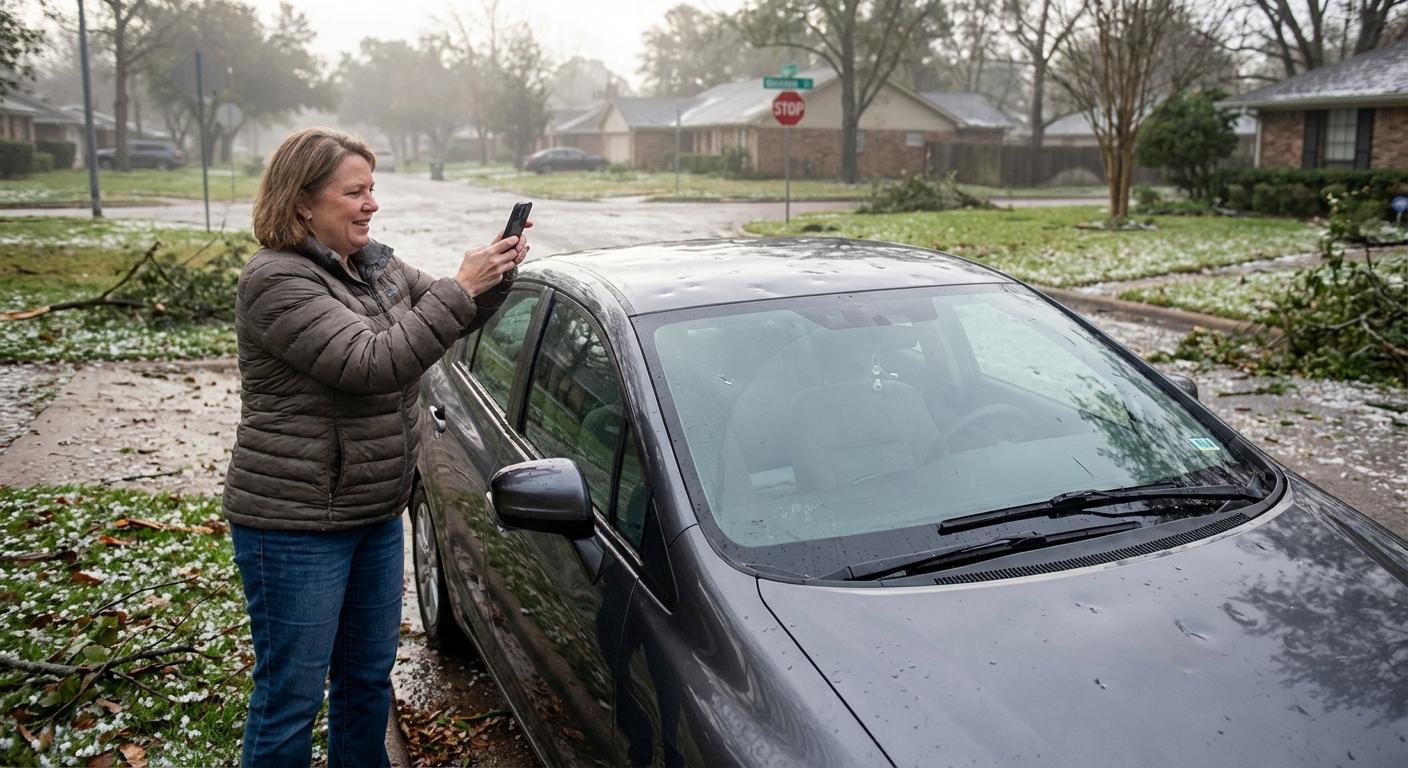
Comprehensive coverage applies when your vehicle sustains damage from events outside a traditional collision. If a hailstorm damages your roof and hood, comprehensive handles it. Learn more about windshield and glass coverage and what to expect at claim time. If you swerve to avoid debris and roll your vehicle, that falls under collision territory.
Both coverages are optional unless you finance or lease your vehicle. Lenders typically require both comprehensive and collision insurance to protect their investment until you pay off the loan, as detailed in our guide on car loan insurance requirements. Once you own your vehicle outright, you can choose to carry one, both, or neither, though liability insurance remains mandatory in most states.
The key distinction: comprehensive protects against uncontrollable external factors, while collision covers driver-related incidents and impacts. You can have one without the other, but most insurers recommend both for optimal protection.

Protect your car with Farmers
Average Rate:
Find coverage options that fit your budget.

The insurance savings you expect.
Average Rate:
Enjoy personalized policies, comprehensive coverage & more.

See how much you could save today!
Average Rate:
Drivers who switch their auto insurance and save with State Farm save $764 on average!

Safe Drivers Save with Allstate®
Average Rate:
Get rewarded with savings for having a clean driving record.
What Does Comprehensive Insurance Cover?
What does comprehensive insurance cover is one of the most common questions drivers ask. This protection extends to numerous scenarios that could damage or destroy your vehicle without involving a collision.
Covered Incidents and Examples
| Coverage Type | What It Includes | Real-World Example |
|---|---|---|
| Theft | Full vehicle or stolen parts | Catalytic converter theft, car stolen from parking lot |
| Vandalism | Intentional damage to your vehicle | Keyed paint, smashed windows, spray paint |
| Weather Events | Natural disasters and severe weather | Hail dents, flood damage, tornado damage, hurricane destruction |
| Fire | Vehicle fires from any source | Engine fire, fire from external source, explosion |
| Falling Objects | Items that fall onto your vehicle | Tree branches, rocks, debris from structures |
| Animal Collisions | Hitting or being hit by animals | Deer strikes, collisions with livestock or wildlife |
| Glass Damage | Windshield and window breakage | Rock chips, cracks from debris (often with waived deductible) |
| Civil Unrest | Damage from riots or protests | Riot-related damage, civil disturbance incidents |
Glass Coverage Benefits
Many comprehensive policies include special provisions for glass damage. Insurers often waive the deductible for windshield repairs (though not full replacements) to encourage quick fixes that prevent larger cracks. For vehicles equipped with ADAS (Advanced Driver Assistance Systems), a typical 2026 windshield replacement plus camera and sensor calibration now runs $600 to $1,500 total, with mainstream vehicles landing in the $400 to $1,000 range. Luxury vehicles with head-up displays or complex ADAS setups routinely exceed $1,500. ADAS calibration alone typically adds $150 to $600 depending on whether static, dynamic, or dual calibration is required. This makes full glass coverage especially valuable on newer vehicles.
What Comprehensive Insurance Doesn't Cover
Understanding exclusions is equally important. Comprehensive coverage does not protect against:
- Collision damage with other vehicles or objects
- Normal wear and tear or mechanical breakdowns
- Damage from poor maintenance
- Personal belongings stolen from inside your vehicle
- Custom parts or equipment not listed on your policy
- Intentional damage you cause to your own vehicle
- Medical expenses (covered by Personal Injury Protection)
For collision-related damage, you'll need separate collision coverage. For mechanical issues, consider an extended warranty rather than relying on insurance. Personal items require homeowners or renters insurance for theft coverage.
Comprehensive Coverage Cost and Factors Affecting Premiums
Understanding comprehensive coverage cost helps you budget appropriately and identify savings opportunities. In 2026, the national average for full coverage car insurance runs approximately $186 per month per Insurify to $208 per month per ValuePenguin (about $2,237 to $2,496 per year) depending on the source and methodology. Comprehensive coverage alone typically represents 10 to 20% of full coverage premiums, making it relatively affordable compared to collision and liability coverage combined.
Rate growth has slowed dramatically after years of sharp increases. Insurify projects the U.S. full-coverage average will finish 2026 at $2,242 per year, roughly a 1% year-over-year rise, and 32 states are on track to see rates climb by year end. Connecticut faces the steepest projected hike at 15%, followed by Kentucky (+8%), West Virginia (+8%), Nevada (+6%), and Illinois (+6%), while Washington, D.C., New Mexico, New Jersey, New York, and Massachusetts are expected to post the biggest declines. Our 2026 car insurance cost breakdown has the full state-by-state picture.
Average Full Coverage Costs by State
Insurance costs vary dramatically by location due to regional risks like theft rates, weather patterns, and local repair costs. Nevada, Louisiana, Florida, Connecticut, and Delaware all have average rates above $300 per month per ValuePenguin, making them the five most expensive states. Vermont (about $128/month), Maine (about $129), and Wyoming (about $131) remain the cheapest, with rates well below the national average. For a deeper look at how these numbers translate to your wallet, see our guide on car insurance cost per year vs per month.
| State Category | Monthly Cost | Annual Cost | Key Risk Factors |
|---|---|---|---|
| Lowest Cost (Vermont, Maine, Wyoming) | ~$128 to $131 | ~$1,536 to $1,572 | Low theft rates, minimal weather risks, rural areas |
| National Average | ~$186 to $208 | ~$2,237 to $2,496 | Balanced risk profile |
| Highest Cost (Nevada, Louisiana, Florida) | ~$300 to $335+ | ~$3,600 to $4,020+ | High theft rates, severe weather, elevated claims frequency |
Key Factors Affecting Your Premiums
Several elements determine your comprehensive car insurance rates:
Location and Regional Risks: Urban areas with high theft rates cost more than rural communities. States prone to hurricanes, tornadoes, or hail see elevated premiums. Your ZIP code significantly impacts pricing, sometimes by 50% or more. California recorded 136,988 vehicle thefts in 2025, more than 20% of all U.S. thefts, keeping premiums elevated there despite the national decline.
Vehicle Make and Model: Expensive vehicles cost more to insure due to higher repair and replacement costs. According to NICB's 2025 data, the Hyundai Elantra (21,732 thefts), Honda Accord (17,797), Hyundai Sonata (17,687), Chevrolet Silverado 1500 (16,764), and Honda Civic (12,725) top the most-stolen list. Owning a frequently targeted model can raise your comprehensive premiums at renewal.
Driver Profile and History: While comprehensive coverage isn't directly tied to your driving record like collision coverage, your overall risk profile matters. Drivers with poor credit pay significantly more than those with excellent credit histories, in some cases over 20% more.
Coverage Limits and Deductibles: Your comprehensive insurance deductible directly impacts premiums. Raising your deductible from $500 to $1,000 typically cuts your combined comprehensive and collision premium by 10% to 25%, which works out to roughly $200 to $300 per year for the average driver. Bankrate's 2025 rate analysis pegged the average savings at $302 annually, while Insurify's 2026 data showed about $264 in yearly savings.
Comparing Insurance Providers
Different insurance companies price comprehensive coverage differently. Shopping around can save you well over $1,000 annually for identical coverage, which is why comparing quotes is essential. You can also review our guide on car insurance deductibles explained to benchmark your own premium.
When Do I Need Comprehensive Insurance?
Determining do I need comprehensive insurance depends on your vehicle's status, value, and your financial situation. While this coverage remains optional in most states, certain circumstances make it mandatory or highly advisable.
Required Situations
Financed or Leased Vehicles: Lenders and leasing companies almost always require comprehensive coverage to protect their financial interest. If you're making payments on your vehicle, expect this as a non-negotiable requirement until you pay off the loan. Failing to maintain required coverage can result in force-placed insurance at much higher rates or even loan default.
GAP Insurance Requirements: If you carry gap insurance, you'll need comprehensive coverage in place. GAP insurance pays the difference between your vehicle's ACV and your remaining loan balance after a total loss, but only if you have comprehensive and collision coverage active. New car replacement insurance is another option worth considering for newer vehicles.
When Comprehensive Makes Financial Sense
Even when optional, comprehensive coverage makes sense in several scenarios:
Newer or High-Value Vehicles: If your car is worth $5,000 or more, comprehensive coverage typically justifies its cost. With ADAS components like cameras and sensors now standard on a large share of new vehicles, even basic glass and sensor repairs can cost $600 to $1,500 or more.
High-Risk Areas: Living in regions prone to severe weather, high theft rates, or abundant wildlife increases your comprehensive claim likelihood. If you're in a hurricane-prone state, review how hurricane coverage ties directly into your comprehensive policy.
Limited Emergency Savings: If replacing your vehicle would create financial hardship, comprehensive coverage acts as essential financial protection. Even if your car is older but you lack savings to replace it, maintaining coverage makes sense.
Understanding Comprehensive Insurance Deductibles
Your comprehensive insurance deductible is the amount you pay out-of-pocket before insurance covers the remaining claim cost. This choice significantly impacts both your premiums and potential claim expenses.
How Deductibles Work
When you file a comprehensive claim, you pay your deductible first, then the insurer covers remaining costs up to your vehicle's ACV. For example:
- Scenario: A hailstorm causes $2,500 in damage to your vehicle
- Your deductible: $500
- Insurance pays: $2,000
- You pay: $500
Comprehensive deductibles apply per incident, not annually like health insurance. Importantly, your comprehensive and collision deductibles can differ. Drivers often select lower comprehensive deductibles since hail, glass damage, or theft can occur without warning regardless of how carefully you drive.
Common Deductible Amounts
Deductibles typically range from $100 to $2,500. The most common options are $250, $500, and $1,000, with $500 the most popular choice, though roughly 26% of drivers now carry $1,000-plus deductibles according to CCC's 2026 Crash Course data. Here's how the options compare:
Choosing Your Deductible Amount
Several factors should guide your deductible decision:
Emergency Savings: Choose a deductible you can comfortably afford to pay. If you only have $1,000 in savings, a $2,500 deductible creates financial risk. Your deductible should represent no more than what you could cover without hardship.
Vehicle Value: On older vehicles, high deductibles might approach the car's value, making comprehensive coverage less practical. For a $3,000 vehicle with a $1,000 deductible, the maximum payout is only $2,000. Assess whether this makes financial sense.
Premium Savings Calculation: Compare actual premium differences between deductible levels. Recent 2026 rate data shows raising your deductible from $500 to $1,000 typically lowers your combined comp and collision premium by 10 to 25% (about $200 to $300 annually), while larger jumps from $250 to $1,000 can produce meaningfully bigger savings. Note that lenders often cap deductibles at $500 to $1,000 for financed or leased vehicles.
Vanishing Deductible Programs: Some insurers offer vanishing or disappearing deductible programs that reduce your deductible amount for every claim-free year. If this option is available, it can make a lower starting deductible even more cost-effective over time.
When to Drop Comprehensive Coverage
Understanding when to drop comprehensive coverage can save you hundreds of dollars annually without sacrificing necessary protection. Our guide on car insurance for older vehicles walks through this decision in full detail.
The 10% Rule
The most widely recommended guideline: consider dropping comprehensive coverage when annual premiums exceed 10% of your vehicle's actual cash value. For example, if your car is worth $4,000 and your comprehensive and collision premiums combined total $400 or more annually, dropping to liability-only coverage might make better financial sense.
With full coverage now averaging $2,237 to $2,496 per year nationally, this threshold is reached quickly on vehicles worth less than $5,000, making the drop-or-keep decision increasingly relevant for older car owners. Learn more about the impact of the aging vehicle fleet on coverage decisions.
Vehicle Value Thresholds
Most experts recommend evaluating comprehensive coverage when your vehicle's ACV falls below $4,000 to $5,000, especially after accounting for your deductible:
| Vehicle Value | Deductible | Maximum Insurance Payout | Recommendation |
|---|---|---|---|
| $5,000+ | Any | Substantial benefit | Keep coverage |
| $3,000 to $5,000 | $500 to $1,000 | Moderate benefit | Evaluate based on premium cost |
| $2,000 to $3,000 | $500+ | Minimal benefit | Likely drop unless premiums very low |
| Under $2,000 | Any | Very limited benefit | Drop coverage |
Use tools like Kelley Blue Book or NADA Guides to determine your vehicle's current ACV before making this decision.
Additional Factors to Consider
Vehicle Age: While age alone isn't definitive, cars over 10 years old often fall into lower value ranges where comprehensive becomes less worthwhile. However, well-maintained classic or collectible vehicles may warrant specialized coverage regardless of age.
Regional Risks: If you live in areas with high theft rates, severe weather, or abundant wildlife, comprehensive coverage may justify its cost even on older vehicles. Vehicle theft trends are moving in the right direction, declining 23% in 2025 alone, but California, Texas, and Illinois remain the highest-volume theft states, a key factor in your keep-or-drop decision.
Personal Financial Situation: Your ability to replace or repair your vehicle out-of-pocket is crucial. Before making the leap, review the potential risks of downgrading coverage.
Premium Cost: If comprehensive coverage only costs $100 to $200 annually, it may be worth keeping for peace of mind even on an older vehicle. However, if it costs $400 to $500 or more, dropping coverage typically makes financial sense on vehicles under $4,000 in value.
Alternatives to Dropping Coverage
Before eliminating comprehensive coverage entirely, consider these options:
- Increase your deductible to $1,000 or higher to reduce premiums while maintaining protection
- Shop for better rates among different insurers, since prices vary significantly for identical coverage
- Switch to comprehensive-only for a stored vehicle, as detailed in our guide on car insurance for parked or stored cars
- Remove collision coverage only while keeping comprehensive, since comprehensive is typically cheaper and protects against more unpredictable risks
Remember that once you drop comprehensive coverage, you can't file claims for theft, vandalism, or weather damage. Only drop coverage if you're financially prepared to handle these potential losses.
Is Comprehensive Insurance Worth It?
The question "is comprehensive insurance worth it" depends entirely on your specific circumstances. This coverage provides valuable protection, but its worth varies based on vehicle value, location risks, and personal finances.
When Comprehensive Insurance Is Worth It
Newer Vehicles (0 to 5 Years Old): For newer cars, comprehensive coverage almost always makes sense. These vehicles have substantial value, and with ADAS-equipped components now standard on a growing share of new vehicles, even basic glass and sensor repairs can run $600 to $1,500 or more.
High-Value Vehicles: Any car worth $5,000 or more typically justifies comprehensive coverage. The potential loss from theft or major weather damage far exceeds the annual premium cost. For vehicles worth $15,000+, comprehensive coverage is a clear financial win.
High-Risk Locations: If you live in areas prone to severe weather, high auto theft rates, or regions with frequent animal collisions, comprehensive coverage provides crucial protection. Given the billions insurers pay out annually for hail damage alone, this coverage can pay for itself with a single storm.
Leased or Financed Vehicles: Beyond being required, comprehensive coverage makes financial sense when you owe more than the vehicle's worth. Pair it with gap insurance for complete protection if your vehicle is totaled.
Limited Savings: If replacing your vehicle would create financial hardship, comprehensive coverage acts as essential protection. For many families, losing their vehicle without an insurance payout would be devastating.
When You Might Skip Comprehensive Coverage
Older, Low-Value Vehicles: Once your vehicle's value drops below $2,000 to $3,000 and you can afford to replace it, comprehensive coverage typically costs more than its potential benefit over time.
Significant Emergency Savings: If you have substantial savings dedicated to vehicle replacement and your car is older, you're effectively self-insured and can skip comprehensive coverage.
Very Low Risk Areas: In rural areas with minimal theft, limited severe weather, and few animal collision risks, comprehensive claims become unlikely. Combined with an older vehicle, dropping coverage might make sense.
Making Your Decision
Consider these factors when evaluating whether comprehensive insurance is worth it for your situation:
Calculate your vehicle's current value using tools like Kelley Blue Book, then compare it to your annual comprehensive premium plus deductible. If a total loss would cost significantly more out-of-pocket than several years of premiums, comprehensive coverage is worth it. If premiums approach 10% of vehicle value or the maximum payout seems minimal, reconsider. For a broader view, check out our common car insurance myths guide to avoid the most common coverage mistakes.
Frequently Asked Questions About Comprehensive Car Insurance
What is comprehensive car insurance and how does it differ from collision coverage?
Comprehensive car insurance protects your vehicle from non-collision damages like theft, vandalism, weather events, fire, falling objects, and animal strikes. Collision coverage, by contrast, handles damage from impacts with other vehicles or stationary objects. Comprehensive covers events largely beyond your control as a driver, while collision covers driving-related incidents. Both are optional unless required by a lender, and you can purchase one without the other depending on your needs and budget.
How much does comprehensive coverage typically cost in 2026?
In 2026, full coverage car insurance (which bundles comprehensive, collision, and liability) averages approximately $186 to $208 per month ($2,237 to $2,496 per year) nationally, varying by source. Comprehensive coverage alone typically represents 10 to 20% of that total, making it one of the more affordable components of a full policy. Your specific rate depends on your ZIP code, vehicle value, credit score, chosen deductible, and local theft or weather risks. Vermont, Maine, and Wyoming are among the cheapest states (around $128 to $131/month), while Nevada, Louisiana, and Florida rank among the most expensive with average full coverage rates above $300 per month.
Do I need comprehensive insurance if I own my car outright?
While not legally required, comprehensive coverage makes sense if your car is worth $5,000 or more, you live in a high-risk area prone to theft or severe weather, or you cannot afford to replace your vehicle out-of-pocket. However, if your vehicle's value is under $2,000 to $3,000 and you have adequate savings, dropping comprehensive coverage often makes financial sense since maximum payouts become minimal after deductibles are applied. Always weigh the annual premium against the realistic maximum payout you'd receive.
How do I choose the right comprehensive insurance deductible?
Choose a deductible you can comfortably afford to pay during a claim. Options typically range from $100 to $2,500, with $500 being the most common choice. Raising your deductible from $500 to $1,000 typically lowers your combined comp and collision premium by 10 to 25% (about $200 to $300 per year for many drivers). Higher deductibles work best if you have adequate emergency savings and a clean claims history. Note that lenders often cap deductibles at $500 to $1,000 for financed or leased vehicles.
When should I drop comprehensive coverage on an older vehicle?
Apply the 10% rule: consider dropping coverage when annual premiums for comprehensive and collision combined exceed 10% of your vehicle's actual cash value. A $2,000 car with a $500 deductible yields just $1,500 in maximum payout, often not worth the annual premium given 2026 national full-coverage averages. However, keep coverage if your premiums are very low, you lack savings for replacement, or you live in a very high-risk area for theft or weather damage. Use Kelley Blue Book or NADA Guides to check your car's current value, then run the numbers annually as your vehicle depreciates.