
Compare Car Insurance Rates in Ohio
See if you qualify for a lower rate in less than 2 minutes



Keep Your Insurance Active Until the Sale Is Truly Complete
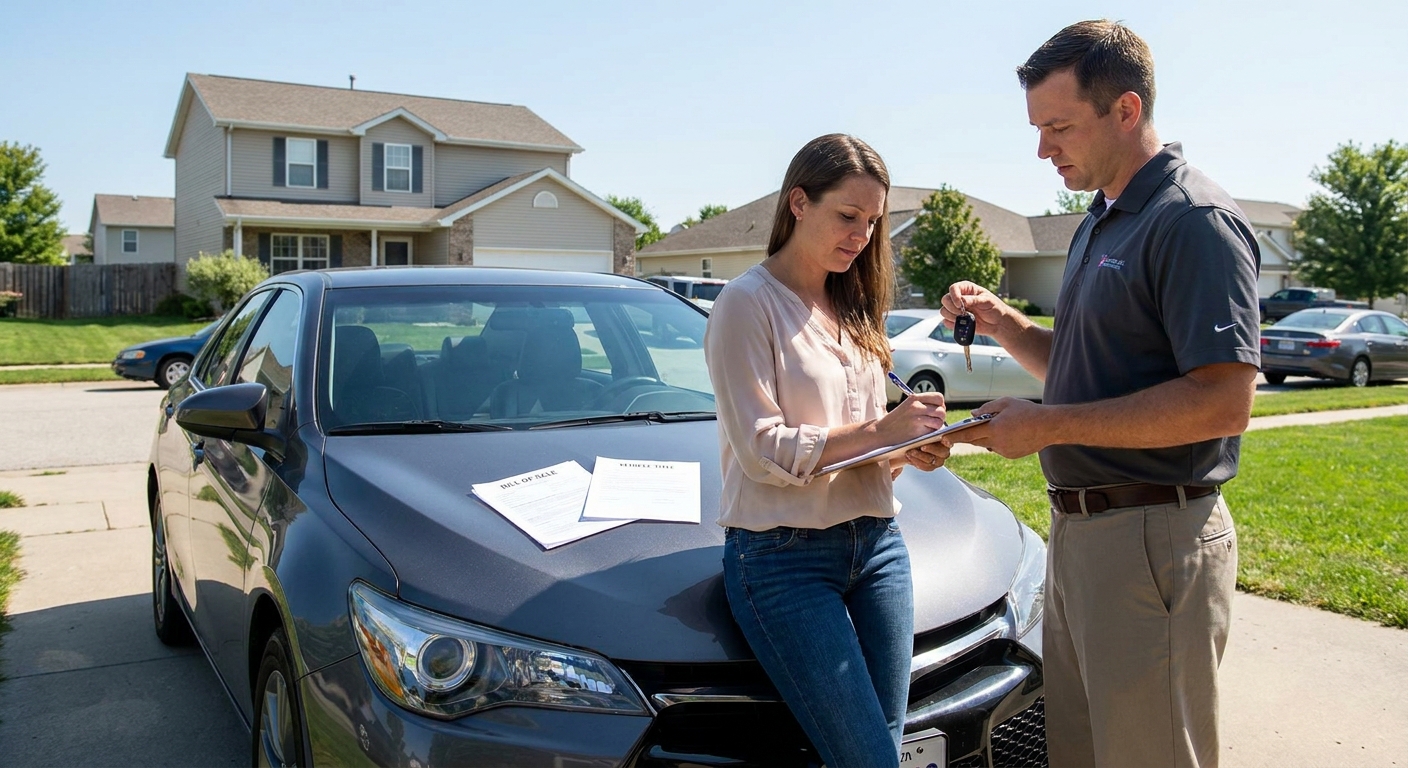
The single most important rule when selling a car privately: do not cancel your insurance before the sale is fully finalized. This means more than just agreeing on a price — it means the title has been legally signed over, the bill of sale is complete, and any required DMV paperwork (such as a Notice of Transfer or Release of Liability) has been submitted.
Canceling early can expose you to serious consequences:
- Fines and legal penalties if the car is still registered in your name without active insurance
- License or registration suspension in many states
- Liability for accidents if the buyer drives the car before title transfer is complete
- A coverage lapse on your record, which can raise future premiums by an average of 11%
Once you've completed all legal steps, contact your insurer right away and provide proof of sale (your bill of sale or signed title) to cancel or modify your policy and potentially collect a refund.

Compare Car Insurance Rates in Ohio
See if you qualify for a lower rate in less than 2 minutes
Insurance Does Not Transfer — And Test Drives Are Your Risk
Car Insurance Does Not Follow the Car to a New Owner
A critical misconception in private sales is that the seller's insurance somehow passes to the buyer. It does not. Your auto insurance policy is tied to you — not the vehicle. When ownership transfers, the buyer is responsible for obtaining their own coverage.
This matters for a few reasons:
- The buyer cannot legally drive the car home without their own insurance in place
- If the buyer drives uninsured after purchase and has an accident, you have no obligation — but only if the title transfer was fully completed
- Allowing a buyer to use your existing policy after the sale is considered insurance fraud
Always remind buyers that they need to secure coverage before taking possession. Learn more about new car insurance requirements if your buyer needs guidance on what to do.
Test Drives: Where Your Liability Is Very Real
Until the title transfers, you remain the owner, and that comes with insurance implications during test drives. Here's what you need to know:
Before allowing any test drive:
- Ask to see a valid driver's license — always
- Request proof of insurance from the prospective buyer
- Accompany the buyer during the drive whenever possible
- Limit the route to a familiar, low-risk area
- Consider a written test drive agreement to document your terms

Protect your car with Farmers
Average Rate:
Find coverage options that fit your budget.

The insurance savings you expect.
Average Rate:
Enjoy personalized policies, comprehensive coverage & more.

See how much you could save today!
Average Rate:
Drivers who switch their auto insurance and save with State Farm save $764 on average!

Safe Drivers Save with Allstate®
Average Rate:
Get rewarded with savings for having a clean driving record.
Getting Your Refund and Navigating the Coverage Gap
How to Get a Prorated Insurance Refund After Selling
If you've prepaid your premium — as many annual policyholders have — you're entitled to a refund for the unused portion of your coverage after cancellation. Here's how the process typically works:
| Step | What to Do |
|---|---|
| 1. Complete the sale | Sign the title, create a bill of sale, submit DMV release of liability |
| 2. Notify your insurer | Contact them with proof of sale and the sale date |
| 3. Request cancellation | Ask for the effective date to be the date of sale |
| 4. Receive your refund | Insurer calculates unused premium minus any cancellation fees |
What affects your refund amount:
- Annual payers typically receive the largest prorated refund
- Monthly payers may see little to no refund depending on billing cycles
- Cancellation fees of $50–$100 may apply with some insurers
- Short-rate penalties may reduce the refund if you cancel mid-term without cause
For a deeper breakdown, see our guide on removing a car from your insurance policy and how refunds are calculated.
Managing the Gap Between Selling and Buying Your Next Car
One of the trickiest situations in a private sale is the gap period — those days or weeks between selling your old car and buying your next one. This is a dangerous stretch for your insurance record.
If you're not buying immediately, consider a non-owner auto insurance policy to maintain continuous coverage until your next vehicle is ready. This keeps your insurance history intact and prevents premium spikes when you reinstate full coverage.
Documentation, State Requirements & Best Practices
What Documents Should You Provide to the Buyer?
Providing the right paperwork protects both you and the buyer — and it's often legally required. Here's a complete checklist of documents you should prepare:
| Document | Purpose | Required? |
|---|---|---|
| Signed Vehicle Title | Transfers legal ownership | Yes — in all states |
| Bill of Sale | Confirms sale price, date, VIN, and parties | Required or strongly recommended in most states |
| Odometer Disclosure Statement | Federal law under Truth in Mileage Act | Yes — federal requirement |
| Lien Release | Proves loan is paid off | Required if vehicle was financed |
| Notice of Transfer / Release of Liability | Releases you from post-sale liability | Required in many states |
| Maintenance Records | Builds buyer trust, not legally required | Optional but recommended |
State Requirements Vary — Know the Rules Where You Live
There is no single national standard for private car sales. State-specific rules can affect:
- Which DMV forms are required for the seller vs. the buyer
- Smog or emissions certification requirements (California, for example, has strict rules)
- Temporary operating permits that may be required for the buyer to legally drive the car home
- Timeframes for completing title transfers and registration (typically 10–30 days for buyers)
Always check your state's DMV website before completing a private sale. If you're unsure about coverage requirements, our guide on car insurance when selling your car offers a solid overview of what to expect on both sides of the transaction.
Best Practices for a Safe, Protected Private Sale
- ✅ Always meet buyers in a public, well-lit location for the first showing
- ✅ Run the transaction through a bank — avoid cash for large amounts; use a cashier's check or verified electronic transfer
- ✅ Don't hand over keys until payment clears and all paperwork is signed
- ✅ Take photos of all signed documents for your records
- ✅ Cancel your insurance only after all DMV filings are complete
Frequently Asked Questions
Can I cancel my car insurance the same day I sell my car privately?
Technically, you can request cancellation for the same date as the sale — but only after the title has been signed over, the bill of sale is complete, and any required DMV notices have been filed. If you cancel before the sale is legally finalized, you risk a coverage lapse, potential fines, and liability exposure if something goes wrong during the handover. Always confirm with your insurer about the timing and get written confirmation of your cancellation date.
What happens if the buyer gets in an accident right after buying my car but before getting insurance?
If the title has already been legally transferred and the DMV notified, you are generally not liable for accidents that occur after the ownership transfer is complete. However, if the title is still in your name, you could face serious legal and financial consequences. This is why it's essential to complete all paperwork before handing over the keys — never allow the buyer to drive the car home without their own insurance in place.
Will my insurer charge a fee to cancel my policy after I sell my car?
It depends on your insurer and policy terms. Some companies charge a flat cancellation fee (typically $25–$100), while others use a "short-rate" method that keeps a slightly larger portion of your prepaid premium. Many major insurers cancel for free when you provide proof of sale. Always ask your agent upfront about any cancellation fees so you know exactly what your refund will look like. You can also learn more about how to remove a car from your insurance policy and what refunds to expect.
Is a test drive covered by my insurance if the buyer causes an accident?
In most cases, yes — standard auto policies include a "permissive use" clause that extends coverage to drivers you authorize. However, if you only carry liability insurance (no collision or comprehensive), your own vehicle may not be covered for physical damage. The buyer's own auto policy can also serve as primary coverage if they carry non-owned vehicle coverage. Always verify both your policy terms and the buyer's coverage status before allowing a test drive.
Do I need to notify the DMV when I sell my car to a private buyer?
In most states, yes — sellers are required to file a Notice of Transfer or Release of Liability with the DMV. This is one of the most important steps in the process, as it officially removes you from responsibility for anything that happens with the vehicle after the sale. Deadlines typically give sellers about 5 days to file. Failing to submit this form can result in parking tickets, tolls, or accident liability being tied to your name even after the car is gone.