
Compare Car Insurance Rates in Ohio
See if you qualify for a lower rate in less than 2 minutes



How VIN Mismatches Happen on Car Insurance Policies
Your Vehicle Identification Number (VIN) is a 17-character code that uniquely identifies your specific car. Insurers use it to confirm exactly what vehicle is covered, assess risk, and process claims. When the VIN on your policy doesn't match your title, registration, or the physical VIN on your vehicle, you have a VIN mismatch, and it can create serious financial consequences if left uncorrected.
VIN errors are more common than most drivers realize. Connected-car technology providers estimate that more than 5% of auto insurance policies have an invalid VIN on file, largely due to manual data entry mistakes, and the U.S. auto insurance industry loses roughly $2.1 billion annually to incorrect VIN reporting through rework and operational friction.
The Most Common Causes of VIN Errors
| Cause | How It Happens |
|---|---|
| Data Entry Typo | An agent or policyholder misreads or transposes characters (e.g., "0" vs. "O", "1" vs. "I"). The 10th digit is one of the most commonly mistyped |
| Incorrect Source Document | VIN is copied from an old registration, prior insurance card, or handwritten bill of sale that already had an error |
| Database Autofill Error | Insurer's system pulls a partial or incorrect VIN from a third-party database |
| Vehicle Switch Not Updated | You traded in a car but the old VIN wasn't fully replaced on the policy |
| Multi-Car Policy Mix-Up | VINs for different vehicles on the same policy get swapped |
| Salvage or Rebuilt Title | Replaced body panels or parts carry VIN tags from donor vehicles, causing confusion |
| Carrier Transfer | A VIN error from a prior policy gets carried forward to a new insurer |

Compare Car Insurance Rates in Ohio
See if you qualify for a lower rate in less than 2 minutes
What Happens to Your Insurance Claim With a VIN Mismatch
This is where a VIN error goes from a minor inconvenience to a potentially costly problem. When you file a claim, adjusters verify the physical VIN on your vehicle against what's listed in the policy. A mismatch triggers an investigation, and depending on the severity, can result in a delayed or fully denied claim. If you want a broader picture of why insurers reject payouts, our guide on why claims get denied covers the full landscape of denial reasons and appeal strategies.
How Claim Outcomes Vary by Mismatch Type
Claims handlers report that minor VIN typos are usually flagged by estimating software, corrected against vehicle photos, and paid without ever being escalated to underwriting. The real problem claims are those where the VIN belongs to a completely different vehicle, which are routed back to underwriting to determine the original coverage intent.
When the Insurer Made the Mistake
If you provided the correct VIN and your agent or insurance company mis-entered it, the law is generally more favorable to you. Most states recognize that an agent's data-entry error is the insurer's responsibility, not yours. Because VINs contain a check digit, a one-character typo will often return "no such vehicle" when run through databases, which is strong evidence the insurer underwrote the correct car but typed it incorrectly on the policy. That situation is very different from material misrepresentation, where the insured knowingly provides false information.
If you're facing a denial on this basis, document everything: emails, quotes, and any written communication where you provided the correct vehicle information. You may also have recourse through the agent's Errors & Omissions (E&O) policy.

Protect your car with Farmers
Average Rate:
Find coverage options that fit your budget.

The insurance savings you expect.
Average Rate:
Enjoy personalized policies, comprehensive coverage & more.

See how much you could save today!
Average Rate:
Drivers who switch their auto insurance and save with State Farm save $764 on average!

Safe Drivers Save with Allstate®
Average Rate:
Get rewarded with savings for having a clean driving record.
How to Verify Your VIN and Fix the Error
Catching a VIN mismatch before you ever need to file a claim is the single best way to protect yourself. The fix is usually simple, but you have to find it first.
Step 1: Find Your Vehicle's True VIN
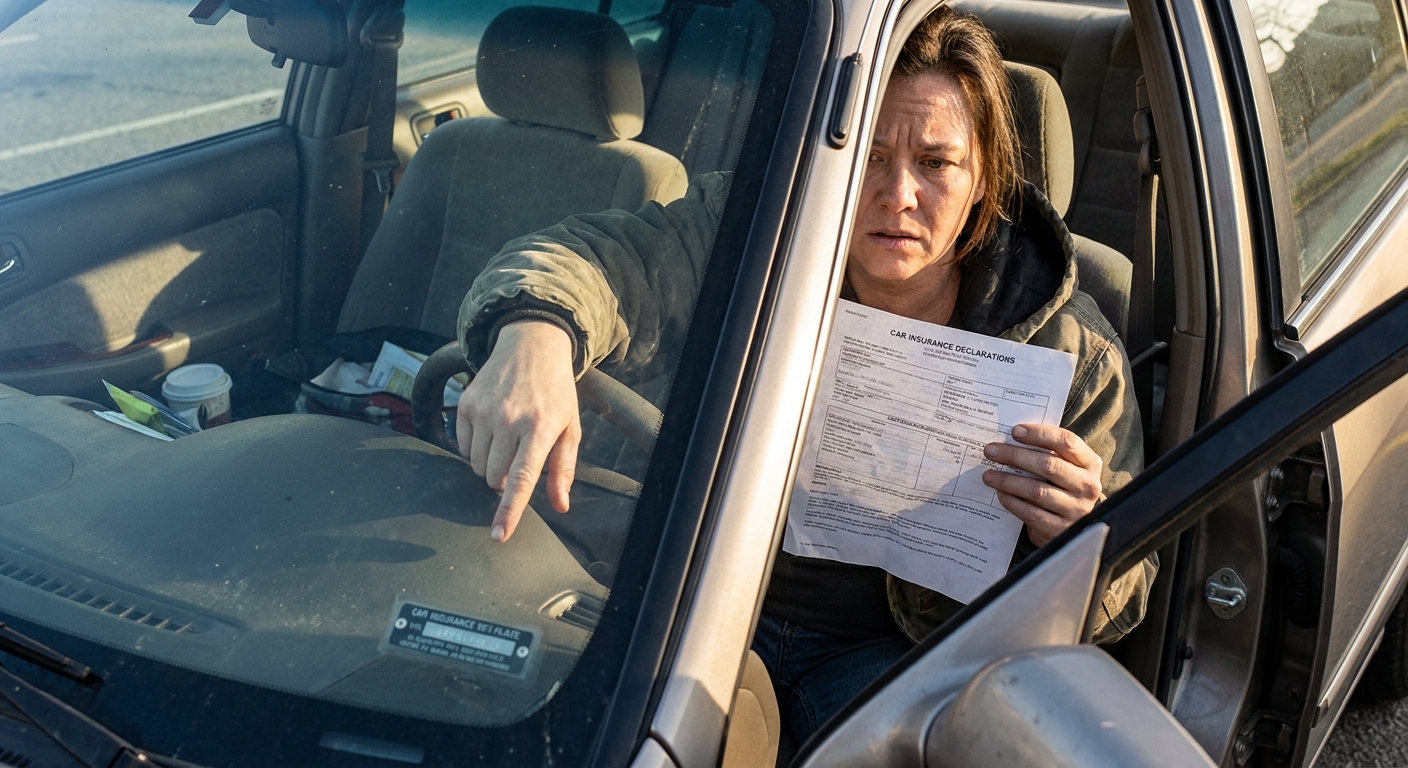
Your car's VIN appears in several locations. Always use the dashboard plate or door jamb sticker as your primary source. These are the most official and tamper-evident locations.
| Location | Where to Look |
|---|---|
| Dashboard Plate | Look through the windshield at the driver's side lower corner where the dash meets the glass |
| Driver's Door Jamb | Open the driver's door and check the sticker on the door frame |
| Engine Block | Stamped on the front of the engine near the radiator (on older vehicles) |
| Vehicle Title | Listed in the "Vehicle Information" section near the top |
| Registration Card | Listed under "VIN" or "Vehicle ID" |
Step 2: Compare Against Your Insurance Documents
Pull out your insurance ID card and declarations page. Find the VIN listed under your vehicle description. Compare it character by character against the VIN on your vehicle. All 17 characters must match exactly.
Step 3: Contact Your Insurer Immediately
If you spot a mismatch, don't wait. Here's the action plan:
- Call your insurer's customer service line (not just your local agent, the company itself must update the electronic record)
- Provide both the incorrect VIN currently listed and the correct VIN from your vehicle
- Send supporting documentation: a clear photo of your dashboard VIN plate, a copy of your title or registration
- Request a corrected ID card and declarations page and verify the updated version before you hang up
- Confirm electronic DMV reporting in states with real-time verification like Texas, Georgia, Tennessee, Illinois, Kansas, and Washington, where insurers must transmit the corrected VIN to the state's database
Ask that the correction be applied retroactively to your original policy inception date so your continuous coverage history stays intact for your lender and DMV.
Step 4: Confirm Premium Impact
A VIN correction can affect your rate because the VIN encodes your vehicle's trim level, safety features, and engine type. Most standard policies contain a clause allowing insurers to correct typographical errors and adjust premiums to what they would have been had the error not occurred. Ask your insurer whether the correction changes your premium, up or down, and get any adjustments in writing.
Can a VIN Mismatch Affect Your Vehicle Registration?
Yes, and this is where things have gotten stricter in 2026. Roughly 34 states now use some form of real-time electronic insurance verification (EIV), up from about 27 in 2020, and each new system has historically cut uninsured driver rates by two to four percentage points within two years.
If the VIN on your policy doesn't match the VIN on your registration, the state's system may return a "no match," which can trigger:
- Violation letters (in Texas, for example, drivers receive roughly 30 days to prove coverage or face fines from $175 to $350 plus a registration block)
- Suspended license plates or registration
- Fines and reinstatement fees
- A permanent record on your driving history
For a full breakdown of how each state's DMV enforces insurance requirements, see our guide on car insurance and vehicle registration requirements by state.
Key 2026 EIV Programs to Know
- Kansas Real-Time Motor Vehicle Insurance Verification Act (SB 42) goes fully operational July 1, 2026
- Washington launched its statewide online verification system on January 1, 2026
- Georgia GEICS cross-references the transmitted VIN with state registration data and links it to your tag
- TexasSure matches DMV registration records against insurer VIN feeds continuously
- New York is phasing in full real-time verification, with completion targeted by December 31, 2028
Can Insurers Retroactively Deny Claims for a VIN Mismatch?
This is one of the most important questions consumers ask, and the answer depends on several factors.
The Key Factors That Determine Retroactive Denial
Your Consumer Rights
- Right to a written denial: Insurers must provide a written explanation citing specific policy language. New 2026 laws in states like Texas strengthen your right to see the exact data used to justify a denial.
- Right to appeal: Submit a formal internal appeal with your documentation showing the clerical error.
- Right to file a state complaint: Your state's Department of Insurance can review whether a denial is justified. Learn more about how the claims process works end-to-end so you know what "normal" looks like.
- Right to legal counsel: For high-value claims, an insurance bad-faith attorney can argue that the insurer cannot benefit from its own data-entry error.
Frequently Asked Questions
Will my insurance pay a claim if the VIN is wrong on the policy?
It depends on how severe the mismatch is and who caused the error. If the difference is a minor typo (one or two characters off) and all other vehicle details match, most insurers will investigate and still honor the claim after verifying your vehicle's identity. However, if the VIN on the policy belongs to an entirely different vehicle, the insurer may argue that your actual car was never covered and deny the claim outright. The fastest path to resolution is correcting the VIN before you ever need to file.
What if my insurance agent entered the wrong VIN?
If you provided the correct VIN and your agent or insurer mis-entered it, this is considered an insurer's error in most states, not a misrepresentation by you. You generally have the right to argue that the insurer cannot escape coverage obligations due to its own clerical mistake, especially after collecting premiums. Document any evidence showing you provided the correct vehicle information, and escalate to your state's insurance department or pursue the agent's E&O policy if needed.
Can a VIN mismatch affect my vehicle registration?
Yes. About 34 states now use real-time electronic insurance verification systems that match the VIN on your registration against the VIN on your insurance policy. If those don't match, you can receive a notice from the DMV indicating a lapse in coverage even if your policy is active. Some states may even suspend your registration, block plate renewals, or issue fines until the discrepancy is resolved, so contact both your insurer and your DMV promptly.
How do I know if the VIN on my insurance policy is correct?
Check your insurance ID card or declarations page and compare the listed VIN character by character against the VIN plate on your vehicle's dashboard (visible through the windshield on the driver's side) or the sticker on your driver's door jamb. All 17 characters must match exactly. Pay close attention to easily confused characters like "0" vs. "O" or "1" vs. "I", and double-check the 10th digit, which is a common mistype. It's a good habit to verify this any time your policy renews or you add a vehicle.
Can I fix a VIN error on my insurance policy online?
Some insurers allow you to update vehicle information through their online portal or mobile app. However, for a VIN correction specifically, it's strongly recommended that you call customer service directly to ensure the change is properly recorded and electronically reported to your state's DMV system if required. Always request updated documents, a new ID card and revised declarations page, after any correction to confirm the change took effect and applies retroactively to your original policy start date.