
Compare Car Insurance Rates in Ohio
See if you qualify for a lower rate in less than 2 minutes



How Insurance Companies Verify Your Mileage
When you apply for car insurance or renew a policy, you're typically asked how many miles you drive per year. It seems like a simple, honor-system question, but insurers don't just take your word for it. Insurance companies have a growing arsenal of tools to verify what you report, and the stakes for getting it wrong (intentionally or not) are higher than most drivers realize.
Methods Insurers Use to Check Your Mileage
Insurers use multiple overlapping methods to confirm the mileage you report. Here's a breakdown of the most common approaches in 2026:
Odometer Photos and Self-Reported Readings
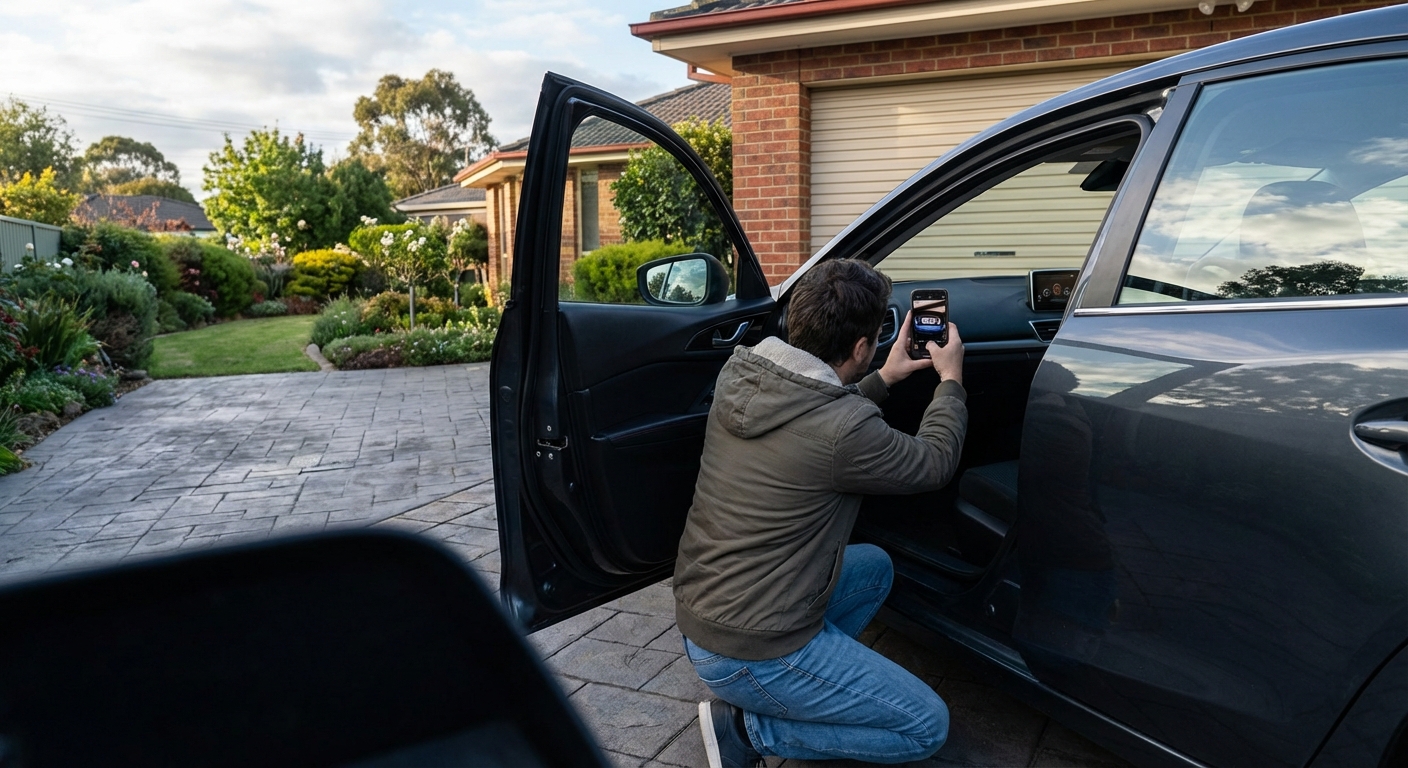
The most direct method is simply asking you. Many insurers request a current odometer photo through their app or website at the time of application or renewal. State Farm contacts policyholders annually for odometer readings, USAA follows a similar annual verification process, and American Family accepts self-reported estimates with no device required. Some states, like California, actually require insurers to verify annual mileage at least every three years. If a driver doesn't return a requested mileage form, the insurer may increase their mileage estimate to the state default, resulting in higher rates.
State and Government Databases
Insurers can access DMV records, smog-check odometer data, and safety-inspection databases without your direct involvement. Under California law, insurers are allowed to verify mileage by accessing various state databases, and when insurers ask for but do not receive the information from a policyholder, they can use those state records. In Massachusetts, mileage is documented at every yearly state inspection and reported to the registry of motor vehicles, giving insurers an easy year-over-year audit trail. These databases are cross-referenced automatically, making it easy to flag major discrepancies between what you reported and what the records show.
Maintenance and Repair Records
Every time you take your car in for an oil change, a tire rotation, or a repair, the shop logs your mileage. Repair shops record mileage when you take your car in for oil changes or a repair after an accident, and insurance companies can pull that data. If your odometer jumped 30,000 miles since your last renewal but you reported driving 8,000 miles annually, that's a serious red flag.
Telematics and Usage-Based Insurance (UBI) Programs
Telematics is the fastest-growing verification method. Through a small OBD-II plug-in device or a smartphone app, insurers can track exactly how many miles you drive in real time. Programs like Progressive Snapshot, Allstate Drivewise, and Nationwide SmartMiles use this technology not only to offer discounts but to continuously validate reported mileage. Learn more about high mileage car insurance and how annual miles affect your rates.
Connected Car APIs and Direct Odometer Access
One of the newest verification methods involves connected car APIs, platforms that pull tamper-proof, on-demand odometer readings directly from a vehicle's ECU (engine control unit). Services like Smartcar's API let policyholders connect their vehicle and agree to share their odometer reading in just three clicks from the insurer's web portal or mobile app, after which the insurer can automatically retrieve the exact odometer reading from the vehicle's instrument cluster on a monthly or annual basis with no hardware required. Notably, Smartcar's Vehicles API v2.0 is being deprecated on December 1, 2026 in favor of a new v3 platform, signaling how quickly connected-car verification is maturing. Verisk's MileageConfirm takes a complementary approach, capturing odometer readings from sources such as state inspections, auto maintenance service providers, and dealers, combining them with a predictive mileage model.
Verisk MileageConfirm and Third-Party Analytics
Some insurers use third-party analytics platforms, most notably Verisk's MileageConfirm, which aggregates odometer readings from state inspections, service providers, dealers, and DMVs, combined with predictive AI modeling to estimate actual mileage for vehicles with limited data history. Underreported mileage is now well documented as a form of soft fraud, and industry research shows a large share of policyholders report fewer miles than they actually drive, which is exactly why automated verification tools have become industry standard. For more on how carriers use AI and telematics to catch inaccuracies, see our guide to material misrepresentation on insurance applications.

Compare Car Insurance Rates in Ohio
See if you qualify for a lower rate in less than 2 minutes
What Happens If You Lie About Your Mileage
Intentionally underreporting your mileage to lower your premium is considered insurance fraud, specifically classified as "soft fraud." Even if it feels like a minor exaggeration, the consequences can be severe. Underreported mileage is a form of soft fraud that occurs when policyholders report a certain number of miles driven, even though their actual mileage is a lot higher. Industry estimates have long put annual losses from underreported mileage in the multi-billion-dollar range for U.S. personal auto insurers, which is exactly why automated verification has moved from optional to mainstream.
Consequences of Mileage Fraud
| Consequence | What It Means |
|---|---|
| Claim Denial | Your insurer can deny a claim if they find your mileage was misrepresented |
| Policy Rescission | Your policy can be canceled retroactively, treating it as if it never existed |
| Non-Renewal | Insurers can refuse to renew your policy, making it hard to get coverage elsewhere |
| Premium Increases | Retroactive premium hikes based on your actual mileage |
| Civil Fines | Fines up to $15,000 for soft-fraud misdemeanor cases, higher for large-scale fraud |
| Criminal Penalties | Misdemeanor to felony charges; up to 3 years federal prison and fines up to $10,000 per vehicle for odometer tampering |
The most common trigger for discovery is a claims investigation. When you file a claim after an accident, your insurer will pull odometer readings, cross-check maintenance records, and review any telematics data. If they find that you drove 22,000 miles last year but reported 9,000, your claim can be denied entirely, right when you need coverage most. State insurance laws classify material misrepresentation as insurance fraud, which can carry civil or even criminal penalties, and in many jurisdictions insurers can void a policy from inception if they prove the misrepresentation influenced their underwriting decision.
Beyond claim denials and cancellations, discovered mileage fraud can also result in retroactive premium hikes based on your actual mileage, and it may make it significantly harder to obtain coverage from a new insurer who flags you as high-risk. In the most serious cases, criminal penalties can escalate: soft-fraud misdemeanors can carry fines of up to $15,000 plus community service, probation, and time in jail. Federal odometer tampering, meanwhile, can trigger civil penalties of up to $10,000 per vehicle, up to a maximum total penalty of $1 million, along with potential criminal fines and up to three years in federal prison. While most soft fraud cases don't escalate to criminal charges, the civil consequences alone (denied claims, canceled policies) can cost you far more than the premiums you saved. Learn more about how carriers pursue material misrepresentation cases.

Protect your car with Farmers
Average Rate:
Find coverage options that fit your budget.

The insurance savings you expect.
Average Rate:
Enjoy personalized policies, comprehensive coverage & more.

See how much you could save today!
Average Rate:
Drivers who switch their auto insurance and save with State Farm save $764 on average!

Safe Drivers Save with Allstate®
Average Rate:
Get rewarded with savings for having a clean driving record.
How Mileage Affects Your Car Insurance Rates
Mileage is a direct proxy for risk. The more you drive, the more opportunities there are for an accident. Insurers use annual mileage as one of several key rating factors. According to FRED data based on the Federal Highway Administration's moving 12-month total, U.S. vehicle miles traveled reached about 3.34 trillion miles in the 12 months ending June 2026 (3,336,829 million miles). The FHWA's Average Annual Miles per Driver table lists the overall average at 13,476 miles per year, and 2026 industry writeups place the typical American driver in a range of roughly 13,476 to 13,700 miles annually. Insurers are paying closer attention to mileage accuracy than ever before.
Mileage Brackets and Rate Impact
Most insurers categorize drivers into general mileage tiers:
| Annual Mileage | Category | Rate Impact |
|---|---|---|
| Under 7,500 miles | Low | Lowest premiums; discount-eligible |
| 7,501 to 12,000 miles | Below Average | Moderate savings vs. average |
| 12,001 to 15,000 miles | Average | Standard rates (U.S. avg ~13,476 miles) |
| 15,001 to 20,000+ miles | High | 10 to 25% higher than average rates |
Savings from a standard low-mileage discount typically range from 2% to 25%, and pay-per-mile programs can deliver up to 50% savings for very infrequent drivers. Learn how a dedicated pay-per-mile car insurance plan compares to a traditional low-mileage discount.
Commute Distance Verification
Insurers also ask specifically about your commute. They want to know how far you drive to work, how many days per week you commute, and whether you use your car for business. Tools like Verisk's MileageConfirm analyze vehicle inspection data and service records to verify whether a vehicle's usage pattern matches a reported commute. Remote workers and retirees who drive very little may qualify for additional discounts, and most carriers now require one or more of the following: a dated odometer photo or physical inspection at policy adjustment, annual odometer submissions via mobile app, or enrollment in a telematics program that tracks actual distance driven.
Low Mileage Discounts by Insurer (2026)
| Insurer | Program | Est. Annual Savings |
|---|---|---|
| Allstate | Milewise (pay-per-mile) | Up to ~50% for very low mileage; 30 to 40% typical |
| Allstate | Drivewise (behavior) | Up to 40% at renewal |
| Nationwide | SmartMiles (pay-per-mile) | Base premium plus per-mile rate; safe-driving discount up to 10% |
| Nationwide | SmartRide | Up to 40% |
| State Farm | Drive Safe & Save | Up to 30% |
| Progressive | Snapshot | Avg. ~$231 to $322/year at renewal |
| Travelers | IntelliDrive | Up to 30% |
| Erie | Low-Mileage Discount | ~20 to 25% |
A 2026 low-mileage roundup lists Nationwide SmartMiles as the best pay-per-mile program (available in 40 states with safe-driving discounts up to 10%) and Allstate Milewise for flexible daily billing (available in 17 states plus D.C. with a daily rate plus a per-mile fee). To qualify, you'll typically need to provide an odometer reading or enroll in a telematics program to verify actual usage. Explore more ways to stack savings in our roundup of car insurance discounts for 2026, and see how Snapshot stacks up in our Progressive car insurance review.
Usage-Based Insurance: The Most Accurate Mileage Tracker
Usage-based insurance (UBI) has fundamentally changed how insurers price policies for drivers who don't fit the average mold. Instead of relying on estimates, UBI tracks exactly how far and how safely you drive. The Automotive Usage-Based Insurance Market is expected to grow from USD 67.21 billion in 2025 to USD 76.59 billion in 2026 and is forecast to reach USD 162.12 billion by 2031 at a 16.18% CAGR. Other 2026 forecasts place the automotive UBI market at about USD 84.2 billion, growing to USD 316.7 billion by 2033 at a 20.8% CAGR, with Pay-As-You-Drive (PAYD) leading the policy type segment at a 38.3% market share. North America continues to dominate the market, driven by high smartphone penetration and favorable regulatory frameworks.
How UBI Tracks Your Miles
UBI programs use one of three main technologies:
- Smartphone Apps use GPS and accelerometers to log every trip automatically
- OBD-II Plug-In Devices connect to your car's diagnostic port (standard on all vehicles made after 1996) and transmit data wirelessly
- Connected Car / Integrated Systems in newer vehicles transmit data directly from the manufacturer to your insurer, enabling tamper-proof, on-demand verification
Safe, low-mileage drivers can earn discounts ranging from 20% to 40% through these programs. Allstate's own newsroom says low-mileage drivers can save up to 50% over traditional policies with Milewise, making telematics-based UBI a cost-effective option for those who work from home, have shorter commutes, or are retired. However, it's worth noting that behavior tracking (hard braking, late-night driving, speeding, phone use) also factors into your score, not just mileage. With Progressive Snapshot and Allstate Drivewise, unsafe driving can actually increase your premium in some states, so it's important to understand the program terms before enrolling.
Top UBI and Pay-Per-Mile Programs in 2026
| Insurer | Program Name | Tracking Method | Potential Savings |
|---|---|---|---|
| Allstate | Milewise (pay-per-mile) | Plug-in device / app | Up to ~50% for very low mileage |
| Allstate | Drivewise | App or plug-in device | Up to 40% at renewal |
| Nationwide | SmartMiles (pay-per-mile) | OBD-II device | Base + per-mile; safe-driving up to 10% |
| Nationwide | SmartRide | App / device | Up to 40% |
| Progressive | Snapshot | App or OBD-II device | Avg. ~$231 to $322/year (up to 40%) |
| Travelers | IntelliDrive | App | Up to 30% |
| State Farm | Drive Safe & Save | App or OnStar | Up to 30% |
| Erie | Low-Mileage | Standard discount | ~20 to 25% |
Frequently Asked Questions
Does car insurance actually verify mileage?
Yes, and increasingly so. Insurers use odometer photos, state DMV databases, smog-check and inspection records, maintenance histories, connected car APIs, and telematics devices to cross-reference what you report. In states like California, verification is legally required at least every three years, and Massachusetts records mileage at every annual inspection. Even without state mandates, insurers routinely audit mileage during claims investigations and at renewal, with tools like Verisk's MileageConfirm and Smartcar's connected vehicle API making large-scale automated verification standard practice in 2026.
What happens if my reported mileage is slightly off?
Minor discrepancies of a few hundred miles are generally not a concern. The real issue arises when there's a substantial and consistent gap between what you reported and what the data shows. Underreported mileage is a form of soft fraud that occurs when policyholders report a certain number of miles driven even though their actual mileage is a lot higher. That kind of gap puts drivers at real risk of a claim denial or policy cancellation during an investigation.
Can I update my mileage mid-policy if I start driving more or less?
Yes, and you should. You can contact your insurer at any time to update your estimated annual mileage. If you've started driving significantly more due to a new job or a longer commute, it's important to update your policy to avoid a claim denial. If you're driving much less (for example, you switched to remote work), an update could lower your premium right away.
Is usage-based insurance worth the privacy trade-off?
For most low-mileage drivers, the savings outweigh the privacy concerns. UBI programs primarily collect trip distance, speed, and braking data, though some also track GPS location in real time. Safe, infrequent drivers can realistically save 20 to 50% on their premiums through programs like State Farm Drive Safe & Save or Nationwide SmartMiles. Read the program's privacy policy carefully before enrolling to understand exactly what data is collected and how it's used, especially given ongoing 2025 to 2026 privacy litigation involving telematics data brokers.
Can my insurer cancel my policy just because of a mileage discrepancy?
Yes. If an insurer discovers that you materially misrepresented your mileage, especially if it affected how your premium was calculated, they have grounds to cancel your policy or refuse renewal. Material misrepresentation is one of the most common reasons insurers void coverage, and mileage is a primary rating factor. In serious cases, insurers may also pursue civil remedies, including recovering the difference in premiums plus investigation costs.