
Compare Car Insurance Rates in Ohio
See if you qualify for a lower rate in less than 2 minutes



What Is the Duty to Mitigate Damages?
The duty to mitigate damages is a legal principle that requires you, as a policyholder or accident victim, to take reasonable steps to prevent your losses from getting worse after an accident. It is rooted in common law and is embedded in nearly every car insurance policy in the United States. Importantly, mitigation is a rule about damages, not fault. It does not decide who caused the crash. It only decides which post-accident losses you can recover.
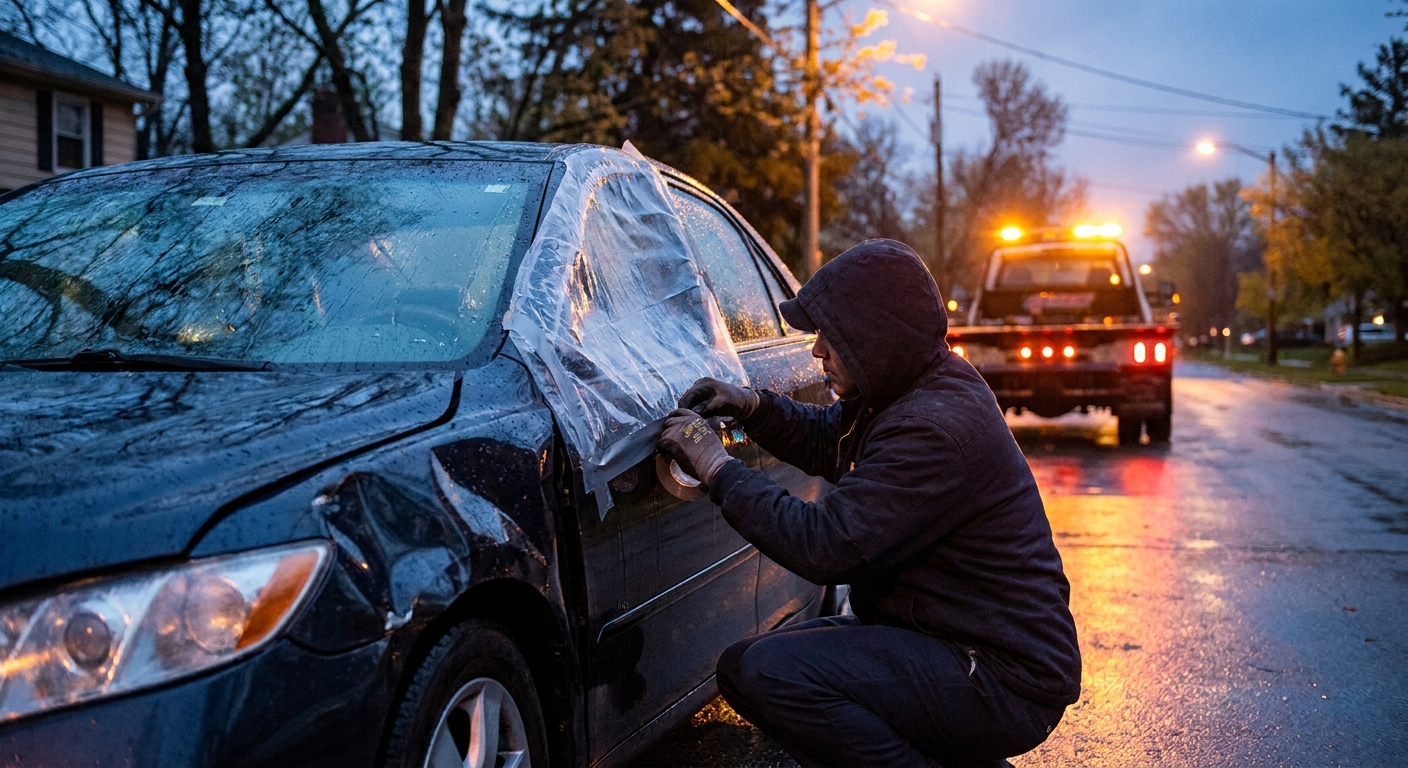
Think of it this way: if your car's window is shattered after a collision and you leave the vehicle in an open parking lot during a rainstorm without any protective covering, your insurer can argue that the resulting water damage to the interior was your fault, not the accident's. The same concept applies to physical injuries. If you delay seeking medical care and your condition worsens, an insurer can reduce your compensation for the portion of harm that was avoidable.
This duty applies to both property damage and personal injury claims and is enforced across all U.S. jurisdictions. It doesn't mean you have to go to extraordinary lengths or spend thousands of dollars out of pocket. It simply means you must act as a reasonable, prudent person would under the same circumstances. For a broader overview of what happens after you file, see our guide on how car insurance claims work.

Compare Car Insurance Rates in Ohio
See if you qualify for a lower rate in less than 2 minutes
Reasonable Steps You Must Take After an Accident
Insurance policies generally outline a policyholder's obligation to protect the vehicle and minimize further harm. Here are the most commonly required and accepted mitigation actions.
Protecting Your Vehicle
| Action | Why It Matters |
|---|---|
| Cover broken windows with plastic sheeting or tarps | Prevents rain, theft, and interior damage |
| Secure loose or damaged body panels | Avoids additional mechanical or structural harm |
| Tow the vehicle to a safe, covered location | Protects from weather, vandalism, and further theft risk |
| Lock the vehicle or use a steering wheel club | Reduces theft exposure after a break-in or accident |
| Don't drive a vehicle that is unsafe to operate | Prevents additional mechanical damage and liability |
In 2026, a standard local accident tow typically runs between $75 and $125, with the national average landing around $109 to $129 per J.D. Power data, and metro areas like NYC, San Francisco, and Los Angeles running $150 to $300. Short-term storage fees at commercial lots generally run $20 to $50 per day, though some markets and impound facilities charge $75 or more per day. About 35 states cap storage fees, typically at $15 to $50 per day. Because vehicles sit in storage an average of five to six days after an accident, a typical accident scenario can rack up $500 to $1,500 in combined towing and storage fees when the car remains in storage 10 to 15 days during adjuster inspections. Insurers generally reimburse these, but only for as long as it takes them to reasonably inspect the vehicle and give you instructions on where to move it. Delays on your end after receiving those instructions can result in denied storage fees. Learn more about claim reimbursement rules and what to expect on timelines.
Protecting Your Health
After an accident, taking care of your physical well-being is just as important as protecting your car. Insurers scrutinize medical timelines very closely.
- Seek medical treatment promptly, ideally the same day or within 24 to 72 hours, even if injuries seem minor
- Follow your doctor's treatment plan, attend all follow-up appointments and physical therapy, and take prescribed medications
- Avoid activities that aggravate injuries, and refrain from strenuous activity until medically cleared
- Use prescribed medical devices such as braces, crutches, or assistive care equipment
- Don't return to demanding physical work prematurely, and wait for your doctor's clearance

Protect your car with Farmers
Average Rate:
Find coverage options that fit your budget.

The insurance savings you expect.
Average Rate:
Enjoy personalized policies, comprehensive coverage & more.

See how much you could save today!
Average Rate:
Drivers who switch their auto insurance and save with State Farm save $764 on average!

Safe Drivers Save with Allstate®
Average Rate:
Get rewarded with savings for having a clean driving record.
Reasonable vs. Unreasonable Mitigation: Real Examples
Understanding the line between what's expected and what's excessive is critical to protecting your claim. Below is a side-by-side breakdown.
What the Law Does NOT Require
The duty to mitigate is bounded by reasonableness. Courts and insurers cannot require you to:
- Undergo high-risk or experimental surgeries to reduce injury-related costs
- Spend significant sums of money upfront with no guarantee of reimbursement
- Take steps that are financially unavailable to you given your current situation
- Pursue treatments that conflict with sincerely held religious beliefs
The key legal standard is what a reasonable person would have done under similar circumstances, not perfection.
How Insurers Use Failure to Mitigate to Deny or Reduce Claims
Insurance companies are well-versed in using the failure-to-mitigate argument as a lever to reduce settlement amounts. Recent case law has strengthened their position. In July 2026, the Michigan Supreme Court in Canty v. Mason held that the state's no-fault act did not abrogate the common-law mitigation duty, meaning Medicare-covered plaintiffs must actively pursue Medicare payments to mitigate their damages in tort actions under MCL 500.3135(3)(c). An August 19, 2026 Iowa Court of Appeals ruling upheld a defense verdict where an injured driver recovered nothing after choosing surgery over recommended therapy, even though the other driver admitted fault. And courts in Connecticut now recognize failure to mitigate as a legally sufficient special defense in auto accident lawsuits, giving insurers stronger procedural footing. Here's how it typically plays out.
Common Insurer Tactics
1. Citing Delayed Medical Treatment If you waited several days before seeing a doctor, an adjuster may argue that your injuries either weren't serious at the time of the accident or that they were worsened by your own inaction. Either way, this justifies a lower payout. This is one of the most common reasons for car insurance claim denials.
2. Flagging Gaps in Care Missing follow-up appointments, skipping physical therapy, or stopping treatment early are red flags insurers actively search for. Per the NAIC's 2026 auto insurer survey, 88% of auto insurers use, plan to use, or are exploring AI models in their operations, and Sedgwick's 2026 Future-Ready Claims report estimates that between 58% and 82% of insurers currently use AI tools in claims workflows. Computer vision and natural-language models are being trained to review thousands of claim files, medical records, photos, adjuster notes, and policy documents to identify patterns relevant to causation disputes and damage assessments. Adjusters and defense attorneys also routinely review publicly available social media for evidence of physical activities that could contradict reported limitations. Learn more about how AI-powered claim reviews actually work.
3. Pointing to Unprotected Property For vehicle damage claims, if your car suffered additional harm (water damage, theft, vandalism) after the accident because it wasn't secured or covered, your insurer may categorize that additional damage as non-covered, and they may have a strong case.
4. Independent Medical Examinations (IMEs) Insurers can request that you undergo an IME by a doctor of their choosing to evaluate whether your treatment was reasonable and proportional to the accident. An unfavorable IME can be used to cap or deny portions of your claim.
5. Fast, Low Settlement Offers Adjusters often make quick settlement offers before treatment is complete. If you decline and treatment drags on, they may later argue any additional losses came from failure to mitigate. Learn how to file a complete claim and push back on lowball offers effectively.
What Failure to Mitigate Can Cost You
| Scenario | Potential Consequence |
|---|---|
| 3-day delay in seeking medical care | Insurer argues injuries weren't accident-related |
| Skipped physical therapy sessions | Settlement reduced for "avoidable" ongoing pain |
| Unprotected broken window leads to water damage | Water damage excluded from claim |
| Driving damaged vehicle causes further mechanical failure | Additional repair costs denied |
| Excessive rental car or storage duration | Portion of fees not reimbursed |
| No documentation of mitigation steps | Claim weakened in disputes or litigation |
Documenting Your Mitigation Efforts
Proper documentation is your strongest defense against a mitigation-based claim denial. In 2026, insurers increasingly use AI-assisted claim review tools that automatically flag treatment gaps and expanding damage timelines, which makes thorough records more important than ever. Computer vision can compare early-loss photos with later submissions to check whether damage grew in a way consistent with avoidable delay, and modern damage-assessment models now achieve up to 95% accuracy on photo-based estimates, so timestamped evidence works strongly in your favor. Here's how to build a bulletproof record.
Build Your Evidence File
- 📸 Photograph everything immediately. Take timestamped photos of all vehicle damage, protective measures you took (tarps, tape, window coverings), and the accident scene itself
- 🧾 Save every receipt. Towing invoices, temporary repair materials, storage fees, and any mitigation-related purchases are all potentially reimbursable and demonstrate good faith
- 📋 Keep a written log. Note the date, time, and description of every protective action you took and every call or communication you made with your insurer
- 🏥 Maintain a complete medical file. Keep all appointment records, prescriptions, therapy schedules, and doctor's notes in one organized place
- 📞 Document insurer communications. Record the date, time, and summary of every conversation with your insurance adjuster, ideally in writing
- 📅 Track your recovery timeline. A simple daily journal noting symptoms, limitations, and treatment progress can be invaluable if your claim is disputed
- 🚗 Save vehicle records. Repair estimates, work-restriction notes from your employer, and pre-accident maintenance records all help establish baseline value and reasonable conduct
For more on how insurers evaluate vehicle repair costs, see our breakdown of the car damage assessment process. And if you want to understand your window to act in each state, our guide on car insurance claim deadlines and statutes of limitations walks through the reporting deadlines and legal filing windows that interact with your mitigation duties.
Frequently Asked Questions
What exactly does "duty to mitigate damages" mean in car insurance?
The duty to mitigate damages is a legal obligation that requires policyholders and accident victims to take reasonable steps to prevent their losses from getting worse after an accident. It applies to both vehicle property damage and personal injury claims. Nearly every U.S. car insurance policy includes a mitigation clause, and failure to comply can result in reduced or denied claim payouts. The standard is based on what a reasonable, prudent person would do under similar circumstances, not an impossible standard of perfection.
Can my insurance company deny my entire claim if I fail to mitigate damages?
A full denial is rare, but partial reductions in your payout are common and legally supported. Insurers typically reduce compensation for the specific portion of damage or injury that was made worse by your failure to act. For example, if your broken window let in rainwater and you didn't cover it, the insurer may cover the original accident damage but deny the water damage. The insurer must prove both that you failed to mitigate and that this failure caused a specific, calculable increase in damages, and under 2026 compliance guidance an AI system alone cannot be the sole basis for that denial.
What counts as a reasonable effort to protect my vehicle after an accident?
Reasonable efforts include covering broken windows with plastic sheeting or tarps, towing the vehicle to a secure location, locking it to prevent theft, and avoiding driving it if it's unsafe. You are not expected to spend large amounts of money upfront or make permanent repairs immediately. Just take practical, affordable steps to stop things from getting worse. Most insurers will reimburse reasonable costs like local towing (typically $75 to $125, with a national average around $109 to $129) and short-term storage ($20 to $50 per day) as part of your claim.
How long do I have to seek medical care before an insurer claims I failed to mitigate?
There's no universal deadline in most states, but the 2026 industry standard is that you should seek treatment as soon as reasonably possible, ideally the same day or within 24 to 72 hours of the accident. Even a gap of a few days can be used by an insurer to argue that your injuries either weren't caused by the accident or were made worse by your delay. Some states impose statutory deadlines: Florida's PIP law under § 627.736(1)(a) requires initial qualifying treatment within 14 days from the accident date, or PIP medical benefits are not payable at all, forfeiting access to the $10,000 limit.
What documentation should I keep to prove I mitigated damages?
You should maintain a comprehensive file that includes timestamped photos of all damage and protective measures taken, receipts for any mitigation costs (towing, tarps, storage), a written log of all protective actions and insurer communications, and a complete medical record including every appointment, prescription, and therapy session. A daily recovery journal noting your symptoms and limitations can also be powerful evidence if your claim is disputed. With the NAIC reporting 88% of auto insurers now using or exploring AI to scan claim files and imagery for gaps and inconsistencies, strong documentation is more important than ever.