
Compare Car Insurance Rates in Ohio
See if you qualify for a lower rate in less than 2 minutes



What Is Accident Forgiveness Insurance?
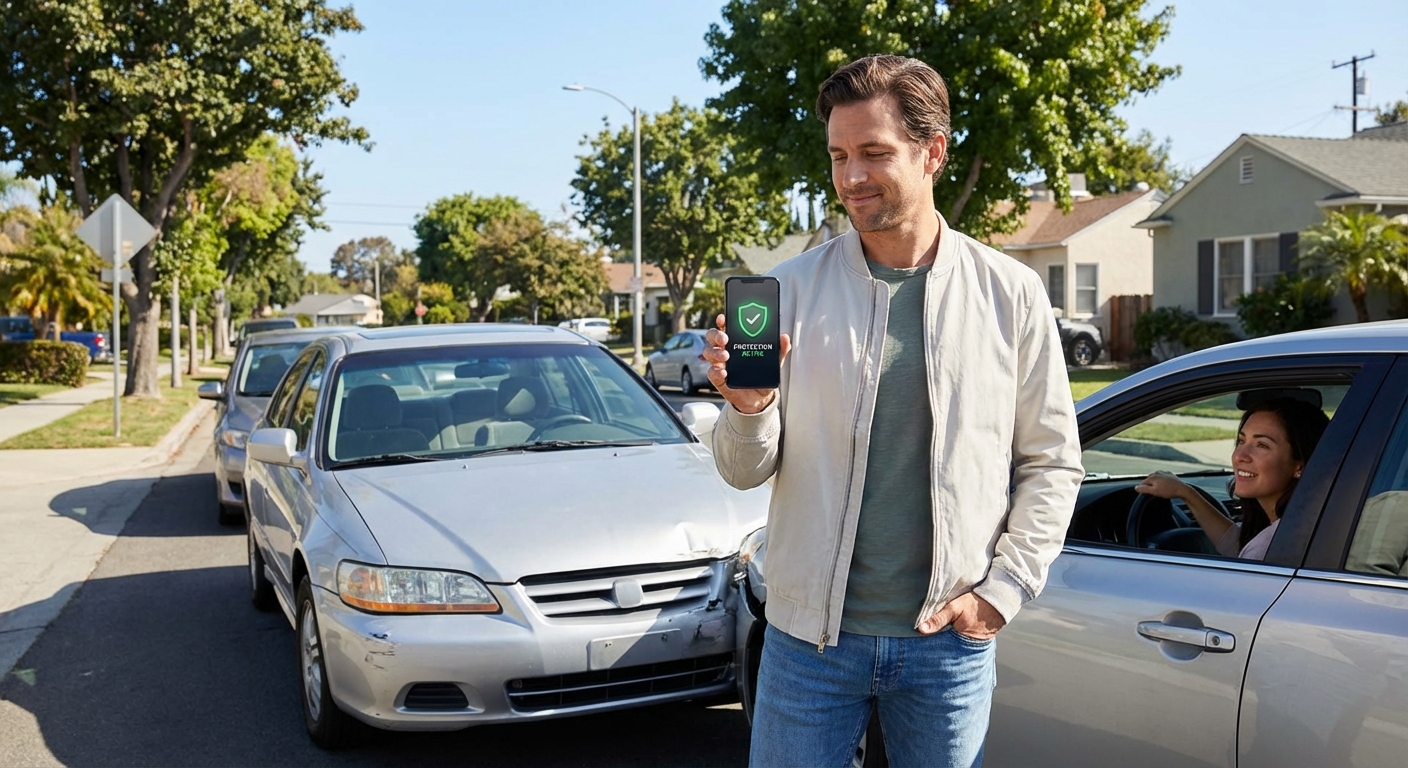
Accident forgiveness is a car insurance feature, either earned through loyalty or purchased as an add-on, that prevents your insurer from raising your premium after your first at-fault accident. Without it, a single at-fault collision can send your rates climbing by 45% to 50% on average in 2026, costing you thousands of dollars over three to five years. Learn more about how an accident affects your car insurance rates to understand the full financial impact.
It's important to understand what accident forgiveness does not do: it won't erase the accident from your driving record. If you switch insurers, the new company will still see the accident and may price your policy accordingly. Accident forgiveness only protects you from a rate hike with your current carrier.

Compare Car Insurance Rates in Ohio
See if you qualify for a lower rate in less than 2 minutes
How Does Accident Forgiveness Work?
There are two main ways to get accident forgiveness coverage:
- Earned (Free): After maintaining a clean driving record for a set period (usually 3 to 9 years depending on the insurer), some carriers automatically grant you accident forgiveness at no extra cost.
- Purchased (Paid Add-On): You can buy accident forgiveness upfront, giving you immediate protection regardless of how long you've been with the insurer. Based on 2026 market data, costs typically range from $5 to $30 per month ($60 to $360 per year), with most drivers paying about $9 to $11 per month. Pricing varies by insurer, location, and driving history.
Small vs. Large Accident Forgiveness
Not all forgiveness programs are created equal. Many insurers split the benefit into two tiers:
| Type | What It Covers | Who Qualifies |
|---|---|---|
| Small Accident Forgiveness | Claims under a threshold (often $500) | New or existing policyholders; sometimes automatic |
| Large Accident Forgiveness | Any at-fault accident, regardless of claim size | Typically requires 5+ years of clean driving with the same insurer |
For example, Progressive automatically grants new customers small accident forgiveness at no charge for claims of $500 or less in most states. Their large accident forgiveness, which covers bigger claims, requires five consecutive years with Progressive and a spotless driving record during that time.
When Does Accident Forgiveness Reset?
Most insurers allow you to use accident forgiveness once every three to five years. After your first forgiven accident, the clock resets and you'll need to maintain a clean record again before the benefit becomes available for another incident. Some insurers, like GEICO, remove the premium surcharge at your next renewal after using the benefit.

Protect your car with Farmers
Average Rate:
Find coverage options that fit your budget.

The insurance savings you expect.
Average Rate:
Enjoy personalized policies, comprehensive coverage & more.

See how much you could save today!
Average Rate:
Drivers who switch their auto insurance and save with State Farm save $764 on average!

Safe Drivers Save with Allstate®
Average Rate:
Get rewarded with savings for having a clean driving record.
Which Companies Offer Accident Forgiveness?
Here's how the major carriers compare on their accident forgiveness programs in 2026:
Allstate Accident Forgiveness
Allstate offers accident forgiveness through its YourChoice Auto Gold and Platinum packages rather than as a standalone rider. The Gold package forgives one accident every three years, while the Platinum package has no accident limit once you meet the tenure requirements. Based on 2026 pricing data, the add-on typically costs $15 to $30 per month depending on your state and driver profile, though some drivers see annual costs of $40 to $80. Learn more about how a rate lock guarantee works for another premium-protection option.
Progressive Accident Forgiveness
Progressive has one of the most flexible programs in 2026. Small accident forgiveness (claims of $500 or less) is free for new customers in most states, starting as soon as the policy begins. Large accident forgiveness is earned after five consecutive years with Progressive while remaining accident- and violation-free, covering accidents of any claim size. A purchased upgrade is also available immediately for around $10 per month on average. See how license points and violations affect your rates to understand why this protection matters.
GEICO Accident Forgiveness
GEICO offers a free version to drivers who've been accident-free for five or more years and are at least 21 years old. A paid version runs about $5 to $20 per month for those who don't yet meet the eligibility window. Note that GEICO's accident forgiveness is not available in California, Connecticut, or Massachusetts due to state law.
Liberty Mutual Accident Forgiveness
Liberty Mutual offers forgiveness after five accident-free years with any insurer, not just Liberty Mutual, making it more accessible than most. Drivers 25 and under must have five consecutive clean years before their first accident is forgiven. The benefit applies to one forgiven accident per household and is not available in California.
Nationwide Accident Forgiveness
Nationwide offers accident forgiveness as an optional paid add-on costing roughly $8 per month in 2026. It covers one accident per policy for all drivers listed, and you typically must be insured with Nationwide for at least six continuous months before adding the coverage.
Travelers Accident Forgiveness
Travelers includes accident forgiveness as part of its Responsible Driver Plan and Premium Responsible Driver Plan, priced at approximately $7 per month in 2026. It's not available in California, Connecticut, or Massachusetts, so confirm availability with a local agent. Travelers is often cited as one of the cheapest options for full coverage with accident forgiveness built in.
Erie Insurance Accident Forgiveness
Erie offers First Accident Forgiveness to customers who have been with the company for at least three years without an at-fault claim. Their long-term loyalty program, "Feature 15," goes further by forgiving all at-fault accidents for drivers with 15 years of continuous Erie coverage. This makes Erie one of the strongest options for long-term policyholders. See our companion guide on accident forgiveness costs and how it works for a deeper comparison.
Does State Farm Offer Accident Forgiveness?
Updated 2026 research confirms that State Farm generally does not sell accident forgiveness as a purchasable add-on, making it one of the only major insurers without a standalone endorsement. Instead, State Farm typically grants accident forgiveness automatically after approximately nine years of continuous accident-free driving with the company. This is one of the longest waiting periods in the industry, but it's essentially permanent once earned and comes at no additional cost. Availability varies by state (Florida notably does not offer a reliable option), so confirm with a State Farm agent. State Farm also rewards safe driving through a good driver discount, an accident-free discount, and their Drive Safe & Save telematics program, which can save up to 30%.
Is Accident Forgiveness Worth the Cost?
Here's the key question most drivers ask. The answer depends on your driving habits, your insurer's pricing, and how much the add-on actually costs you.
The Math Behind the Decision
Post-accident surcharges vary significantly by insurer and severity. According to LendingTree's January 2026 analysis, drivers with an at-fault accident causing at least $2,000 in property damage pay an average of 45% more nationwide, or about $1,031 more per year. ValuePenguin's 2026 analysis puts it slightly higher at 49% (roughly $102 per month), and NerdWallet's August 2026 study found up to a 50% increase (about $1,173 per year). Here's how those multi-year costs can stack up:
| Accident Severity | Est. Annual Rate Increase | 3-Year Total Cost |
|---|---|---|
| Minor (under $2,000 claim) | $200 to $400/year | $600 to $1,200 |
| Moderate ($2,000 to $15,000 claim) | $500 to $1,000/year | $1,500 to $3,000 |
| Serious (injury involved) | $1,000 to $1,500+/year | $3,000 to $4,500+ |
| National Average (about 45%) | $1,031/year | $3,093 |
Since rate surcharges typically last three to five years, the total cost of not having forgiveness can easily exceed $3,000. Even if accident forgiveness costs you $60 to $360 per year as a paid add-on, one at-fault accident can make it pay for itself many times over. Review what car insurance actually covers to make sure your policy also includes the right foundational protections, and consider whether stacking it with other car insurance endorsements makes sense for your driver profile.
Who Benefits Most?
- High-mileage commuters who spend more time on the road face statistically higher accident risk, making the added protection more valuable.
- Progressive customers, since their post-accident surcharges can be among the highest of any major insurer, making their forgiveness program one of the highest-value add-ons available.
- Drivers who recently earned free eligibility. If you've had a clean record for 3 to 9 years (depending on your carrier), call your insurer today. You may already qualify at no cost.
- Long-term Erie or State Farm customers who may already be eligible for automatic first accident forgiveness without paying extra.
Who Should Skip It?
- Drivers with very low annual mileage (under 7,500 miles per year) who face minimal accident risk.
- Those already enrolled in a free, earned forgiveness program after maintaining a clean record.
- Drivers shopping for the absolute lowest base premium who can accept the risk of a future surcharge.
- Drivers who could benefit more from a vanishing deductible program that rewards safe driving by gradually reducing your out-of-pocket costs over time.
States Where Accident Forgiveness Has Restrictions
California remains the primary state where accident forgiveness is prohibited. Under Proposition 103 (passed in 1988), insurers are effectively banned from using accident forgiveness as a rating factor because it indirectly raises premiums for other drivers. California does offer one related protection: insurers cannot raise your rates for accidents where you were not primarily at fault (50% or less responsible). However, this is distinct from traditional accident forgiveness.
Connecticut and Massachusetts also have state-specific restrictions. Travelers, GEICO, and Liberty Mutual all explicitly exclude one or more of these states from their accident forgiveness offerings. New York and North Carolina are cited by industry sources as having restricted availability under their regulated rating structures. Drivers in no-fault states such as Florida, Michigan, and New York may also find that frequent claims can make them ineligible for forgiveness programs, as insurers track claim frequency closely in those states.
Frequently Asked Questions
Does accident forgiveness apply to every type of accident?
No. Accident forgiveness typically applies only to your first at-fault accident within a qualifying period. Most programs exclude serious violations like DUIs, reckless driving, hit-and-run incidents, and accidents that occur while using your vehicle for commercial purposes like rideshare driving. Always read the fine print of your specific policy to understand what qualifies. Minor fender-benders and standard collision incidents are the most commonly covered scenarios.
How long does it take to earn free accident forgiveness?
Most insurers require three to five consecutive years of clean driving, meaning no at-fault accidents and no major violations. GEICO and Liberty Mutual both require roughly five accident-free years, while State Farm requires around nine years, one of the longest in the industry. Progressive offers free small accident forgiveness immediately to new customers in most states, but large accident forgiveness still requires five clean years with Progressive. Erie is one of the more accessible options, requiring just three years as a customer to qualify.
Will accident forgiveness save my record if I switch insurers?
No. Accident forgiveness only prevents your current insurer from raising your rates. The at-fault accident still appears on your driving record, and any new insurer will factor it into their pricing. If you switch carriers after an accident, even a forgiven one, expect your new insurer to charge higher rates. This is one of the most important limitations to understand before making any coverage changes after a collision.
How much does accident forgiveness typically cost as a paid add-on?
Based on 2026 market data, paid accident forgiveness typically costs $5 to $30 per month ($60 to $360 per year), with most drivers paying around $9 to $11 per month. Allstate is among the pricier at $15 to $30 per month, while Auto-Owners, Travelers, and Nationwide sit at the lower end ($7 to $8 per month). The key comparison is the add-on cost versus the 2026 national average post-accident surcharge of roughly $1,031 per year. In most cases, forgiveness pays for itself after a single qualifying incident.
Is accident forgiveness available in California?
No, California's Proposition 103 effectively prohibits traditional accident forgiveness programs, banning insurers from using it as a rating factor. California does provide a related protection: insurers cannot surcharge your rates for accidents where you were 50% or less at fault, and surcharges cannot last beyond three years from the accident date. Drivers in Connecticut, Massachusetts, New York, and North Carolina should also verify with their specific insurer, as some carriers exclude those states. Always confirm your state's availability directly with your carrier before purchasing any add-on.