

Compare Home Warranty Options in Ohio
See what plans you qualify for in less than 2 minutes
Why Most Home Warranties Don't Cover Your Roof
If you've ever assumed your home warranty has your roof covered, you may be in for a costly surprise. Standard home warranty plans are designed to protect the mechanical systems and appliances inside your home (think HVAC, plumbing, and kitchen appliances), not the physical structure of the building itself. That means your roof is typically left out by default.
Most home warranties provide no automatic roof coverage whatsoever. The few that do include roofs cap coverage at modest limits, usually between $500 and $1,500 per contract term, and only for specific types of leak repairs, not full replacements. If your roof develops a slow leak from normal wear and tear over many years, you may have options through an add-on. But if a storm tears off your shingles? That's a job for your homeowners insurance policy, not your warranty.
Understanding how these protections overlap (and where the gaps are) can save you thousands of dollars and a lot of frustration. For a broader breakdown of how these two products differ, see our home warranty vs home insurance guide.
What Roof Damage Is Covered vs. Excluded
Even when roof coverage is available through a home warranty, the scope is narrow. Here's a breakdown of what typically falls inside and outside the coverage lines in 2026:
What May Be Covered (With Add-On)
- Leak repairs to composition shingle, rolled asphalt, tar and gravel, or tile residential roofs
- Flashing, nail, or fastener failures on covered roof areas
- Water intrusion from normal wear and tear
- Dry rot, broken or missing shingles, and normal freezing and thawing cycles (select providers like American Home Shield)
- Underlayment, membrane, and seam repairs on flat or rolled roofs
What Is Almost Always Excluded
- Full roof replacement
- Damage from hail, high wind, hurricanes, tornadoes, or other extreme weather
- Pre-existing conditions and leaks present at contract start
- Poor workmanship or improper installation
- Metal roofs, green/eco roofs, mobile home roofs, and shared condo or townhouse roofs
- Skylights, chimneys, vents, roof-mounted solar panels, gutters, and downspouts
Roof Leak Coverage as an Add-On: Top Companies Compared
If your home warranty doesn't include roofs by default, you may be able to purchase a roof leak repair add-on. Several major companies offer this option in 2026, and the pricing is generally affordable, though the coverage limits and structure vary. According to industry data, roof leak add-ons typically cost between $6 and $20 extra per month, with coverage limits ranging from $500 to $1,000 depending on the provider.
| Company | Add-On Status (2026) | Coverage Limit | Notable Details |
|---|---|---|---|
| American Home Shield | Add-on for ShieldSilver/Gold; included in ShieldPlatinum | Up to $1,000/term | Covers nonstructural leaks; excludes condos/mobile homes |
| First American Home Warranty | Add-on to any plan | Up to $1,000/term | Roof must be watertight at coverage start |
| 2-10 Home Buyers Warranty | Optional upgrade on all plans | Caps vary by plan | Nonstructural leaks; quote-based pricing |
| Choice Home Warranty | Optional "Limited Roof Leak" add-on | ~$500/occurrence | Around $50 to $90 per year |
| Select Home Warranty | Included free in all plan tiers | ~$400/year | Only major provider to bundle it by default |
| Liberty Home Guard | À la carte add-on | Limited | ~$14.99/month; nonstructural leaks only |
American Home Shield's roof leak add-on for ShieldSilver or ShieldGold plans runs about $10 per month and is included at no extra cost with ShieldPlatinum, providing up to $1,000 in roof leak repairs. You'll still pay a standard trade service fee of $75, $100, or $125 per visit depending on your plan tier. For a deeper provider-by-provider breakdown, check our best home warranty companies guide, and see how home warranty plans compare in 2026 across systems, appliance, and combo tiers.
When evaluating these plans, always ask whether the add-on requires a roof inspection or watertight certification before purchase, as some companies deny coverage for damage that predates the contract start date. Our home warranty coverage limits guide covers per-item caps and what happens when you exceed them.
Roof Leaks vs. Structural Roof Damage: Know the Difference
One of the most misunderstood aspects of home warranty roof coverage is the distinction between a roof leak and structural roof damage. These are treated very differently by both home warranty companies and homeowners insurance providers.
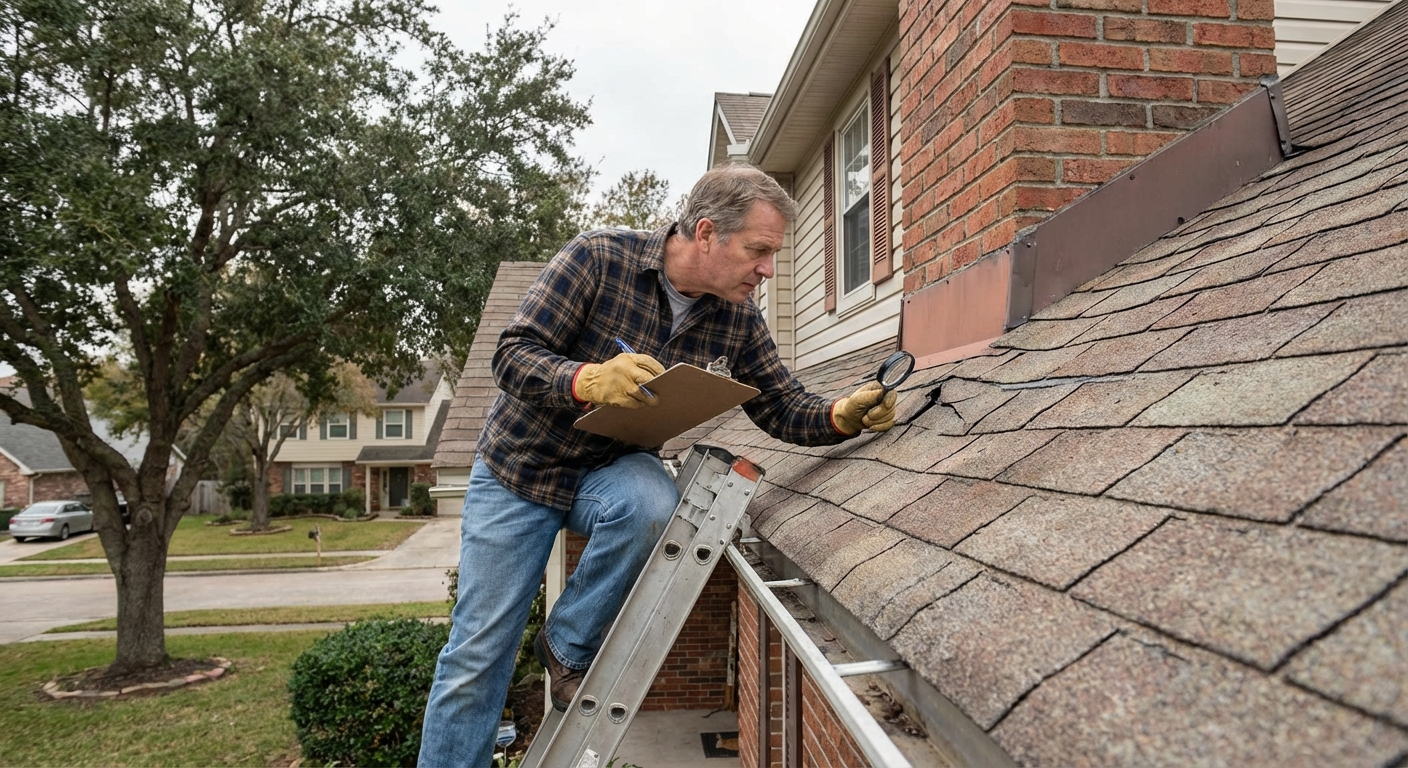
Roof leak damage refers to water infiltration through a small or localized failure point such as a cracked shingle, separated flashing, or worn sealant joint. These are the types of repairs a home warranty add-on is designed to address. According to 2026 cost data, most homeowners pay $400 to $1,800 to repair a roof leak, with the typical bill landing around $950 for a moderate flashing or boot repair on a two-story asphalt shingle roof.
Structural roof damage, on the other hand, involves the foundational components of the roof system itself: the rafters, decking, load-bearing framework, or widespread deterioration. Home warranties uniformly exclude structural damage because American Home Shield and similar providers only cover the repair of nonstructural roof leaks, not full roof failures or replacements.
When Homeowners Insurance Steps In
Your homeowners insurance policy is the right product to call when roof damage is sudden, unexpected, or caused by an external event. Insurance typically covers roof damage from:
- Windstorm or hail damage, where shingles are torn off or damaged by severe weather
- Falling objects like tree limbs, debris, or other items striking the roof
- Fire or lightning causing direct damage to the roof structure
- Vandalism or deliberate damage to roofing materials
- Vehicle impact, such as a car striking the home
- Weight of ice or snow, including some ice-dam-related damage
Homeowners insurance typically does not cover roof damage from normal wear and tear, aging shingles, lack of maintenance, or neglect, which is exactly the gap that a home warranty roof add-on is meant to fill. Together, the two products can provide relatively comprehensive coverage when used correctly. Learn more about how the two work together in our home warranty vs home insurance comparison.
The Big 2026 FHFA Rule Change (This Matters)
One critical 2026 development every homeowner should know about: on March 18, 2026, the Federal Housing Finance Agency (FHFA) said Fannie Mae and Freddie Mac will no longer require full replacement-cost coverage on roofs, and will accept cheaper actual cash value (ACV) coverage instead. That means many insurers are shifting older roofs from full replacement cost coverage down to depreciated ACV settlements.
Under ACV, the insurer only covers the depreciated value of the roof rather than the full replacement cost. So if a hailstorm destroys a 15-year-old roof that costs $10,000 to replace, an ACV settlement based on a $2,000 depreciated value would leave you responsible for the remaining $8,000. If your roof is aging, review your policy declarations before assuming a full payout.
Is a Roof Leak Add-On Worth the Cost?
This is the practical question most homeowners are really asking. The answer depends on a few key factors about your specific situation.
When It's Worth It
- Your roof is 10 to 20 years old, when wear-and-tear leaks become more common
- You live in a wet or high-humidity climate, where moisture accelerates shingle and flashing deterioration
- Your homeowners policy has shifted to ACV on your roof, leaving a bigger gap you'd have to pay yourself
- The add-on is low cost, since at $8 to $12 per month, the break-even point is just one service call avoided per year
When It May Not Be Worth It
- Your roof is less than 10 years old and unlikely to develop wear-and-tear leaks
- Your HOA covers exterior maintenance (always check your HOA agreement first, especially for condo home warranty situations)
- You own a condo, townhouse, or mobile home where most providers exclude roof coverage anyway (see our mobile home warranty guide)
- Coverage caps are too low to be meaningful (a $400 cap may not even cover a moderate flashing repair plus the service fee)
The math generally favors purchasing the add-on if your roof is aging and the monthly cost is under $12, especially when bundled with an existing home warranty plan you're already paying for. Check our American Home Shield reviews or First American Home Warranty reviews if you're deciding between the two leaders for roof coverage. Older homes may also want to see our home warranty for old homes guide for context on pre-existing exclusions.
Frequently Asked Questions
Does a standard home warranty cover roof leaks?
No, most standard home warranty plans do not include any roof coverage by default. Roofs are considered part of the physical structure of the home rather than a mechanical system or appliance, so they fall outside the typical scope of basic plans. A handful of companies like Select Home Warranty include limited roof leak coverage in all plans, but this is the exception. For most providers, roof coverage must be purchased as a separate add-on or comes only with the top-tier plan like American Home Shield's ShieldPlatinum.
How much does a roof leak add-on typically cost in 2026?
Roof leak add-ons generally range from $6 to $20 per month, or roughly $50 to $150 per year, depending on the provider and your location. American Home Shield charges about $10 per month for ShieldSilver or Gold plans, Liberty Home Guard runs about $14.99, and Choice Home Warranty comes in at $50 to $90 per year. Keep in mind that service call fees of $75 to $135 per visit also apply, so factor those into the overall cost when deciding if the add-on makes financial sense.
Will a home warranty pay for a full roof replacement?
No. Home warranties never cover full roof replacements. Coverage is strictly limited to leak repairs, and even then it's capped at a set dollar amount, usually $400 to $1,500 per contract term. If your roof is beyond repair and needs a full replacement, you'll need to either file a homeowners insurance claim (if the damage was caused by a covered peril) or pay out of pocket, though be aware many insurers now only pay depreciated ACV on older roofs following the March 2026 FHFA rule change.
What's the difference between a home warranty and homeowners insurance for roof damage?
Homeowners insurance covers sudden, unexpected damage caused by external events like storms, hail, fire, or falling trees. A home warranty covers gradual wear-and-tear failures like a slow-developing roof leak from aged shingles. The two products are designed to complement each other, not replace one another. Having both gives you the most complete protection, especially for older homes in weather-prone regions where new 2026 ACV rules have narrowed insurance payouts.
Which home warranty company offers the best roof coverage?
American Home Shield's ShieldPlatinum plan is often cited as the most comprehensive option, with a $1,000 coverage cap built in and no separate add-on fee. First American Home Warranty also offers up to $1,000 in roof leak add-on coverage on any plan. Select Home Warranty is the only major provider to include roof leak coverage on every tier at no extra cost, making it the best value pick for budget-conscious homeowners. Read our best home warranty companies guide for full comparisons.