

Compare Home Warranty Options in Ohio
See what plans you qualify for in less than 2 minutes
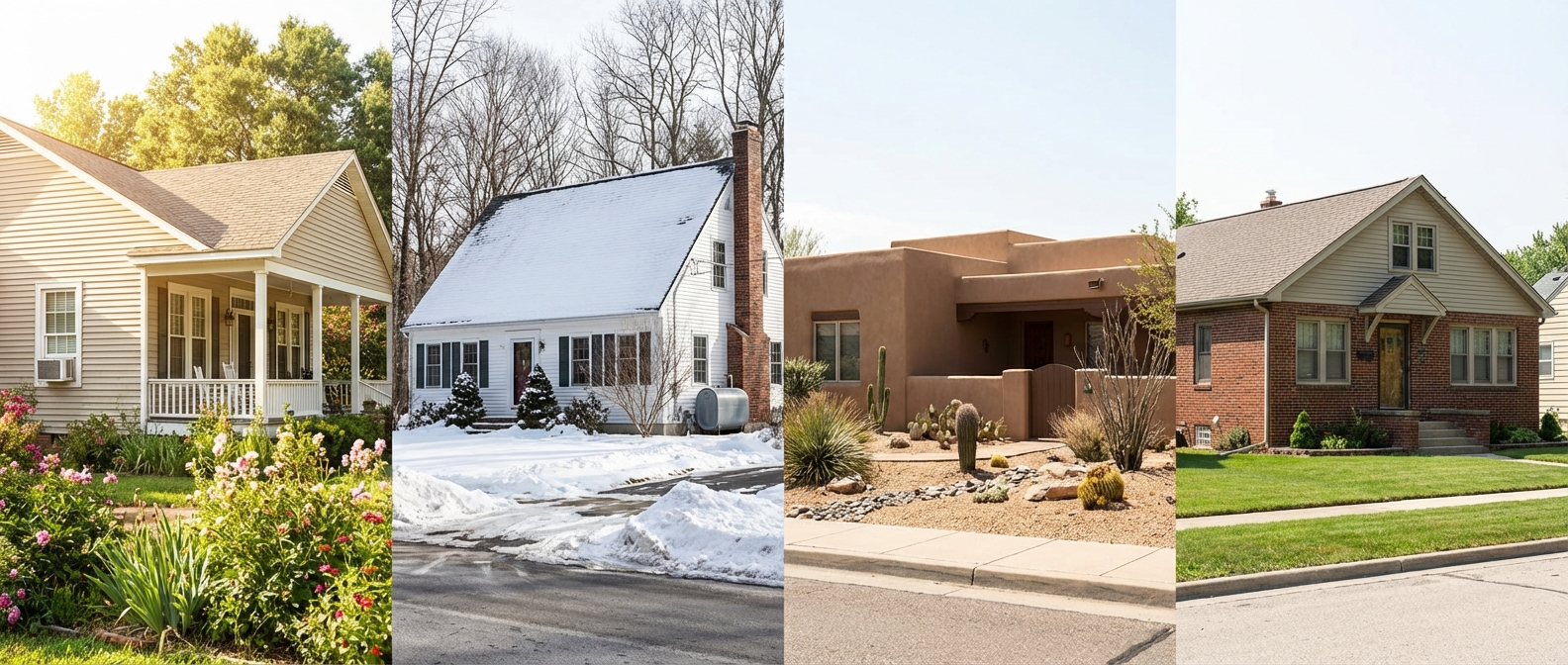
How Home Warranty Pricing Varies by Region
Where you live has a bigger impact on your home warranty cost than most homeowners realize. According to 2026 NerdWallet data, home warranty plans average $73 per month nationwide but can range from as low as $28 to as high as $191 per month depending on your location, coverage tier, and provider. Other 2026 studies place the average closer to $56 to $67 per month (ConsumerAffairs currently reports about $67), with typical annual premiums running $300 to $650 by state per Empire Home Protect's 2026 analysis. MarketWatch's 2026 review of 3,300 quotes puts the average at $85 per month, while Empire Home Protect pegs the current annual range at $540 to $1,020. Those swings are not random. They reflect real economic and geographic forces at work in your local market.
Key Factors Behind Regional Pricing Differences
Several variables drive why the same plan from the same national company can cost dramatically different amounts depending on your zip code:
| Pricing Factor | How It Affects Your Cost |
|---|---|
| Local Labor Rates | Higher-cost metros (NYC, San Francisco) raise service fees and premiums |
| Contractor Network Size | Sparse rural networks mean fewer bids and higher costs |
| Home Age | Older Northeast/Midwest homes generate more claims, pushing premiums up |
| State Regulations | Compliance costs get passed on to consumers |
| Climate Demands | Regions with extreme seasons require more system use, increasing claim frequency |
Service fees also vary by state and provider. The 2026 industry average is roughly $75 to $125 per service call (about $108 per visit on average), but plans can range from $50 to $150 depending on where you live and which company you choose. Coastal urban markets tend to cluster at the top of that range, while suburban Midwest and rural Southwest ZIPs land at the low end.
Estimated Monthly Home Warranty Cost Ranges by State (2026)
Based on Empire Home Protect's August 2026 state-by-state pricing data:
| Cost Tier | Example States | Est. Monthly Cost |
|---|---|---|
| Lowest | TN, IN | $30 to $46 |
| Low-Mid | OH, MI, NC, GA | $31 to $48 |
| Mid | TX, FL, IL, PA | $33 to $55 |
| Higher | CA, NY | $45 to $60 |
| Highest | AK, CT, HI, and other high-cost metros | $70 to $90+ |
For more detail on national averages, service fees, and plan tier pricing, see our full home warranty cost guide.
Climate-Driven Coverage Considerations by Region
Your region's climate should directly shape which coverage options you prioritize. A one-size-fits-all plan rarely makes sense when a Texas homeowner's biggest risk is a failing AC in July while a Minnesota homeowner's worst nightmare is a cracked furnace in January. Climate volatility is making regional weather patterns more extreme in 2026, which accelerates wear and tear on heating and cooling systems in almost every part of the country. Some warranty providers have started denying claims tied to unusual environmental conditions, so read exclusions carefully before you buy.
Regional Climate Coverage Priorities
South (FL, TX, LA, GA, SC)
Air conditioning is the single most critical coverage item in the South. Hot, humid climates mean AC systems run nearly year-round, leading to higher wear on compressors, evaporator coils, and refrigerant lines. Look for plans with high HVAC coverage caps (ideally $2,000 or more, with premium plans offering up to $5,000 or even $6,500) and no exclusions for refrigerant or pre-existing wear. This is especially important in 2026 because the EPA's Technology Transitions Program prohibits new installations using refrigerants above 700 GWP (like R-410A) as of January 1, 2026. New split systems now typically use R-454B (GWP 466) or R-32 (GWP 675), which require A2L-certified technicians and matched components. Every major OEM has tied warranty coverage to documented A2L training, meaning coverage on a Puron Advance, Daikin, or similar unit can be voided if the installing or servicing technician cannot show training records. That has already led to warranty denials in 2026 when mixed refrigerants, mismatched indoor/outdoor units, or uncertified service work were involved. Our home warranty HVAC coverage guide breaks down which providers adjusted their limits accordingly.
Northeast (NY, MA, CT, PA, NH, VT)
Heating systems dominate here. Furnaces, boilers, heat pumps, and steam radiators take a beating through long, cold winters. Prioritize plans that explicitly cover boilers and steam systems, which some national providers exclude or cap at low amounts. Older housing stock in this region is another concern. Many homes date back 50 to 100 years or more, meaning aging pipes, electrical panels, and ductwork are common claim sources. Our guide to home warranty for old homes covers how age affects eligibility and pricing.
Midwest (OH, IL, MN, MI, IA, MO)
The Midwest is the region of extremes. Brutal winters and hot summers mean both heating AND cooling systems face heavy seasonal demand. Combination HVAC/heating coverage is essential. Hail and wind events are also frequent, making it worth checking whether your warranty covers HVAC units damaged by external elements (most will not, so a homeowners policy needs to fill that gap). See how caps interact with heavy use in our home warranty total cost analysis.
West (CA, CO, OR, WA, NV)
California and other western states face wildfire-driven risks that can damage HVAC systems, electrical wiring, and ductwork. While a home warranty will not cover fire damage itself, it can cover the repair or replacement of components degraded by smoke or heat wear. Drought conditions in the Southwest also stress plumbing systems and water heaters, key items to verify are covered. Compare tiered plans in our home warranty plans comparison.
State Regulations, Licensing & Consumer Protections
Home warranties are not regulated uniformly across the country. Depending on your state, they may be overseen by an insurance commissioner, a real estate commission, or a financial services department. In some states (like Alaska), oversight is minimal or nonexistent.
How Regulation Varies by State
States like Florida (Office of Insurance Regulation), Texas (Department of Licensing and Regulation), and New York (Department of Financial Services) have established regulatory frameworks that hold home warranty companies accountable. Regulated states are more likely to require:
- Licensing before a company can sell warranties in the state
- Financial reserves to ensure claims can actually be paid
- Cancellation and refund rules that protect consumers
- Dispute resolution processes when claims are denied
New 2025 to 2026 Regulatory Changes to Know
Several state-level changes affecting home warranty companies took effect in 2025 and remain in force through 2026:
- Florida (HB 623, effective July 1, 2025): Signed by Governor DeSantis on April 15, 2024 and codified as Fl. Stat. § 553.837, this law requires builders of newly constructed single-family homes, duplexes, triplexes, and quadplexes (including manufactured, modular, and factory-built structures) to provide a transferable one-year warranty. It covers defects in materials, workmanship, or equipment that result in a material violation of the Florida Building Code, and the warranty follows the home if it is sold or transferred during the one-year period. Normal wear and tear, settling, third-party damage, and acts of God are excluded.
- Florida (HB 367, effective July 1, 2025): This law revised financial requirements for home warranty associations regulated by Florida's Office of Insurance Regulation. It allows a home warranty association to use multiple contractual liability insurance policies from multiple insurers to cover 100% of claim exposure, instead of relying on a single policy or maintaining an unearned premium reserve. In practice, this can strengthen the financial backstop behind Florida-issued warranties.
- North Carolina (H203, "Home Warranty Act," effective October 1, 2025): Sections 1 and 2 of this law apply to home appliance service agreement companies operating in North Carolina and cover agreements entered into on or after October 1, 2025. It also included an appropriation to the Department of Justice for enforcement, adding real teeth to state oversight.
- Watch other states: As of August 2026, no comparable new statewide home warranty statute has been widely reported outside Florida and North Carolina. California and Colorado did introduce broader auto-renewal consumer protections (AB 2863 and SB 25-145) that indirectly affect warranty billing. If you are buying new construction in Illinois or another state, ask your builder in writing whether a statutory implied warranty applies.
States with Strongest Consumer Protections
While no definitive national ranking exists for home warranty-specific protections, states with robust consumer financial oversight tend to provide the most accountability:
| State | Regulating Body | Notable Protection |
|---|---|---|
| New York | Dept. of Financial Services | Strict licensing and reserve requirements |
| Florida | Office of Insurance Regulation | Active oversight plus 2025 HB 623 and HB 367 |
| Texas | Dept. of Licensing and Regulation | Dedicated home warranty oversight and RSC Ombudsman |
| California | Dept. of Insurance | Regulates "home protection companies"; new AB 2863 auto-renewal rules |
| North Carolina | Dept. of Justice (per H203) | 2025 Home Warranty Act with dedicated enforcement funds |
| Washington & Oregon | State Insurance Commissioners | Registration and reimbursement insurance requirements |
| New Jersey | Dept. of Community Affairs | 10-year statutory new home warranty coverage |
Understanding contract fine print matters just as much as licensing. Our guide on reading a home warranty contract shows what to check before you sign.
Coverage Availability: National vs. Local Providers
Not every home warranty company operates in every state, and this has real implications for your choices.
Who Operates Where in 2026
Alaska and Hawaii remain the two most commonly excluded states across all major providers. Based on 2026 state-availability data:
- American Home Shield operates in 49 states plus Washington, D.C., with Alaska as the primary exclusion. Some sources also note limits in New York City and certain Hawaii ZIP codes.
- Choice Home Warranty covers roughly 47 to 48 states. MarketWatch's 2026 review lists Washington, California, and Oklahoma as the excluded states, though some earlier sources only cite Washington. Verify at quote time.
- First American Home Warranty has a narrower footprint (roughly 36 states), with the strongest presence in the South (especially Florida, Georgia, and Texas).
- AFC Home Warranty currently excludes California, Hawaii, and Washington per AFC's own 2026 availability page.
- Cinch Home Services is not available in Alaska or Hawaii.
- Liberty Home Guard is advertised in 48 states plus DC, most often excluding Washington (and sometimes Wisconsin), while Select Home Warranty typically excludes Nevada, Washington, and Wisconsin per 2026 comparison data. Always confirm at quote time.
- Home Warranty Inc. (Home Warranty of the Midwest) covers 43 states but excludes Arizona, California, Florida, Massachusetts, New York, Oregon, and Washington.
For a deeper look at how each provider's coverage caps and workmanship guarantees stack up, see our best home warranty companies review.
Local vs. National Home Warranty Companies
Choosing between a national brand and a regional provider involves real trade-offs:
Learn more about how coverage tiers and plan structures compare in our home warranty options guide.
Top-Rated Providers by Region (2026)
| Region | Top Providers |
|---|---|
| National (All/Most States) | American Home Shield, Cinch Home Services, Liberty Home Guard, Choice |
| Southeast / Florida | American Home Shield, First American Home Warranty, Choice, Liberty Home Guard |
| Southwest / West | American Home Shield, Choice, Liberty Home Guard, Old Republic Home Warranty |
| Northeast | American Home Shield, Cinch, Liberty Home Guard, 2-10 Home Buyers Warranty |
| Midwest | American Home Shield, Cinch Home Services, Old Republic, AFC Home Warranty |
For help matching a provider to your specific coverage priorities, our home warranty payout limits guide walks through systems-only, appliance-only, and combo plan structures.
Frequently Asked Questions
Why does my home warranty cost more than my neighbor's in another state?
Home warranty pricing is heavily influenced by local labor rates, contractor network density, home age, and state regulations. States with fewer licensed contractors and higher wages (like Connecticut, Alaska, or Hawaii) will naturally have higher premiums than states with a competitive service market. According to NerdWallet's 2026 analysis, monthly premiums range from as little as $28 to as high as $191 depending on where you live. That gap can add up to more than $1,900 per year for the exact same coverage.
Do home warranty companies have to be licensed in my state?
It depends on your state. States like Florida, Texas, and New York require licensing and maintain regulatory oversight of home warranty companies. Florida added a statutory builder warranty via HB 623 (Fl. Stat. § 553.837) and revised home warranty association financial rules via HB 367, both effective July 1, 2025. North Carolina's Home Warranty Act (H203) added new oversight of home appliance service agreement companies effective October 1, 2025. Always verify a company's licensing status with your state's insurance commissioner or consumer protection agency before purchasing. Learn more in our home warranty vs extended warranty guide.
Should I prioritize HVAC coverage if I live in the South?
Absolutely. In Southern states like Texas, Florida, Louisiana, and Georgia, central air conditioning systems run nearly year-round under demanding conditions. HVAC failure is one of the most common and most expensive claims in these regions, and the EPA's 2026 A2L refrigerant transition (R-454B and R-32) has raised the cost of many repairs and replacements because A2L systems require specially certified technicians and matched components. Look for plans with repair caps of at least $2,000 for HVAC systems and confirm there are no exclusions for refrigerant recharging or pre-existing wear. See our home warranty statistics guide for claim frequency data by category.
Are there home warranty companies that don't operate in my state?
Yes. Alaska and Hawaii are the most frequently excluded states, with many major providers not offering coverage there. AFC Home Warranty currently excludes California, Hawaii, and Washington, MarketWatch's 2026 review reports Choice Home Warranty is not sold in California, Washington, or Oklahoma, and American Home Shield does not sell plans in Alaska. First American Home Warranty operates in only about 36 states. Before shopping, verify that the companies you are considering are available in your specific state.
Is a local home warranty company better than a national one?
It depends on your priorities. Local companies often offer faster response times, more personalized service, and pricing better tailored to your region. However, national companies typically offer larger contractor networks, higher repair caps, and more robust workmanship guarantees. If you are in a state with strong local competitors, it is worth getting quotes from both types. Our what is a home warranty guide can help you compare their coverage claims side by side.