

Compare Home Warranty Options in Ohio
See what plans you qualify for in less than 2 minutes
What Qualifies as a Home Warranty Emergency?
Not every breakdown rises to the level of a true emergency under your home warranty contract. Providers have specific criteria, and understanding them before a crisis hits can save you hours of frustration.
Situations Typically Classified as Emergencies
Most major home warranty companies define an emergency as any situation that poses an immediate risk to occupant safety or home habitability. Choice Home Warranty's 2026 user agreement (in its Nevada provisions) explicitly defines an "Emergency Repair" as the loss of heating or cooling, plumbing, or substantial electrical service that renders the dwelling unfit to live in due to defects that immediately endanger occupants.
Common qualifying emergencies include:
| Emergency Type | Why It Qualifies |
|---|---|
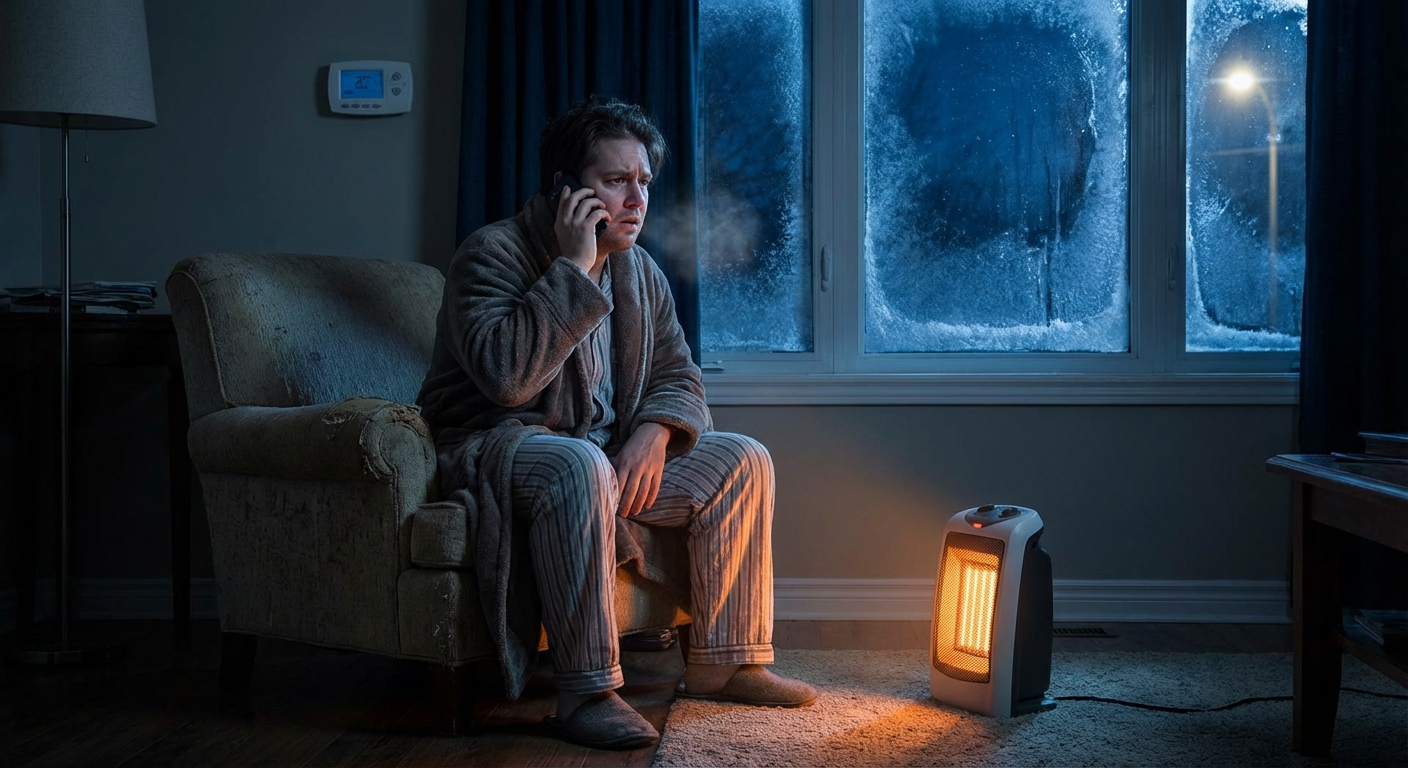
| Complete loss of heat (winter) | Habitability and safety risk |
| Total loss of hot water | Habitability concern |
| Active sewage stoppage | Health and sanitation hazard |
| Severe plumbing leak requiring water shut-off | Structural damage risk |
| Hazardous electrical failure | Fire or electrocution risk |
| Gas leak | Immediate life-safety threat |
| Roof leak into interior | Active property damage |
According to 2026 industry data, roughly 80% of home warranty plans include some form of emergency repair provision, but access is generally gated behind the standard 30-day waiting period and the covered-cause requirement.
What Usually Does NOT Qualify
Surprisingly, a loss of air conditioning is typically not classified as an emergency by most providers. It's considered a comfort issue rather than a safety threat, unless temperatures are extreme or vulnerable occupants (elderly, infants, medically fragile) are involved. Similarly, a single non-functioning appliance like a dishwasher or refrigerator rarely triggers emergency protocols. Home warranties also generally exclude damage from acts of nature (floods, storms, lightning, hail), pre-existing conditions, and consequential damage such as water damage caused by a covered breakdown. Those situations fall to homeowners insurance instead.
24/7 Availability & Emergency Response Times by Company
Understanding home warranty response times is crucial when selecting a provider. Here's how the leading companies stack up on emergency availability and dispatch speed in 2026.
Company-by-Company Comparison
Detailed Breakdown
- Choice Home Warranty operates a 24/7/365 online claims portal and call center, and its user agreement commits to begin contacting service providers within 4 hours of a submitted claim, with contractor assignment typically completed within 48 hours. Emergencies are expedited per the company's FAQ, though customer experiences vary. Reviewers note that while intake is fast, the technician may still take 48 hours or more to be assigned and accept the job.
- Liberty Home Guard advertises 24/7/365 claims availability and was again recognized in 2026 for quick service, dispatching a licensed technician within 24 to 48 hours of every request. See how it stacks up in our best home warranty companies comparison.
- American Home Shield allows you to request service 24/7 via phone or live chat and commits to a technician assessment within 48 hours, though actual arrival ranges from 24 to 72 hours depending on locale.
- First American Home Warranty accepts service requests 24/7 via phone and online portal. For emergency claims specifically, First American commits to making "all reasonable effort" to respond within 24 hours.
- Cinch Home Services commits to contacting you within 2 hours during business hours and includes up to $1,200 in emergency lodging reimbursement on its Complete Home Plan when a covered A/C or heating failure leaves your home uninhabitable for 24 hours or more after the first service visit (one claim per 12-month period).
- Assurant Home Warranty offers 24/7 access to claims specialists and is one of the few providers that includes emergency hotel stay reimbursement on eligible plans in certain states when a covered event makes your home uninhabitable.
- AFC Home Warranty runs a 24-hour in-house service department and lets you choose your own technician for repairs.
- 2-10 Home Buyers Warranty accepts 24/7 online service requests and will attempt to have a contractor contact you within 24 hours, but its help center explicitly states 2-10 does not provide emergency services or repairs.
After-Hours, Weekend & Holiday Coverage: What to Expect
Can You File a Claim at 2 AM on Christmas?
Yes. Most major home warranty providers allow you to file a claim 24/7 via phone, online portal, or mobile app. However, there's an important distinction between filing a claim and getting a technician to your door.
- Claim filing: Available around the clock with virtually all top providers, including AFC, AHS, Liberty Home Guard, ARW, Select, and Cinch.
- Technician dispatch: Dependent on local contractor availability, which is significantly reduced on nights, weekends, and holidays.
- Emergency escalation: True emergencies (no heat, no water) are generally prioritized, but most contracts only guarantee "reasonable efforts to expedite," not a guaranteed same-day arrival.
After-Hours and Holiday Service Fees
This is where homeowners are often caught off guard. According to 2026 NerdWallet research, home warranty service fees average about $108.45 per visit, with most contracts charging between $75 and $125. But after-hours and emergency dispatch can cost considerably more.
| Service Type | Typical 2026 Fee Range |
|---|---|
| Standard service call | $75 to $125 (avg $108.45) |
| After-hours / weekend call | $100 to $175+ |
| Holiday emergency dispatch | $150 to $200+ |
| Out-of-network emergency plumbing surcharge | $100 to $300 above standard labor |
Note that Select Home Warranty is a notable exception: it charges a flat $75 to $85 service fee with no extra fees for emergency calls in areas where its network offers emergency service. Always check your contract's "Additional Charges" section before assuming what fee you'll owe. For a deeper look at fee structures, see how to read a home warranty contract.
What to Do During a Home Emergency
Immediate Steps Before the Technician Arrives
Knowing how to manage the situation while you wait can prevent additional damage and help your claim go more smoothly. Here's what to do:
- Ensure safety first. If there's flooding, an active gas leak, fire, or electrical danger, evacuate and call 911 before your warranty company.
- Shut off the source. Turn off the main water supply for burst pipes, disable your furnace if it's malfunctioning dangerously, or cut power at the breaker for electrical hazards.
- Contain the damage. Use towels, buckets, or tarps to catch leaks and move valuables away from affected areas.
- Document everything. Take photos and video of the damage and affected systems. This is critical for both your warranty claim and any homeowners insurance filing.
- Make safe temporary repairs. Small leaks can be temporarily controlled with waterproof tape or a pipe clamp. Use a space heater if you've lost heat in winter.
- File your warranty claim immediately. The sooner you file, the sooner the clock starts on your provider's response window.
Temporary Solutions for Common Emergencies
| Emergency | Temporary Fix |
|---|---|
| No heat | Portable space heater, warm layers, seal drafts |
| No AC (extreme heat) | Portable AC unit, fans, cooling centers |
| No hot water | Boil water on stove, gym shower, neighbor's home |
| Burst pipe | Shut off main water, use bottled water for essentials |
Can You Get Reimbursed for Emergency Repairs?
If your home warranty provider cannot dispatch a technician in a reasonable timeframe, you may be authorized to hire your own contractor and seek home warranty reimbursement for the cost. This is not automatic. Select Home Warranty's 2026 terms state that you MUST contact Select before obtaining service on a covered item, and that failure to do so may render your claim invalid, with no reimbursement for unauthorized work. Choice Home Warranty's user agreement is similar: it will not reimburse services performed without prior approval, though a limited exception process exists for Oregon residents who submit an itemized diagnosis for pre-approval.
To qualify for reimbursement, you must:
- Get prior written authorization from your warranty company before hiring an outside contractor
- Hire a licensed professional (unlicensed work is typically not reimbursable)
- Submit all invoices and receipts with itemized costs within the provider's stated timeframe
- Ensure the repair involves a covered item under your specific plan
Reimbursement is generally capped at what the provider would have paid its own contractor. Select Home Warranty, for example, caps HVAC payouts at $3,000 per contract term and appliances, electrical, and plumbing at $500 per item per year. Cinch's Complete Home Plan adds up to $1,200 in emergency lodging on top of the repair reimbursement. For a complete walkthrough, see our guide on getting paid back for out-of-pocket repairs.
Frequently Asked Questions
What counts as a home warranty emergency?
A home warranty emergency is generally a situation that poses an immediate risk to your safety or makes your home uninhabitable. Qualifying emergencies typically include total loss of heat in winter, complete loss of hot water, severe plumbing leaks, hazardous electrical failures, and gas leaks. Loss of air conditioning is often not classified as an emergency under most standard contracts, though extreme heat events or vulnerable occupants may change that designation.
Which home warranty company has the fastest emergency response?
Choice Home Warranty's 2026 user agreement commits to contacting a service provider within 4 hours of your request, which is among the fastest published commitments in the industry, though actual contractor assignment can still take up to 48 hours. Cinch commits to a 2-hour contact window during business hours plus up to $1,200 in emergency lodging. Liberty Home Guard continues to be recognized in 2026 for quick service with 24 to 48 hour dispatch, while American Home Shield and most other large providers typically quote 24 to 72 hours for a technician to arrive. Actual repair completion can take longer based on contractor network availability and parts.
Are there extra fees for after-hours or weekend home warranty service?
Yes for most providers. The average 2026 home warranty service fee is $108.45 (most contracts charge $75 to $125), but after-hours and holiday dispatch can cost $150 to $200 or more. Emergency plumbing calls commonly carry after-hours surcharges of $100 to $300 on top of standard labor. Select Home Warranty is a notable exception, charging the same $75 to $85 fee for emergency calls where available. Overtime labor rates are often explicitly excluded from coverage, so review your provider's service fee and contract terms carefully.
What should I do if my home warranty company can't send a technician quickly enough?
First, contact your provider and formally escalate, making sure your ticket is flagged as an emergency. Ask in writing whether you're authorized to hire your own licensed contractor for reimbursement. Without that prior authorization, most contracts (including Select's and Choice's) will deny reimbursement entirely. In the meantime, implement safe temporary fixes, document everything, and review the best home warranty companies if you're weighing a switch to a provider with faster emergency service.
Does a home warranty cover HVAC emergencies like no heat or no AC?
Yes, most home warranty plans that include HVAC coverage will cover emergency heating and cooling failures, including repair or replacement of covered components. Loss of heat in winter is almost universally treated as a priority emergency. Loss of air conditioning may or may not qualify depending on your provider and local temperatures. Your specific furnace coverage determines which heating components are repaired or replaced and under what conditions, while water heater coverage handles hot water failures separately.