
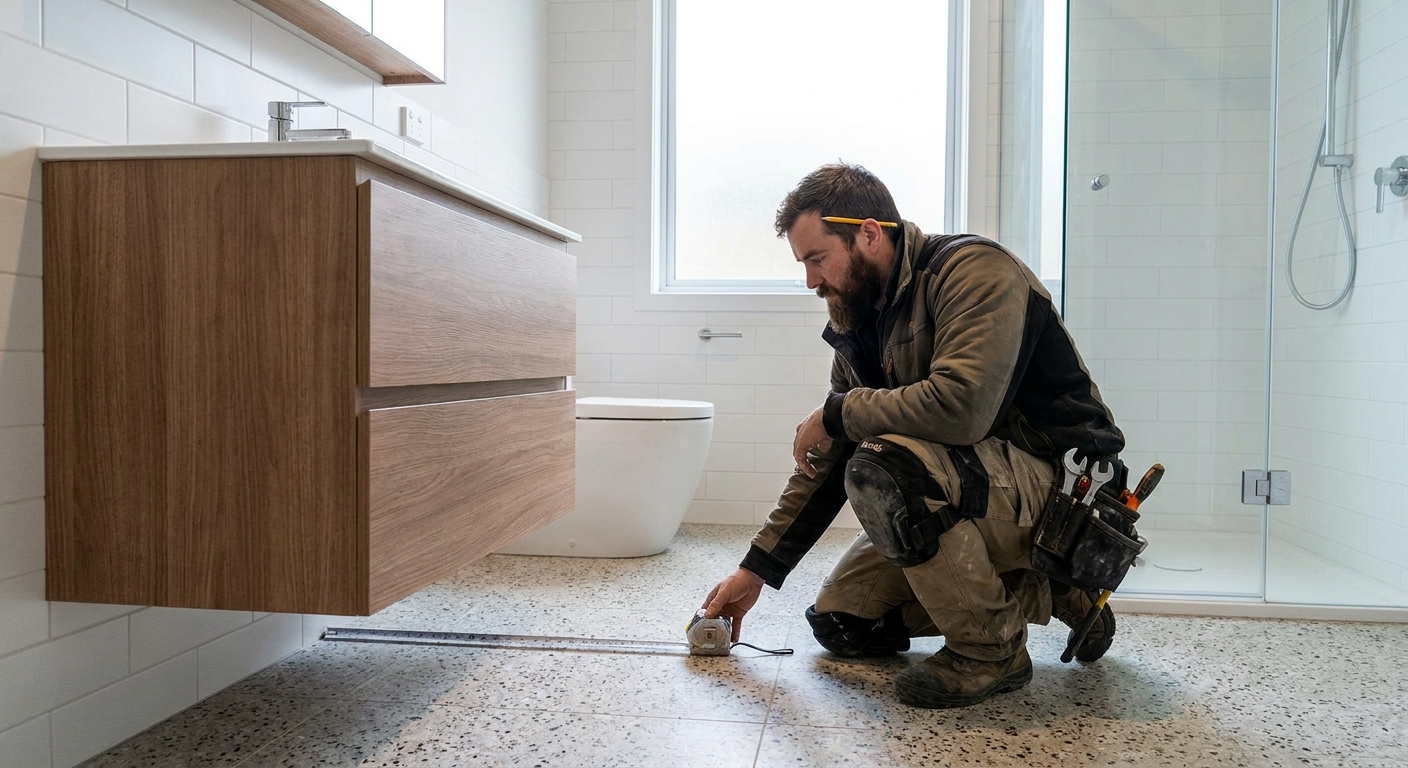
Toilet Heights: Standard vs. Comfort vs. ADA
Toilet height is one of the most scrutinized measurements in any plumbing installation, and for good reason. Get it wrong and you'll fail inspection or create a fixture that's uncomfortable for daily use.
Standard Toilet Height
A standard toilet measures 15 to 16 inches from the finished floor to the top of the seat. This has been the residential norm for decades and suits the average adult comfortably. Most residential building codes do not set a rigid minimum for standard toilets in private homes, but industry convention firmly holds this range.
Comfort Height Toilets
Comfort height toilets (sometimes called "chair height" or "ADA-height") measure 17 to 19 inches from finished floor to seat top. This range mirrors a standard dining chair and is preferred by taller adults, seniors, and those with knee or hip conditions. Comfort height has decisively become the default in 2026 new construction. Major manufacturers like Kohler, TOTO, and American Standard now build the majority of their models at comfort height, and standard-height toilets are increasingly a specialty choice reserved for children's baths, powder rooms, or households with shorter users.
ADA-Compliant Toilets
Per the 2010 ADA Standards for Accessible Design (Section 604.4) and ICC A117.1, accessible toilets must sit between 17 and 19 inches high, measured to the top of the seat (including the seat itself, not just the bowl rim). This standard remains unchanged in 2026 and applies to all new construction and alterations in commercial and public buildings. Extra-tall toilets exceeding 19 inches do NOT meet ADA requirements and are only suitable for private residential use. Note: certain covered residential dwelling units under ADA allow a wider 15 to 19 inch range per §604.4 Exception 2.
| Toilet Type | Height (Floor to Seat) | Required By |
|---|---|---|
| Standard Residential | 15-16 inches | Industry Convention |
| Comfort Height | 17-19 inches | Voluntary (Residential) |
| ADA-Compliant | 17-19 inches | ADA 2010 §604.4, ICC A117.1 |
| Children's ADA (ages 3-12) | 11-17 inches | ADA §604.9 |
| Extra Tall | 20-22 inches | Not Code-Compliant |
For a broader look at code enforcement risks, our plumbing code compliance guide covers common inspection issues and how to read the diagrams inspectors use.

Find Trusted & Licensed Plumbers in Ohio
Get matched with companies for your specific needs
Sink, Shower, and Faucet Height Standards
Bathroom Sink Heights
Standard bathroom sink (lavatory) heights have evolved significantly. Older homes commonly feature vanities at 30 to 32 inches, while modern installations in 2026 trend toward 34 to 36 inches, a height that aligns with kitchen countertops and reduces back strain. Industry design guides now describe 36 inches as the "new standard" comfort height for adult households in new construction, and roughly 95% of new custom vanities are built at this taller height, replacing the old 32-inch standard.
- Traditional height: 30-32 inches (floor to countertop)
- Comfort/modern height: 34-36 inches (floor to countertop)
- Pedestal sinks: Typically 32-34 inches
- Vessel sinks: Vanity cabinet reduced to about 30-32 inches so the finished rim lands in the 34-36 inch range
- ADA-compliant sinks: Maximum 34 inches to the front rim, with knee clearance of at least 27 inches high by 30 inches wide by 19 inches deep
For a deeper look at how these heights integrate into a full renovation, see our guide on accessible bathroom plumbing design.
Kitchen Sink Heights
Kitchen sink height is governed primarily by countertop height. The standard kitchen countertop sits at 36 inches from the floor, placing the sink basin rim at roughly 36 inches as well. For taller homeowners, counter heights up to 38 to 42 inches improve ergonomics significantly. Per ICC A117.1 §606.3 Exception 2, accessible residential kitchen sinks may be adjustable between 29 inches minimum and 36 inches maximum, provided the rough-in plumbing supports the 29-inch position.
Shower Head Heights
The IPC and IRC do not mandate a specific shower head height, but industry standard and compartment clearance rules set the range at 72 to 80 inches from the finished floor. Here's how installations typically break down in 2026:
| Shower Head Type | Recommended Height |
|---|---|
| Standard Fixed Head | 80 inches (6'8") |
| Adjustable/Handheld | 72-80 inches |
| Rainfall / Ceiling Mount | 84-96+ inches |
| ADA Handheld (operable part) | 38-48 inches |
| Shower Valve Controls | 38-48 inches |
Note: Building codes do require a minimum 7-foot (84-inch) ceiling height over the shower area and a minimum compartment size of 30 by 30 inches. ADA-compliant handheld shower heads must have a hose at least 59 inches long to allow seated users to reach head and torso.
Tub Spouts and Faucet Heights
Tub spout height is not strictly regulated by the IPC but is guided by manufacturer specs and practical installation:
- Tub spout (wall-mounted): Typically 4 inches above the rim of the tub, or 2 to 4 inches above the overflow plate, usually placing it around 16 to 23 inches from the tub floor
- Bathtub faucet handles: Typically placed 6 to 8 inches above the tub rim
- ADA faucet controls: Must be operable with one hand, without tight grasping, pinching, or twisting; spout no higher than 36 inches from finished floor for accessible sinks
For homeowners considering fixture replacements alongside a height review, our plumbing fixture upgrade guide covers 2026 installed costs and rebate opportunities, and our touchless fixtures installation guide walks through hands-free faucet and toilet options.
Grab Bars and Clearance Requirements
Grab Bar Heights
Grab bars are a critical safety and accessibility feature. The ADA Standards (Section 609) and ICC A117.1 specify:
- Side wall grab bar (toilet): Mounted 33 to 36 inches above the finished floor, extending from 12 inches behind the toilet centerline to 54 inches in front
- Rear wall grab bar (toilet): Mounted 33 to 36 inches above finished floor, centered on the toilet
- Shower/tub grab bars: Mounted 33 to 36 inches above the floor or tub deck (all required horizontal bars at the same height per ADA)
- Grab bar diameter: 1.25 to 2 inches (circular cross-section), with 1.5 inches clearance from the wall
- Structural performance: Grab bars must withstand 250 pounds of applied force
- Children's water closets: Horizontal grab bars mounted 18 to 27 inches above finished floor (§604.9)
Note: The 33-36 inch range is absolute; no installation may be below 33 inches or above 36 inches. Newer ICC A117.1 editions being enforced in 2026 also require an 18-inch minimum vertical grab bar on the side wall at ambulatory-accessible water closets, a requirement not found in the federal ADA. Learn more about grab bar placement in our plumbing for aging in place guide.
Plumbing Fixture Clearance Requirements
Clearance around fixtures is just as important as mounting height. The 2024 International Plumbing Code (IPC) Section 405.3.1 and 2024 International Residential Code (IRC) Section P2705 set these minimums, which remain unchanged from prior editions:
| Fixture | Front Clearance | Side Clearance (Center to Wall) | Center-to-Center (Adjacent Fixtures) |
|---|---|---|---|
| Toilet | 21 inches | 15 inches | 30 inches |
| Bathroom Sink | 21 inches | 15 inches | 30 inches |
| Shower | 21 inches | 15 inches | N/A |
| Bidet | 21 inches | 15 inches | 30 inches |
The 2024 IPC commentary reminds designers that accessibility requirements in Section 404 can require more clearance than the base minimums in Section 405, so ADA-covered projects always default to the stricter set.
ADA clearance requirements are more stringent:
- 60 inches wide by 56 inches deep clear floor space at toilet (wall-mounted) or 60 by 59 inches for floor-mounted models
- 30 inches wide by 48 inches deep clear floor space in front of sinks
- Toilet centerline must be positioned 16 to 18 inches from the adjacent side wall (wheelchair compartment) or 17 to 19 inches for ambulatory compartments
- Updated ADA guidance now requires 12-inch vertical toe clearance under partitions, extending 8 inches beyond the compartment front (a refinement to stall design, not a height change)
For layout-level planning, our bathroom plumbing layout planning guide covers rough-in dimensions and wet wall design under the latest 2024 IPC, and our water conservation plumbing guide explains how newer WaterSense flow limits interact with fixture selection.
Residential vs. Commercial Standards
How Fixture Heights Affect Comfort and Resale Value
Getting plumbing fixture heights right isn't just a code exercise. It directly impacts how enjoyable your home is to live in and how much a buyer will pay for it.
Comfort and Ergonomics
Correct fixture heights reduce physical strain across all daily routines. Comfort height toilets (17-19 inches) ease the sit-to-stand motion for adults over 50 and reduce fall risk during transfers for seniors. Vanities at 36 inches eliminate the hunching posture that causes lower back pain over time. Shower heads at 80 inches ensure a comfortable experience for the vast majority of users without requiring ducking or craning.
Resale Value Impact (2026 Data)
Properly installed, code-compliant plumbing is a strong selling point. According to the latest Zonda/Remodeling Magazine Cost vs. Value data, a midrange bathroom remodel now recoups roughly 74 to 80% of its cost at resale in 2026 (about $20,915 on a $26,138 average project), making it the highest-ROI interior renovation category since 2007. Upscale bathroom projects still lag, returning closer to 36 to 55% depending on region and finish level. A universal design or ADA-accessible remodel returns approximately 64% nationally in 2026, with returns reaching 65 to 70% in aging-heavy markets where accessible features are in high demand.
Broader home value bumps are equally meaningful. A well-executed bathroom project can add 4-7% to overall home value, and homes with updated bathrooms typically sell faster on average. Accessible features (ADA-height toilets, grab bars, roll-under sinks) appeal to the growing market of aging-in-place buyers, expanding your buyer pool by 20-30% in mature markets.
Buyers increasingly expect move-in-ready homes with modern, compliant fixtures. Outdated or improperly mounted fixtures can trigger inspection flags, reduce offers, or slow a sale. Documenting that fixtures meet current IPC 2024 and ADA standards gives buyers (and their lenders) confidence, and pairs well with strategic upgrades from our plumbing fixture lifespan guide.
Frequently Asked Questions
What is the standard toilet height from the floor?
Standard residential toilets measure 15 to 16 inches from the finished floor to the top of the seat. Comfort height toilets measure 17 to 19 inches, which also satisfies ADA requirements for commercial and accessible installations, and this range has become the default in most 2026 new construction. Extra-tall models above 19 inches are available but are not code-compliant for ADA use. Always measure to the top of the seat, not the bowl rim.
What height must an ADA-compliant sink be mounted at?
ADA-compliant sinks must have the front rim or counter surface no higher than 34 inches from the finished floor. Below the sink, you must provide knee clearance of at least 27 inches high, 30 inches wide, and 19 inches deep to allow wheelchair access. Exposed pipes under the sink must also be insulated or covered to prevent contact burns. This applies to all new construction and alterations in public and commercial facilities.
Is there a code-required height for shower heads?
The 2024 International Plumbing Code (IPC) does not mandate a specific shower head height, but building codes do require a minimum 7-foot (84-inch) ceiling height over the shower area. Industry standard places fixed shower heads at 80 inches from the finished floor, with a generally accepted range of 72 to 80 inches. ADA-compliant handheld shower heads must have their operable parts positioned 38 to 48 inches above the shower floor, with a hose at least 59 inches long. Shower valves are typically placed at 38 to 48 inches for easy access.
How much clearance is required in front of a toilet?
Per the 2024 IPC Section 405.3.1 and 2024 IRC Section P2705, a minimum of 21 inches of clear space is required in front of a toilet. Additionally, the toilet centerline must be at least 15 inches from any side wall or obstruction, and 30 inches center-to-center from any adjacent fixture. ADA requirements are stricter: 60 inches wide by 56 inches deep of clear floor space must be provided for wheelchair transfer access, and toilet centerlines must sit 16-18 inches from the side wall.
Do accessible fixture heights really increase home resale value?
Yes, accessible and ADA-height fixtures meaningfully increase resale value by appealing to a broader buyer pool, including aging-in-place buyers, individuals with disabilities, and families planning long-term. According to 2026 Cost vs. Value data, universal design bathroom remodels return approximately 64% nationally and up to 65-70% in aging-heavy markets, while overall home value can rise 4-7% from a well-executed bath project. Features like comfort height toilets, grab bars, and roll-under sinks signal a move-in-ready home that buyers won't need to immediately renovate. Documenting code compliance during a listing can also smooth the inspection process and reduce buyer negotiating leverage.