
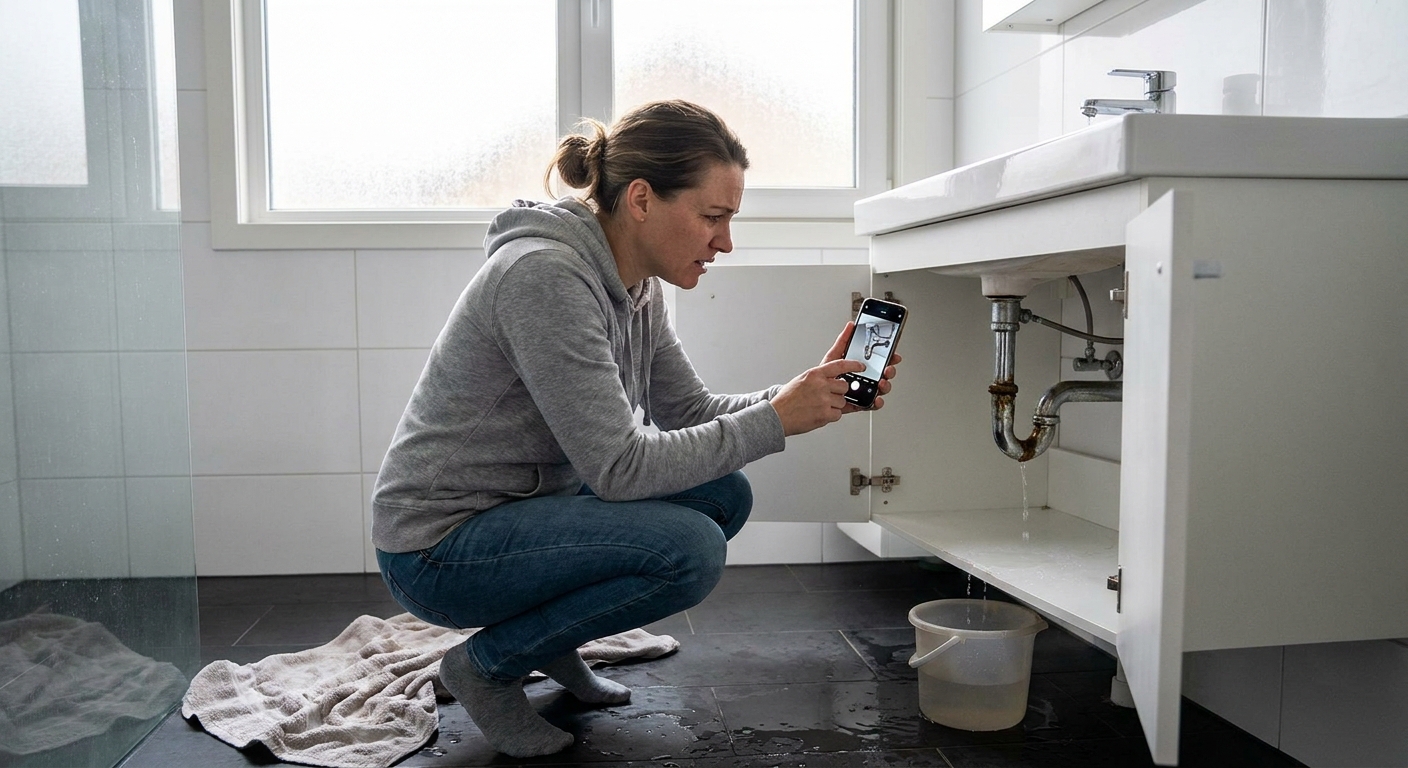
Who Is Responsible for Plumbing Repairs in a Rental?
When a pipe bursts or a drain backs up in your apartment, the first question on everyone's mind is: who pays for this? In the U.S., the answer depends on what caused the problem, the laws in your state, and what your lease says. While landlords carry the majority of plumbing responsibility under federal habitability standards, tenants can still be held financially liable in specific situations.
Understanding the dividing line between landlord and tenant responsibility is one of the most important things any renter can know — and it can save you hundreds or even thousands of dollars in wrongful repair charges or security deposit deductions.
Landlord Responsibilities: What They're Required to Fix
In every U.S. state, landlords are bound by an implied warranty of habitability. This legal standard requires that rental units be safe and livable — and working plumbing is a core component of that obligation. This duty cannot be waived in a lease, even if the landlord tries to write it out.
What Landlords Must Maintain
| Plumbing System | Landlord's Responsibility |
|---|---|
| Supply pipes (hot & cold water) | ✅ Yes — must be functional at all times |
| Sewer lines and main drain stacks | ✅ Yes — including tree root intrusions, collapses |
| Water heater | ✅ Yes — failure due to age or defect |
| Toilets, sinks, tubs (structural) | ✅ Yes — when failure is due to wear or defect |
| Sewage backups | ✅ Yes — if caused by building plumbing, not tenant misuse |
| Code violations | ✅ Yes — landlord must bring plumbing up to code |
| Leaks causing mold or structural damage | ✅ Yes — must be addressed promptly after notice |
Habitability Violations for Plumbing
A plumbing issue becomes a habitability violation when it prevents you from safely living in the unit. Common examples include:
- No running water — hot or cold, for more than a brief outage
- Sewage backing up into sinks, tubs, or floor drains
- Non-functioning toilet in a single-bathroom unit
- Serious leaks causing mold, structural damage, or electrical hazards
- Plumbing that violates health or building codes
Once you notify your landlord in writing, they are legally required to act within a reasonable time. For emergencies like sewage backups or no water, many states expect a response within 24 to 48 hours. Non-emergency habitability repairs typically must be completed within 7 to 14 days.
Tenant Responsibilities: When You're on the Hook
Tenants are not off the hook for all plumbing issues. If the damage or clog was caused by your actions, negligence, or misuse, you can be billed for repairs — often through a security deposit deduction.
What Counts as Tenant Negligence?
Common Tenant-Caused Plumbing Problems
- Flushing paper towels, "flushable" wipes, cotton swabs, or diapers
- Pouring fats, oils, and grease down kitchen drains
- Using garbage disposals improperly (bones, fibrous vegetables, glass)
- Ignoring a known small leak until it causes major water damage
- Using harsh chemical drain cleaners that corrode pipes
- Breaking fixtures through misuse or physical force

Find Trusted & Licensed Plumbers in Ohio
Get matched with companies for your specific needs
Emergency Plumbing: Who Pays and What to Do
Plumbing emergencies — burst pipes, sewage flooding, sudden loss of water — require fast action. In these situations, both parties have responsibilities.
Emergency Response: A Quick Reference
If your landlord is unreachable during an emergency and damage is actively spreading, you may be able to call a plumber yourself and seek reimbursement — but this must be handled carefully. Many states allow repair-and-deduct under specific conditions:
- You gave written notice and a reasonable time to respond
- The issue materially affects health or safety (habitability)
- You use a licensed contractor and keep all invoices
- The cost does not exceed the statutory cap (often one month's rent)
States with a clear statutory right to repair-and-deduct include California, Texas, Arizona, Oregon, and Washington. States like Florida and Georgia have more limited options and are riskier to act without legal advice.
What to Do If Your Landlord Won't Fix Plumbing
If your landlord is ignoring a legitimate plumbing problem, you have more options than you might think — but you must follow the correct process to protect yourself legally.
Step-by-Step: Escalating a Repair Dispute
Step 1 — Send Written Notice Describe the problem clearly, include the date it started, and request repair in writing. Use email or certified mail and keep copies.
Step 2 — Set a Deadline Give a reasonable repair window based on severity. Emergencies: 24–48 hours. Non-emergency habitability issues: 7–14 days. Put this deadline in writing.
Step 3 — File a Code Enforcement Complaint Contact your local housing or code enforcement office. An official inspection creates a legal record of the violation and can force the landlord's hand.
Step 4 — Know Your State-Specific Remedies
| State | Repair & Deduct | Rent Withholding | Notes |
|---|---|---|---|
| California | ✅ Up to 1 month's rent | ✅ With caution | Best documented tenant protections |
| Texas | ✅ Limited, strict notice rules | ✅ In some cases | Must use certified mail notice |
| Florida | ❌ Not broadly codified | ✅ With 7-day notice | Follow Fla. Stat. § 83.51 closely |
| New York | ✅ With legal guidance | ✅ Strong protections | NYC adds extra local rules |
| Illinois | ✅ Chicago RLTO adds protections | ✅ For serious defects | Chicago renters have strongest rights |
| Georgia | ❌ Limited | ✅ Court-driven | Habitability rights exist but are narrow |
Step 5 — Consult Legal Aid Most cities have free tenant legal aid resources. If you're considering withholding rent, get guidance first — doing it incorrectly can lead to eviction proceedings even when you're in the right.
Protecting Yourself: Documentation & Security Deposit Defense
Plumbing disputes are one of the most common sources of security deposit deductions. The best way to protect your deposit is to make documentation a habit from day one.
Your Plumbing Documentation Checklist
- 📷 Move-in photos and video — document every fixture, drain, toilet, and water heater at move-in
- 📝 Written repair requests — always request repairs in writing with a date
- 📱 Save all texts, emails, and portal messages — these are timestamped and legally useful
- 🧾 Keep plumber's invoices and work orders — especially if you paid for any repairs
- 📋 Move-out inspection report — complete this with the landlord present if possible
Disputing a Plumbing-Related Security Deposit Deduction
If your landlord tries to charge you for a plumbing repair after move-out, you have the right to dispute it. A deduction is only valid if:
- The damage was caused by tenant negligence, not normal wear and tear
- The landlord provides an itemized written statement with receipts within the state-required timeframe (typically 14–30 days after move-out)
- The repair cost is reasonable and proportionate — not inflated
If you believe the deduction is improper, send a written dispute letter citing your documentation. If unresolved, small claims court is your next option. Filing fees are typically low ($30–$75) and many states award double or triple damages if a landlord wrongfully withholds your deposit.
Frequently Asked Questions
Is a landlord required to fix a leaking faucet in my apartment?
Yes, in most cases. A dripping faucet caused by worn internal components (washers, cartridges, O-rings) is considered normal wear and tear and is the landlord's responsibility to repair. If you caused the leak through misuse — such as forcing a handle — you may be responsible. Report it in writing regardless, so the issue is officially documented.
Who pays for a plumber if my toilet keeps backing up?
It depends on the cause. If a plumber finds foreign objects (wipes, paper towels, etc.) in the line, you'll likely be responsible. If the backup is caused by a failing sewer line, tree roots, or a building-wide plumbing defect, the landlord is responsible. Always ask for a written summary of the plumber's findings so you have documentation.
Can my landlord make me pay for all plumbing repairs in my lease?
No. Lease clauses that shift all plumbing responsibility to tenants are generally unenforceable because they conflict with the implied warranty of habitability — a standard that exists in every state and cannot be waived by contract. A landlord can legitimately assign you responsibility for minor, tenant-caused issues, but not for the overall plumbing system.
What should I do if my apartment has no hot water?
Loss of hot water is considered a habitability violation in most states. Notify your landlord immediately in writing and request repair within a specific timeframe (usually 24–48 hours for this type of emergency). If they don't respond, contact local code enforcement. Depending on your state, you may be able to withhold rent or deduct the cost of repairs from rent after following proper legal steps.
How can I avoid being blamed for plumbing damage I didn't cause?
The best protection is documentation. Take photos and video at move-in, submit a written move-in inspection form, always report problems in writing, and never flush or pour anything down drains that doesn't belong there. If a repair is made during your tenancy, keep a copy of the work order or invoice showing the cause — so you have proof that it wasn't your fault if the issue is revisited at move-out.